



Business Information Blog
Credit Management

Reports & Scores

Data & Analytics

The latest from our experts
One of the world’s largest financial institutions, Citi is determined to keep pace with rapid changes in international commerce. As detailed in the April 2017 issue of PYMNTS.com’s B2B API Tracker Citi believes APIs – Application Programing Interfaces – are the key to getting international businesses the financial information they need to prosper.
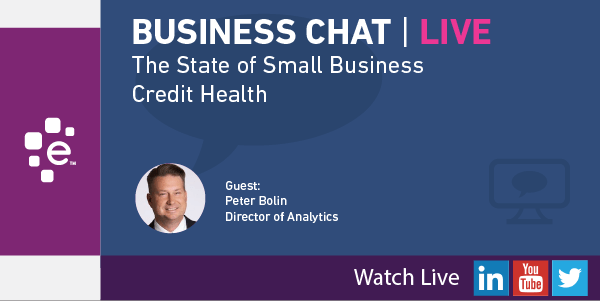
On May 10th we hosted an episode of Business Chat | Live. This episode features an interview with Experian Director of Analytics and Consulting, Peter Bolin. Peter shared highlights from his “State of Small Business Credit” presentation, which he co-presented at our Vision Conference in Orlando with Cristian DeRitis of Moody’s Analytics.

Senior business consultant, Gavin Harding provides a recap of the marketplace lending panel discussion, which took place at Experian’s Vision Conference.
The Experian/Moody’s Analytics Main Street Report provides small business credit trends and offers insight on the coming quarter.
Today Experian released the Q4 2016 Experian/Moody’s Analytics Main Street Report. The report offers deep insight into the overall financial well-being of the small-business landscape, as well as providing commentary around what certain trends mean for credit grantors and the small-business community as a whole.
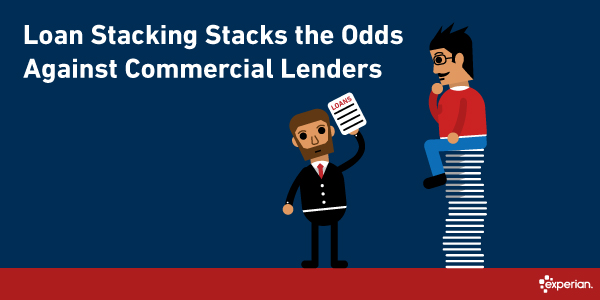
Loan stacking is the opening of multiple credit lines within a short period of time. It’s a serious problem for lenders. This post explores solutions.

This year’s Marketplace Lending and Investing Conference explored issues of transparency, partnership, consistency and sustainability. There was healthy debate on each of these topics and the audience, presenters and panelists frequently returned to the theme of the relationship between Marketplace Lenders, Fintech, Banks and Investors. As the conference unfolded I thought about the role of small businesses in the relationship between these stakeholders. How do mom and pop small businesses fit into these complex, rapidly evolving relationships?

Reporting business data to Experian is an important and essential part of the credit ecosystem. In this post we explain how to report data to Experian.

Experian met with LendIt Conference Chairman Peter Renton recently and during our talk he shared some valuable insights on marketplace lending and the growing Chinese peer-to-peer lending industry. Why do so excited about the Chinese peer-to-peer lending industry? I think there are two things, one is that it is massive, the Chinese market is so big it’s bigger than the rest of the world, combined. And so that, I think, it’s an opportunity for everybody, and western platforms and Chinese platforms. But that’s not all, I think one of the things I think is most interesting about China is how they use technology particularly in the mobile space. The way these platforms operate on the borrower acquisition side, on the investor side it’s all done through mobile. And that is very different to what’s done in the West, so we’ve got a lot to learn. The Chinese experience is probably 3 to 5 years ahead of what the West is going to be. We all talk about “Well, we are going to move to mobile eventually” but it hasn’t happened yet and you talk to most platforms and the still the majority of their traffic is coming from through the desktop so that’s not the case in China it’s something like 80% or 90% coming on mobile sometimes even more. Some companies have nothing other than mobile traffic, they don’t even have a website. That’s why I think China is interesting and we can really learn a lot from the Chinese. Will we start to see U.S. companies make investments in China? I think the first thing were going to see from U.S. companies is them trying to attract Chinese capital, that is already started we have already seen some Chinese capital coming in, there’s been publicly available information like with one of SoFi’s investors is a Chinese company. The Chinese are making more equity investments in this space, we’re also starting to see debt capital coming from China into the U.S., so that’s definitely I think one of the ways that we will be connecting the two countries. The other is eventually we’re probably down the road two to three years minimum we are going to see western platforms going to China and either buying a Chinese platform or starting operations there. We’ve seen all of the major banks have done that, China such a big market, it can’t be ignored. If you want to be a global player you have to be in China so I think that’s probably the secondary second step, the first step is attracting capital. Is the Chinese market primarily consumer lending or using lending to small business? So it’s similar to the U.S. where really the consumer lending sector has led the way in marketplace lending and I think the same thing is true in China. There is definitely small business lending in fact small business lending is probably even needed more in China than the West because small business owner’s, entrepreneurs in China have very few options when it comes to obtaining financing, so these platforms are setting up to really fill that massive void. What goal should marketplace lenders consider when partnering with traditional lenders? If you talk about traditional lenders if you are talking about banks I think that is something that we’re seeing more and more just at LendIt today we had a whole session on bank partnerships, there’s been several other mentions we had Avant’s Al Goldstein this morning talking about their new partnership with Regions Bank. Regions Bank is a top 20 bank in the U.S. I think what’s in it for the platforms obviously is, if you look at the Avant deal they get two things, they’re sort of licensing their technology and their underwriting box helping these banks reach difficult to obtain customers and underwrite customers in ways that a bank necessarily wouldn’t have the expertise to do. So they are doing that and then with Avant they’re also getting referrals so the bank may have people coming to them for loans that they can’t or won’t underwrite so then they can refer them on to Avant, so I think that’s the best example. You talk about the Chase OnDeck deal, I’ve spoken with Noah Breslow about that and he’s mentioned that it was a long process. Chase is the biggest bank in the country, they’ve got a massive compliance department, they had to check every single box and so I think platforms they really need to be like professional grade shall we say. All of their compliance systems – he said it took OnDeck many months to get up to the standard that Chase was comfortable with, so I think having that sort of rock-solid compliance in place it’s great for a platform not just by partnering with banks but dealing with regulators they can see that they are checking all the boxes just like a bank would. What can you tell us about the new Marketplace Lending Association? It’s something that I’ve been passionate about for a long time. We are probably a year or two overdue on having this association coming to be, but it’s better late than never. I think we really need to come together as an industry and have a unified voice when we’re dealing with Washington, dealing with lawmakers. Every industry that has an association that can be heard in Washington that represents the entire industry and I feel like, we just started, we just launched it a few days ago but I think it’s overdue and having that will help us not only just raise up the profile of the industry but really help us to talk directly with regulators and regulators aren’t going to say this is just one company with their own agenda this is the industry talking and they’ll pay more attention I think.

Gavin Harding shares perspectives from American Banker’s Marketplace Lending & Investing Conference which took place in New York City.

We know that small business is the heart of the U.S. economy, driving the majority of private-sector employment. But just how successful in managing credit is the average small business owner compared with the average consumer? In a new data study titled The Face of Small Business, Experian examines key credit and demographic attributes of both groups and uncovered distinct differences.
Highlights from the Q2 2016 Main Street report, it offers a unique quarterly snapshot into the health of small business credit in the United States.