Loading...

Across the Universe of Alternative Credit Data

by Stefani Wendel 2 min read May 22, 2019

The universe has been used as a metaphor for many things – vast, wide, intangible – much like the credit universe. However, while the man on the moon, a trip outside the ozone layer, and all things space from that perspective may seem out of touch, there is a new line of access to consumers. In Experian’s latest 2019 State of Alternative Credit Data report, consumers and lenders alike weigh in on the growing data set and how they are leveraging the data in use cases across the lending lifecycle.
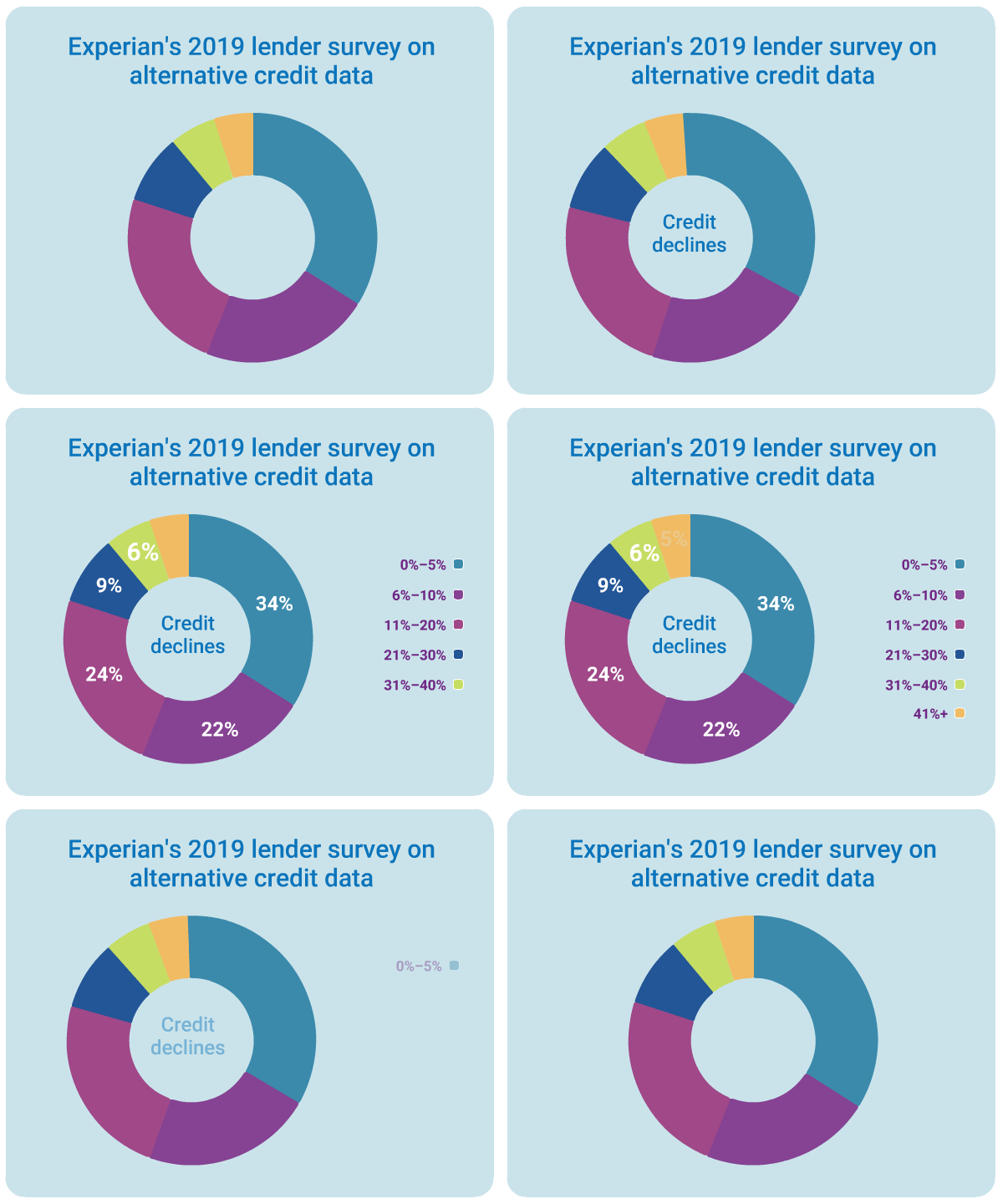
While the topic of alternative credit data is no longer as unfamiliar as it may have been a year or two ago, the capabilities and benefits that can be experienced by financial institutions, small businesses and consumers are still not widely known.

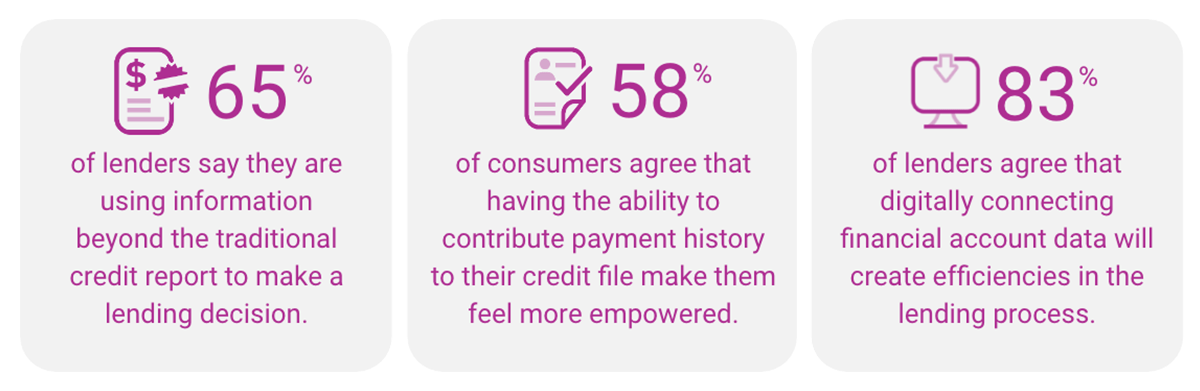
Did you know?:

–  65% of lenders say they are using information beyond the traditional credit report to make a lending decision.

–  58% of consumers agree that having the ability to contribute payment history to their credit file make them feel empowered.

–  83% of lenders agree that digitally connecting financial account data will create efficiencies in the lending process.

These and other consumer and lender perceptions of alternative credit data are now launched with the latest edition of the State of Alternative Credit Data whitepaper. This year’s report rounds up the different types of alternative credit data (from alternative financial services data to consumer-permissioned account data, think Experian BoostTM), as well as an overview of the regulatory landscape, and a number of use cases across consumer and small business lending.

In addition, consumers also have a lot to say about alternative credit data:
With the rise of machine learning and big data, lenders can collect more data than ever, facilitating smarter and more precise decisions.

Unlock your portfolio’s growth potential by tapping into alternative credit data to expand your consumer universe. Learn more in the 2019 State of Alternative Credit Data Whitepaper.

Read Full Report

View our 2020 State of Alternative Credit Data Report for an updated look at how consumers and lenders are leveraging alternative credit data. 

Related Posts

Since 1996, The Internal Revenue Service (IRS) has issued more than 27 million individual taxpayer identification numbers (ITINs) –⁠ a 9-digit number used by individuals who are required to file or report taxes in the United States but are not eligible to obtain a Social Security number (SSN). Across the country, ITIN holders are actively contributing to their communities and the U.S. financial system. They pay bills, build businesses, contribute billions in taxes and manage their finances responsibly. Yet despite their clear engagement, many remain underrepresented within traditional lending models.  Lenders have a meaningful opportunity to bridge the gap between intention and impact. By rethinking how ITIN consumers are evaluated and supported, financial institutions can: Reduce barriers that have historically held capable borrowers back Build products that reflect real borrower needs Foster trust and strengthen community relationships Drive sustainable, responsible growth Our latest white paper takes a more holistic look at ITIN consumers, highlighting their credit behaviors, performance patterns and long-term growth potential. The findings reveal a population that is not only financially engaged, but also demonstrating signs of ongoing stability and mobility. A few takeaways include: ITIN holders maintain a lower debt-to-income ratio than SSN consumers. ITIN holders exhibit fewer derogatory accounts (180–⁠400 days past due). After 12 months, 76.9% of ITIN holders remained current on trades, a rate 15% higher than SSN consumers. With deeper insight into this segment, lenders can make more informed, inclusive decisions. Read the full white paper to uncover the trends and opportunities shaping the future of ITIN lending. Download white paper

by Theresa Nguyen 2 min read February 2, 2026

Growth, risk and the rise of "hidden" business accounts As inflation remains elevated and early signs of labor market cooling emerge, the credit card landscape is entering its next phase. Over the past few weeks, policy actions and discussions around potential interest-rate caps have driven increased uncertainty across the credit card industry and broader global markets. Lenders face a careful balancing act: capturing growth opportunities while maintaining disciplined risk oversight. Our second annual State of Credit Cards Report explores the macroeconomic forces influencing the market, key shifts in originations and delinquency trends, and lender mix. New this year, the report also digs into an often‑overlooked segment: business accounts hidden inside consumer credit card portfolios. Additionally, the report offers actionable strategies to help lenders segment risk and drive disciplined growth more effectively. Key insights include: 30+ DPD delinquency rates remained above pre-pandemic levels in 2025, underscoring the need for disciplined asset‑quality monitoring. Fintechs continue to gain ground, posting a 71% YOY increase in account originations.  Business accounts masked in the consumer credit card universe represent roughly 14% of balances and are more than 50% larger than the business card universe — a material segment with distinct risk and profitability dynamics that many lenders are not explicitly managing today. The report also outlines practical strategies to: Identify and segment business behavior within consumer portfolios. Align underwriting and account management with actual usage patterns. Capture targeted growth while protecting long‑term portfolio performance. Ready to dive deeper? Download the full 2026 State of Credit Cards Report to uncover insights that can help your organization manage risk more precisely and grow with confidence. Download report

by Theresa Nguyen 2 min read February 2, 2026

Unlock the future of fintech by exploring how alternative data is reshaping decision-making and growth strategies.

by Laura Burrows 2 min read January 12, 2026