Apply DA Tag

Are you looking for ways to make your financial institution more secure without adding unnecessary friction to the customer experience? Automated identity verification is an essential part of this process, safeguarding sensitive consumer information and helping to prevent fraud. This blog post will serve as the ultimate guide to automated identity verification so that you can understand why it's important and how it works. We'll cover all the details, like what automated ID verification is, how authentication software works with identifying documents, why automated identification technology is preferred over manual processes, and tips on implementing automation identity verification solutions into your business practices. What is automated identity verification? Automated identity verification is a secure, efficient process for verifying the identity of individuals or entities. This process is integral in various industries, especially the financial sector, to curb identity theft and fraudulent activities. It operates by using advanced analytics and authentication software that cross-references the provided data with a set of stored information. This technology eliminates manual ID verification, saving time and improving accuracy. ID verification automation uses artificial intelligence and machine learning to compare identifying credentials against various authenticating sources. Automated identity verification also comes into play for employment and income verification. Experian VerifyTM enables businesses through precise, real-time employment and income verification, ultimately helping businesses reduce risk, accelerate conversion and remove friction. For a more comprehensive understanding of automated identity verification, you can visit Experian's Identity Verification Solutions webpage, which provides a deep dive into the intricacies of identity verification, including insights on its importance in modern business operations and how it keeps your business secure. Benefits of automated identity verification for businesses and consumers Automated ID verification has revolutionized the way businesses conduct their operations and interact with customers. For businesses, AIV offers a range of benefits such as: Improved efficiency – businesses can automate the time-consuming process of identity verification, freeing up resources (staff) to focus on other critical tasks. Enhanced security – the technology ensures that customer data is secure and accurate, minimizing fraud risks and/or data breaches. Reduced costs – with the process being faster and more secure, costs are reduced as a byproduct. On the other hand, consumers enjoy a hassle-free experience as they can verify their identity within seconds, without physical documentation. This is essential for today’s consumers who expect frictionless experiences that keep them and their information safe. Data from Experian’s annual U.S. Identity and Fraud Report reflects these sentiments: 37% of consumers moved a new account opening process to another organization because of a poor experience; 95% of consumers say it's important to be repeatedly recognized online by businesses; and 60% of consumers are concerned about their online privacy. With automated identity verification, businesses can build trust, streamline their processes, and ultimately improve their bottom line. Furthermore, automated identity verification is a necessary component for businesses to minimize fraud risks in our evolving digital landscape. Living in an era where cybercrime is rampant, AIV safeguards businesses from potential fraudulent attempts and data breaches that could cause significant financial and reputational damage. From a compliance standpoint, automated identity verification ensures regulatory compliance, which is critical, considering the stringent regulations regarding customer data protection. Non-compliance can lead to severe legal repercussions and financial penalties. For financial institutions, Know Your Customer (KYC) policies must include Customer Identification Programs. Experian can help across the entire customer journey, from onboarding through portfolio management, while reducing risk of non-compliance and providing seamless authentication. Common challenges of automated identity verification As more companies turn to artificial intelligence and automation to deliver superior customer service experiences, the challenges businesses face have multiplied. One of the most common issues is ensuring identity proofing and accurate information protection within their networks. Although account takeover prevention has become more advanced, fraudsters still use increasingly sophisticated methods to circumvent it. As such, businesses must continuously develop new strategies to overcome these challenges, ensuring that their AI-powered solutions continue to provide reliable and secure user experiences. Types of identity verification solutions As the digital world continues to evolve, automated identity verification solutions have become a crucial part of online interactions. These solutions not only enhance security measures, but also provide faster and more efficient ways of identifying individuals. For instance, facial recognition is one example. Experian’s CrossCore® Doc Capture enables confident identity verification via facial recognition, which scans a person's face and compares it to their identification documents. Another type is voice recognition, which uses speech patterns to verify an identity. Additionally, document verification scans and validates various identification documents, such as driver's licenses and passports. It's essential to choose the most suitable AIV solution for your organization to ensure robust and reliable security measures. How to implement an automated ID verification solution It’s not new news that identity theft and fraud continue to be major concerns, particularly in an increasingly digital-only world. Implementing automated identity verification solutions to safeguard against such threats can seem daunting, particularly for businesses with limited IT resources. However, the benefits of automated ID verification, such as increased accuracy and efficiency, make it a worthwhile investment. When choosing a solution, consider factors such as the level of security provided, ease of implementation and integration with existing systems, and the ability to customize rules and settings. With careful planning and the right solution, , organizations can take a significant step towards improving their security posture and protecting their customers. Best Practices for automated identity verification Automated identity verification presents one way that financial institutions can increase automation. In doing so, organizations can improve accuracy, speed, and security in the verification process. One technique that has proven effective is the use of biometric technology, such as facial recognition and fingerprint scanning, to verify a person's identity. Additionally, utilizing various data sources, such as credit bureaus like Experian and government agencies, can increase the accuracy of verification. Implementing these best practices can not only save time and resources but also enhance customer experience by providing a seamless and secure verification process. In summary, automated identity verification is a vital tool for businesses and consumers to enhance their safety and security when engaging with customers. Automated identity verification streamlines customer processes across the lifecycle by eliminating manual checks and lengthy delays. As technology continues to evolve, it’s important for organizations to remain mindful that the methodologies used within automated identity verification will rapidly change as well. The key is to stay ahead. Automated identity verification solutions offer many advantages for businesses who want to maintain their trustworthiness while staying competitive in an ever-changing market. To learn more about Experian’s automated identity verification solutions, visit our website. Learn More *This article includes content created by an AI language model and is intended to provide general information.

From science fiction-worthy image generators to automated underwriting, artificial intelligence (AI), big data sets and advances in computing power are transforming how we play and work. While the focus in the lending space has often been on improving the AI models that analyze data, the data that feeds into the models is just as important. Enter: data-centric AI. What is a data-centric AI? Dr. Andrew Ng, a leader in the AI field, advocates for data-centric AI and is often credited with coining the term. According to Dr. Ng, data-centric AI is, ‘the discipline of systematically engineering the data used to build an AI system.’1 To break down the definition, think of AI systems as a combination of code and data. The code is the model or algorithm that analyzes data to produce a result. The data is the information you use to train the model or later feed into the model to request a result. Traditional approaches to AI focus on the code — the models. Multiple organizations download and use the same data sets to create and improve models. But today, continued focus on model development may offer a limited return in certain industries and use cases. A data-centric AI approach focuses on developing tools and practices that improve the data. You may still need to pay attention to model development but no longer treat the data as constant. Instead, you try to improve a model's performance by increasing data quality. This can be achieved in different ways, such as using more consistent labeling, removing noisy data and collecting additional data.2 Data-centric AI isn't just about improving data quality when you build a model — it's also part of the ongoing iterative process. The data-focused approach should continue during post-deployment model monitoring and maintenance. Data-centric AI in lending Organizations in multiple industries are exploring how a data-centric approach can help them improve model performance, fairness and business outcomes. For example, lenders that take a data-centric approach to underwriting may be able to expand their lending universe, drive growth and fulfill financial inclusion goals without taking on additional risk. Conventional credit scoring models have been trained on consumer credit bureau data for decades. New versions of these models might offer increased performance because they incorporate changes in the economic landscape, consumer behavior and advances in analytics. And some new models are built with a more data-centric approach that considers additional data points from the existing data sets — such as trended data — to score consumers more accurately. However, they still solely rely on credit bureau data. Explainability and transparency are essential components of responsible AI and machine learning (a type of AI) in underwriting. Organizations need to be able to explain how their models come to decisions and ensure they are behaving as expected. Model developers and lenders that use AI to build credit risk models can incorporate new high-quality data to supplement existing data sets. Alternative credit data can include information from alternative financial services, public records, consumer-permissioned data, and buy now, pay later (BNPL) data that lenders can use in compliance with the Fair Credit Reporting Act (FCRA).* The resulting AI-driven models may more accurately predict credit risk — decreasing lenders' losses. The models can also use alternative credit data to score consumers that conventional models can't score. Infographic: From initial strategy to results — with stops at verification, decisioning and approval — see how customers travel across an Automated Loan Underwriting Journey. Business benefit of using data-centric AI models Financial services organizations can benefit from using a data-centric AI approach to create models across the customer lifecycle. That may be why about 70 percent of businesses frequently discuss using advanced analytics and AI within underwriting and collections.3 Many have gone a step further and implemented AI. Underwriting is one of the main applications for machine learning models today, and lenders are using machine learning to:4 More accurately assess credit risk models. Decrease model development, deployment and recalibration timelines. Incorporate more alternative credit data into credit decisioning. AI analytics solutions may also increase customer lifetime value by helping lenders manage credit lines, increase retention, cross-sell products and improve collection efforts. Additionally, data-centric AI can assist with fraud detection and prevention. Case study: Learn how Atlas Credit, a small-dollar lender, used a machine learning model and loan automation to nearly doubled its loan approval rates while decreasing its credit risk losses. How Experian helps clients leverage data-centric AI for better business outcomes During a presentation in 2021, Dr. Ng used the 80-20 rule and cooking as an analogy to explain why the shift to data-centric AI makes sense.5 You might be able to make an okay meal with old or low-quality ingredients. However, if you source and prepare high-quality ingredients, you're already 80% of the way toward making a great meal. Your data is the primary ingredient for your model — do you want to use old and low-quality data? Experian has provided organizations with high-quality consumer and business credit solutions for decades, and our industry-leading data sources, models and analytics allow you to build models and make confident decisions. If you need a sous-chef, Experian offers services and has data professionals who can help you create AI-powered predictive analytics models using bureau data, alternative data and your in-house data. Learn more about our AI analytics solutions and how you can get started today. 1DataCentricAI. (2023). Data-Centric AI.2Exchange.scale (2021). The Data-Centric AI Approach With Andrew Ng.3Experian (2021). Global Insights Report September/October 2021.4FinRegLab (2021). The Use of Machine Learning for Credit Underwriting: Market & Data Science Context. 5YouTube (2021). A Chat with Andrew on MLOps: From Model-Centric to Data-Centric AI *Disclaimer: When we refer to “Alternative Credit Data," this refers to the use of alternative data and its appropriate use in consumer credit lending decisions, as regulated by the Fair Credit Reporting Act. Hence, the term “Expanded FCRA Data" may also apply in this instance and both can be used interchangeably.

The Federal Reserve (Fed) took a big step towards revolutionizing the U.S. payment landscape with the official launch of FedNow, a new instant payment service, on July 20, 2023. While the new payment network offers advantages, there are concerns that fraudsters may be quick to exploit the new real-time technology with fraud schemes like automated push payment (APP) fraud. How is FedNow different from existing payment networks? To keep pace with regions across the globe and accelerate innovation, the U.S. created a alternative to the existing payment network known as The Clearing House (TCH) Real-Time Payment Network (RTP). Fraudsters can use the fact that real-time payments immediately settle to launder the stolen money through multiple channels quickly. The potential for this kind of fraud has led financial regulators to consider measures to better protect against it. While both FedNow and RTP charge a comparable fee of 4.5 cents per originated transaction, the key distinction lies in their governance. RTP is operated by a consortium of large banks, whereas FedNow falls under the jurisdiction of the Federal Reserve Bank. This distinction could give FedNow an edge in the market. One of the advantages of FedNow is its integration with the extensive Federal Reserve network, allowing smaller local banks across the country to access the service. RTP estimates accessibility to institutions holding approximately 90% of U.S. demand deposit accounts (DDAs), but currently only reaches 62% of DDAs due to limited participation from eligible institutions. What are real-time payments? Real-time payments refer to transactions between bank accounts that are initiated, cleared, and settled within seconds, regardless of the time or day. This immediacy enhances transparency and instills confidence in payments, which benefits consumers, banks and businesses.Image sourced from JaredFranklin.com Real-time payments have gained traction globally, with adoptions from over 70 countries on six continents. In 2022 alone, these transactions amounted to a staggering $195 billion, representing a remarkable year-over-year growth of 63%. India leads the pack with its Unified Payments Interface platform, processing a massive $89.5 billion in transaction volume. Other significant markets include Brazil, China, Thailand, and South Korea. The fact that real-time payments cannot be reversed promotes trust and ensures that contracts are upheld. This also encourages the development of new methods to make processes more efficient, like the ability to pay upon receiving the goods or services. These advancements are particularly crucial for small businesses, which disproportionately bear the burden of delayed payments, amounting to a staggering $3 trillion globally at any given time. The launch of FedNow marks a significant milestone in the U.S. financial landscape, propelling the country towards greater efficiency, transparency, and innovation in payments. However, it also brings a fair share of challenges, including the potential for increased fraud. Are real-time payments a catalyst for fraud? As the financial landscape evolves with the introduction of real-time payment systems, fraudsters are quick to exploit new technologies. One particular form of fraud that has gained prominence is authorized push payment (APP) fraud. APP fraud is a type of scam where fraudsters trick individuals or businesses into authorizing the transfer of funds from their bank accounts to accounts controlled by the fraudsters. The fraudster poses as a legitimate entity and deceives the victim into believing that there is an urgent need to transfer money. They gain the victim's trust and provide instructions for the transfer, typically through online or telephone banking channels. The victim willingly performs the payment, thinking it is legitimate, but realizes they have been scammed when communication halts. APP fraud is damaging as victims authorize the payments themselves, making it difficult for banks to recover the funds. To protect against APP fraud, it's important to be cautious, verify the legitimacy of requests independently, and report any suspicious activity promptly. Fraud detection and prevention with real-time payments Advances in fraud detection software, including machine learning and behavioral analytics, make unusual urgent requests and fake invoices easier to spot — in real time — but some governments are considering legislation to ensure more support for victims. For example, in the U.K., frameworks like Confirmation of Payee have rolled out instant account detail checks against the account holder’s name to help prevent cases of authorized push payment fraud. The U.K.’s real-time payments scheme Pay.UK also introduced the Mule Insights Tactical Solution (MITS), which tracks the flow of fraudulent transactions used in money laundering through bank and credit union accounts. It identifies these accounts and stops the proceeds of crimes from moving deeper into the system – and can help victims recover their funds. While fraud levels related to traditional payments have slowly come down, real-time payment-related fraud has recently skyrocketed. India, one of the primary innovators in the space, recorded a 23% rise in fraud related to its real-time payments system in 2022. The same ACI report stated that the U.S., making up only 1.2% of all real-time payment transactions in 2022, had, for now, avoided the effects. However, “there is no reason to assume that without action, the U.S. will not follow the path to crisis levels of APP scams as seen in other markets.” FedNow currently has no specific plans to bake fraud detection into their newly launched technology, meaning the response is left to financial institutions. Fight instant fraud with instant answers Artificial Intelligence (AI) holds tremendous potential in combating the ever-present threat of fraud. With AI technologies, financial institutions can process vast amounts of data points faster and enhance their fraud detection capabilities. This enables them to identify and flag suspicious transactions that deviate from the norm, mitigating identity risk and safeguarding customer accounts. The ability of AI-powered systems to ingest and analyze real-time information empowers institutions to stay one step ahead in the battle against account takeover fraud. This type of fraud, which poses a significant challenge to real-time payment systems, can be better addressed through AI-enabled tools. With ongoing monitoring of account behavior, such as the services provided by FraudNet, financial institutions gain a powerful weapon against APP fraud. In addition to behavioral analysis, location data has emerged as an asset in the fight against fraud. Incorporating location-based information into fraud detection algorithms has proven effective in pinpointing suspicious activities and reducing fraudulent incidents. As the financial industry continues to grapple with the constant evolution of fraud techniques, harnessing the potential of AI, coupled with comprehensive data analysis and innovative technologies, becomes crucial for securing the integrity of financial transactions. Taking your next step in the fight against fraud Ultimately, the effectiveness of fraud prevention measures depends on the implementation and continuous improvement of security protocols by financial institutions, regulators, and technology providers. By staying vigilant and employing appropriate safeguards, fraud risks in real-time payment systems, such as FedNow, can be minimized. To learn more about how Experian can help you leverage fraud prevention solutions, visit us online or request a call. *This article leverages/includes content created by an AI language model and is intended to provide general information.

This article was updated on August 24, 2023. The continuous shift to digital has made a tremendous impact on consumer preferences and behaviors, with 81% thinking more highly of brands that offer multiple digital touchpoints. As a result, major credit card issuers are making creative pivots to their credit marketing strategies, from amplifying digital features in their card positioning to promoting partnerships and incentives on digital channels. But as effective as it is to reach consumers where they most frequent, credit card marketing will need to be more customer-centric to truly captivate and motivate audiences to engage. So, what does this innovative period of credit marketing mean for financial institutions? How can these institutions stand out in a competitive, ever-changing market? To target and acquire the right consumers, here are three credit card marketing strategies financial institutions should consider: Maximize share of voice through targeted approaches About half of consumers say personalization is the most important aspect of their online experience. Because today’s consumers are now expecting to engage digitally with brands, it’s important for financial institutions to not only be seen and mentioned on the right digital channels, but to deliver content that will resonate with their specific audiences. To do this, lenders must leverage fresh, comprehensive data sets to gain a more holistic view of consumers. This way, they can create targeted, customer-centric prescreen campaigns, allowing for enhanced personalization and increased response rates. Seek new opportunities to provide value to customers 77% of Gen Zers believe having an established credit history is important to being less financially dependent on their parents. Changes in consumer needs and lifestyles provide great opportunities to deliver value to customers. For example, younger consumers starting their credit journeys may look for brands that offer financial education or tools to help them build credit. Financial institutions that are open to pivoting their strategies to adapt to these needs and behaviors are those that will succeed in attracting new customers and maintaining long-lasting relationships with existing ones. Amplify points of differentiation in their products and marketing Before buying a product, consumers likely want to know more about the items they are purchasing and how they compare to different players in the market. To help set their products apart from other offerings, financial institutions should clearly define their product’s key differentiators and convey them in a personalized and compelling manner. Enhance your credit card marketing campaigns From identifying the right prospects to saturating your targeting criteria with data-rich insights, Experian offers credit marketing solutions to help you level up your campaigns and stand out from the competition. Learn more

"Grandma, it’s me, Mike.” Imagine hearing the voice of a loved one (or what sounds like it) informing you they were arrested and in need of bail money. Panicked, a desperate family member may follow instructions to withdraw a large sum of money to provide to a courier. Suspicious, they even make a video call to which they see a blurry image on the other end, but the same voice. When the fight or flight feeling settles, reality hits. Sadly, this is not the scenario of an upcoming Netflix movie. This is fraud – an example of a new grandparent scam/family emergency scam happening at scale across the U.S. While generative AI is driving efficiencies, personalization and improvements in multiple areas, it’s also a technology being adopted by fraudsters. Generative AI can be used to create highly personalized and convincing messages that are tailored to a specific victim. By analyzing publicly available social media profiles and other personal information, scammers can use generative AI to create fake accounts, emails, or phone calls that mimic the voice and mannerisms of a grandchild or family member in distress. The use of this technology can make it particularly difficult to distinguish between real and fake communication, leading to increased vulnerability and susceptibility to fraud. Furthermore, generative AI can also be used to create deepfake videos or audio recordings that show the supposed family member in distress or reinforce the scammer's story. These deepfakes can be incredibly realistic, making it even harder for victims to identify fraudulent activity. What is Generative AI? Generative artificial intelligence (GenAI) describes algorithms that can be used to create new content, including audio, code, images, text, simulations, and videos. Generative AI has the potential to revolutionize many industries by creating new and innovative content, but it also presents a significant risk for financial institutions. Cyber attackers can use generative AI to produce sophisticated malware, phishing schemes, and other fraudulent activities that can cause data breaches, financial losses, and reputational damage. This poses a challenge for financial organizations, as human error remains one of the weakest links in cybersecurity. Fraudsters capitalizing on emotions such as fear, stress, desperation, or inattention can make it difficult to protect against malicious content generated by generative AI, which could be used as a tactic to defraud financial institutions. Four types of Generative AI used for Fraud: Fraud automation at scale Fraudulent activities often involve multiple steps which can be complex and time-consuming. However, GenAI may enable fraudsters to automate each of these steps, thereby establishing a comprehensive framework for fraudulent attacks. The modus operandi of GenAI involves the generation of scripts or code that facilitates the creation of programs capable of autonomously pilfering personal data and breaching accounts. Previously, the development of such codes and programs necessitated the expertise of seasoned programmers, with each stage of the process requiring separate and fragmented development. Nevertheless, with the advent of GenAI, any fraudster can now access an all-encompassing program without the need for specialized knowledge, amplifying the inherent danger it poses. It can be used to accelerate fraudsters techniques such as credential stuffing, card testing and brute force attacks. Text content generation In the past, one could often rely on spotting typos or errors as a means of detecting such fraudulent schemes. However, the emergence of GenAI has introduced a new challenge, as it generates impeccably written scripts that possess an uncanny authenticity, rendering the identification of deceit activities considerably more difficult. But now, GenAI can produce realistic text that sounds as if it were from a familiar person, organization, or business by simply feeding GenAI prompts or content to replicate. Furthermore, the utilization of innovative Language Learning Model (LLM) tools enables scammers to engage in text-based conversations with multiple victims, skillfully manipulating them into carrying out actions that ultimately serve the perpetrators' interests. Image and video manipulation In a matter of seconds, fraudsters, regardless of their level of expertise, are now capable of producing highly authentic videos or images powered by GenAI. This innovative technology leverages deep learning techniques, using vast amounts of collected datasets to train artificial intelligence models. Once these models are trained, they possess the ability to generate visuals that closely resemble the desired target. By seamlessly blending or superimposing these generated images onto specific frames, the original content can be replaced with manipulated visuals. Furthermore, the utilization of AI text-to-image generators, powered by artificial neural networks, allows fraudsters to input prompts in the form of words. These prompts are then processed by the system, resulting in the generation of corresponding images, further enhancing the deceptive capabilities at their disposal. Human voice generation The emergence of AI-generated voices that mimic real people has created new vulnerabilities in voice verification systems. Firms that rely heavily on these systems, such as investment firms, must take extra precautions to ensure the security of their clients' assets. Criminals can also use AI chatbots to build relationships with victims and exploit their emotions to convince them to invest money or share personal information. Pig butchering scams and romance scams are examples of these types of frauds where AI chatbots can be highly effective, as they are friendly, convincing, and can easily follow a script. In particular, synthetic identity fraud has become an increasingly common tactic among cybercriminals. By creating fake personas with plausible social profiles, hackers can avoid detection while conducting financial crimes. It is essential for organizations to remain vigilant and verify the identities of any new contacts or suppliers before engaging with them. Failure to do so could result in significant monetary loss and reputational damage. Leverage AI to fight bad actors In today's digital landscape, businesses face increased fraud risks from advanced chatbots and generative technology. To combat this, businesses must use the same weapons than criminals, and train AI-based tools to detect and prevent fraudulent activities. Fraud prediction: Generative AI can analyze historical data to predict future fraudulent activities. By analyzing patterns in data and identifying potential risk factors, generative AI can help fraud examiners anticipate and prevent fraudulent behavior. Machine learning algorithms can analyze patterns in data to identify suspicious behavior and flag it for further investigation. Fraud Investigation: In addition to preventing fraud, generative AI can assist fraud examiners in investigating suspicious activities by generating scenarios and identifying potential suspects. By analyzing email communications and social media activity, generative AI can uncover hidden connections between suspects and identify potential fraudsters. To confirm the authenticity of users, financial institutions should adopt sophisticated identity verification methods that include liveness detection algorithms and document-centric identity proofing, and predictive analytics models. These measures can help prevent bots from infiltrating their systems and spreading disinformation, while also protecting against scams and cyberattacks. In conclusion, financial institutions must stay vigilant and deploy new tools and technologies to protect against the evolving threat landscape. By adopting advanced identity verification solutions, organizations can safeguard themselves and their customers from potential risks. To learn more about how Experian can help you leverage fraud prevention solutions, visit us online or request a call

While the principle of “trust but verify” might work for personal relationships, “verifying before trusting” is a more appropriate approach for businesses. According to Experian’s 2024 U.S. Identity and Fraud Report, consumers ranked identity theft as their top online security concern. As consumers conduct more activities online, the use of digital identity verification methods is becoming increasingly important. In this article, we explore how a streamlined initial verification process and continual authentication can help you build consumer trust and loyalty, as well as protect your business. What is identity verification? Online identity verification is the process of digitally confirming the identity of a user. Whether you’re reviewing an account application or approving an online transaction, you need to know that the person you’re dealing with is who they claim to be. Technology can help bring traditional identification verification methods online, such as checking a photo ID. Additionally, people and organizations have more digital “fingerprints” than ever before, which digital identity solutions can use to authenticate users with increased accuracy and less friction. What do online identity verification methods help solve? A well-designed and implemented online identity verification process can help address fraud, compliance and customer demands all at once. Verifying someone’s identity when they first create an account could be an important part of the know your customer (KYC) and customer identification program (CIP) requirements. From that moment on, continuous authentication can help detect and prevent fraud. Balancing the need for identity verification with a smooth online experience can be challenging. Customers may abandon a cart if identification requirements aren’t easy and fast, and may look for new services altogether if they’re repeatedly asked to authenticate themselves. But the challenge also presents an opportunity for companies that can leverage online identity verification services and methods to verify users’ identities accurately and discreetly. Examples of online identity verification methods There are multiple ways to verify someone’s identity, but some of the most popular online identity verification methods include: Personally identifiable information. Including their name, address, email address and phone number that can be checked against existing databases. Mobile network operator data. A service that verifies a person’s mobile phone identity. For instance, this can help verify the name, address, device details and other information associated with a phone number. Document verification. There are services that ask consumers to snap and upload a picture of the required document, like a driver’s license, passport, visa or national ID card. These may be verified with 2D or 3D facial recognition with liveness detection (e.g., verifying the user is human) or validating whether the document is real by verifying things like magnetic ink, the machine-readable zone and the barcode are genuine. One-time passwords. A one-time password is sent to a user’s phone or email during an application process to verify that they can access the account or device. Multifactor authentication. A service for existing users who can verify their identity with a combination of different factors, such as a password or biometrics (a method that measures unique physiological characteristics using fingerprints and face recognition). Knowledge-based association questions. These are questions that users answer to verify their identity. The questions may be based on their previous answers to “secret questions” or information from a credit bureau. Behavioral analysis. A service that verifies identity by comparing how a user interacts with a website or app to their previous behavior or an average user’s behavior. Environmental attributes, such as time and location, may also be considered. This technique requires no effort from the consumer. To keep up with increasing consumer and business demand, online identity verification processes may use artificial intelligence and machine learning techniques to complement the digital and manual processes. Some methods, such as consistency checks on a device and behavioral biometric assessments, can also help offer an “invisible” approach to verification. Even small behavioral traits, such as a user’s scrolling style or finger pressure, could be important data points. These invisible methods may be welcomed as a low-friction approach by consumers, who are increasingly aware of the lack of security that comes from only using passwords as an identity verification method. In Experian’s 2024 U.S. Identity and Fraud Report, 71 percent of consumers said physical biometrics are most important for a better online experience, followed by PIN codes sent to a mobile device (70 percent) and behavioral biometrics (66 percent). How Experian can help Experian is a global leader in identity verification and fraud detection services. We offer a layered approach that draws on different verification methods, including credit, device, non-traditional and user-provided data. Step-up authentication can add additional verification requirements based on how risky a user appears or the action they’re trying to take. The approach gives your trusted users a lower-friction experience while helping you detect multiple types of fraud and address CIP discrepancies. At the same time, your customers are assigned a unique and persistent identity, which can give you a single, consolidated view of your customers based on data from different platforms. Using these insights from identity resolution, you can deliver a personalized experience that surprises and delights. Learn more about Experian’s identity verification solutions and Experian VerifyTM. Learn more
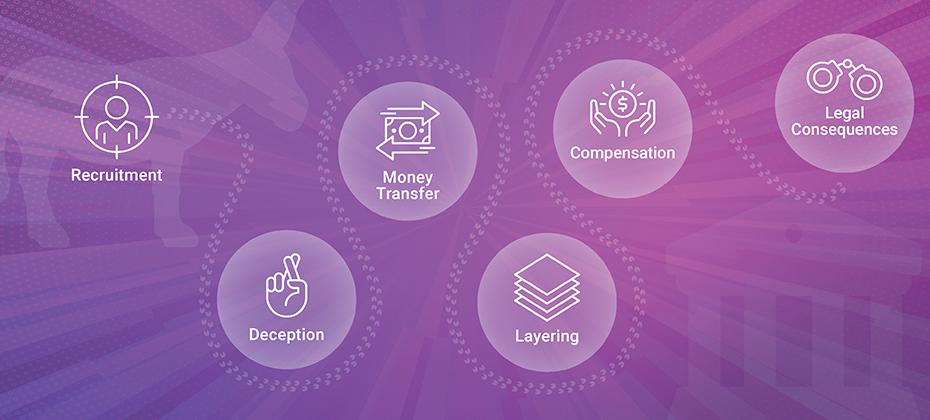
Money mule fraud is a type of financial scam in which criminals exploit individuals, known as money mules, to transfer stolen money or the proceeds of illegal activities. Money mule accounts are becoming increasingly difficult to distinguish from legitimate customers, especially as criminals find new ways to develop hard-to-detect synthetic identities. How money mule fraud typically works: Recruitment: Fraudsters seek out potential money mules through various means, such as online job ads, social media, or email/messaging apps. They will often pose as legitimate employers offering job opportunities promising compensation or claiming to represent charitable organizations. Deception: Once a potential money mule is identified, the fraudsters use persuasive tactics to gain their trust. They may provide seemingly legitimate explanations like claiming the money is for investment purposes, charity donations or for facilitating business transactions. Money Transfer: The mule is instructed to receive funds to their bank or other financial account. The funds are typically transferred from other compromised bank accounts obtained through phishing or hacking. The mule is then instructed to transfer the money to another account, sometimes located overseas. Layering: To mask the origin of funds and make them difficult to trace, fraudsters will employ layering techniques. They may ask the mule to split funds into smaller amounts, make multiple transfers to different accounts, or use various financial platforms such as money services or crypto. Compensation: The money mule is often promised a percentage of transferred funds as payment. However, the promised monies are lower than the dollars transferred, or sometimes the mule receives no payment at all. Legal consequences: Regardless whether mules know they are supporting a criminal enterprise or are unaware, they can face criminal charges. In addition, their personal information could be compromised leading to identity theft and financial loss. How can banks get ahead of the money mule curve: Know your beneficiaries Monitor inbound paymentsEngage identity verification solutionsCreate a “Mule Persona” behavior profileBeware that fraudsters will coach the mule, therefore confirmation of payee is no longer a detection solution Educate your customers to be wary of job offers that seem too good to be true and remain vigilant of requests to receive and transfer money, particularly from unknown individuals and organizations. How financial institutions can mitigate money mule fraud risk When new accounts are opened, a financial institution usually doesn’t have enough information to establish patterns of behavior with newly registered users and devices the way they can with existing users. However, an anti-fraud system should catch a known behavior profile that has been previously identified as malicious. In this situation, the best practice is to compare the new account holder’s behavior against a representative pool of customers, which will analyze things like: Spending behavior compared to the averagePayee profileSequence of actionsNavigation data related to machine-like or bot behaviorAbnormal or risky locationsThe account owner's relations to other users The risk engine needs to be able to collect and score data across all digital channels to allow the financial institution to detect all possible relationships to users, IP addresses and devices that have proven fraud behavior. This includes information about the user, account, location, device, session and payee, among others. If the system notices any unusual changes in the account holder’s personal information, the decision engine will flag it for review. It can then be actively monitored and investigated, if necessary. The benefits of machine learning This is a type of artificial intelligence (AI) that can analyze vast amounts of disparate data across digital channels in real time. Anti-fraud systems based on AI analytics and predictive analytics models have the ability to aggregate and analyze data on multiple levels. This allows a financial institution to instantly detect all possible relationships across users, devices, transactions and channels to more accurately identify fraudulent activity. When suspicious behavior is flagged via a high risk score, the risk engine can then drive a dynamic workflow change to step up security or drive a manual review process. It can then be actively monitored by the fraud prevention team and escalated for investigation. How Experian can help Experian’s fraud prevention solutions incorporate technology, identity-authentication tools and the combination of machine learning analytics with Experian’s proprietary and partner data to return optimal decisions to protect your customers and your business. To learn more about how Experian can help you leverage fraud prevention solutions, visit us online or request a call

Using data to understand risk and make lending decisions has long been a forte of leading financial institutions. Now, with artificial intelligence (AI) taking the world by storm, lenders are finding innovative ways to improve their analytical capabilities. How AI analytics differs from traditional analytics Data analytics is analyzing data to find patterns, relationships and other insights. There are four main types of data analytics: descriptive, diagnostic, predictive and prescriptive. In short, understanding the past and why something happened, predicting future outcomes and offering suggestions based on likely outcomes. Traditionally, data analysts and scientists build models and help create decisioning strategies to align with business needs. They may form a hypothesis, find and organize relevant data and then run analytics models to test their hypothesis. However, time and resource constraints can limit the traditional analytics approach. As a result, there might be a focus on answering a few specific questions: Will this customer pay their bills on time? How did [X] perform last quarter? What are the chances of [Y] happening next year? AI analytics isn't completely different — think of it as a complementary improvement rather than a replacement. It relies on advances in computing power, analytics techniques and different types of training to create models more efficient than traditional analytics. By leveraging AI, companies can automate much of the data gathering, cleaning and analysis, saving them time and money. The AI models can also answer more complex questions and work at a scale that traditional analytics can't keep up with. Advances in AI are additionally offering new ways to use and interact with data. Organizations are already experimenting with using natural language processing and generative AI models. These can help even the most non-technical employees and customers to interact with vast amounts of data using intuitive and conversational interfaces. Benefits of AI analytics The primary benefits of AI-driven analytics solutions are speed, scale and the ability to identify more complex relationships in data. Speed: Where traditional analytics might involve downloading and analyzing spreadsheets to answer a single question, AI analytics automates these processes – and many others.Scale: AI analytics can ingest large amounts of data from multiple data sources to find analytical insights that traditional approaches may miss. When combined with automation and faster processing times, organizations can scale AI analytics more efficiently than traditional analytics.Complexity: AI analytics can answer ambiguous questions. For example, a marketing team may use traditional analytics to segment customers by known characteristics, such as age or location. But they can use AI analytics to find segments based on undefined shared traits or interests, and the results could include segments that they wouldn't have thought to create on their own. The insights from data analytics might be incorporated into a business intelligence platform. Traditionally, data analysts would upload reports or update a dashboard that business leaders could use to see the results and make educated decisions. Modern business intelligence and analytics solutions allow non-technical business leaders to analyze data on their own. With AI analytics running in the background, business leaders can quickly and easily create their own reports and test hypotheses. The AI-powered tools may even be able to learn from users' interactions to make the results more relevant and helpful over time. WATCH: See how organizations are using business intelligence to unlock better lending decisions with expert insights and a live demo. Using AI analytics to improve underwriting From global retailers managing supply chains to doctors making life-changing diagnoses, many industries are turning to AI analytics to make better data-driven decisions. Within financial services, there are significant opportunities throughout customer lifecycles. For example, some lenders use machine learning (ML), a subset of AI, to help create credit risk models that estimate the likelihood that a borrower will miss a payment in the future. Credit risk models aren't new — lenders have used models and credit scores for decades. However, ML-driven models have been able to outperform traditional credit risk models by up to 15 percent.1 In part, this is because the machine learning models might use traditional credit data and alternative credit data* (or expanded FCRA-regulated data), including information from alternative financial services and buy now pay later loans. They can also analyze the vast amounts of data to uncover predictive attributes that logistic regression (a more traditional approach) models might miss. The resulting ML models can score more consumers than traditional models and do so more accurately. Lenders that use these AI-driven models may be able to expand their lending universe and increase automation in their underwriting process without taking on additional risk. However, lenders may need to use a supervised learning approach to create explainable models for credit underwriting to comply with regulations and ensure fair lending practices. Read: The Explainability: ML and AI in credit decisioning report explores why ML models will become the norm, why explainability is important and how to use machine learning. Experian helps clients use AI analytics Although AI analytics can lead to more productive and efficient analytics operations over time, the required upfront cost or expertise may be prohibitive for some organizations. But there are simple solutions. Built with advanced analytics, our Lift Premium™ scoring model uses traditional and alternative credit data to score more consumers than conventional scoring models. It can help organizations increase approvals among thin-file and credit-invisible consumers, and more accurately score thick-file consumers.2 Experian can also help you create, test, deploy and monitor AI models and decisioning strategies in a collaborative environment. The models can be trained on Experian's vast data sources and your internal data to create a custom solution that improves your underwriting accuracy and capabilities. Learn more about machine learning and AI analytics. * When we refer to “Alternative Credit Data," this refers to the use of alternative data and its appropriate use in consumer credit lending decisions as regulated by the Fair Credit Reporting Act (FCRA). Hence, the term “Expanded FCRA Data" may also apply in this instance and both can be used interchangeably. 1. Experian (2020). Machine Learning Decisions in Milliseconds 2. Experian (2022). Lift PremiumTM product sheet

Today’s digital-first world is more interconnected than ever. Financial transactions take place across borders and through various channels, leaving financial institutions and their customers at increasing risk from evolving threats like identity theft, fraud and others from sophisticated crime rings. And consumers are feeling that pressure. A recent Experian study found that over half of consumers feel like they are more of a target for online fraud than a year ago. Likewise, more than 40% of businesses reported increased fraud losses in recent years. It’s not only critical that organizations ensure the security and trustworthiness of digital transactions and online account activity to reduce risk and losses but what consumers expect. In the same Experian study, more than 85% of consumers said they expect businesses to respond to their fraud concerns, an expectation that has increased over the last several years. Businesses and financial institutions most successful at mitigating fraud and reducing risk have adopted a layered, interconnected approach to identity confirmation and fraud prevention. One vital tool in this process is identity document verification. This crucial step not only safeguards the integrity of financial systems but also protects individuals and organizations from fraud, money laundering and other illicit activities. In this blog, we will delve into the significance of identity document verification in financial services and explore how it strengthens the overall security landscape. Preventing identity theft and fraud Identity document verification plays a vital role in thwarting identity theft and fraudulent activities. By verifying the authenticity of identification documents, financial institutions can ensure that the individuals accessing their services are who they claim to be. Sophisticated verification processes, including biometric identification and document validation, help detect counterfeit documents, stolen identities and impersonation attempts. By mitigating these risks, financial institutions can protect their customers from unauthorized access to accounts, fraudulent transactions and potential financial ruin. Compliance with regulatory requirements Financial institutions operate in an environment governed by stringent regulatory frameworks designed to combat money laundering, terrorist financing and other financial crimes. Identity document verification is a key component of these regulatory requirements. By conducting thorough verification checks, financial service providers can adhere to Know Your Customer (KYC) and Anti-Money Laundering (AML) regulations. Compliance safeguards the institution's reputation and helps combat illicit financial activities that can have far-reaching consequences for national security and stability. Mitigating risk and enhancing trust Effective identity document verification mitigates risks associated with financial services. By verifying the identity of customers, financial institutions can reduce the likelihood of fraudulent activities, such as account takeovers, unauthorized transactions and loan fraud. This verification process bolsters the overall security of the financial system and creates a more trustworthy environment for stakeholders. Trust is fundamental in establishing long-lasting customer relationships and attracting new clients to financial institutions. Facilitating digital onboarding and seamless customer experience As financial services embrace digital transformation, identity document verification becomes essential for smooth onboarding processes. Automated identity verification solutions enable customers to open accounts and access services remotely, eliminating the need for in-person visits or cumbersome paperwork. By streamlining the customer experience and minimizing the time and effort required for account setup, financial institutions can attract tech-savvy individuals and enhance customer satisfaction. Combating money laundering and terrorist financing Proper document verification is a key component of combating money laundering and terrorist financing activities. By verifying customer identities, financial institutions can establish the source of funds and detect suspicious transactions that may be linked to illicit activities. This proactive approach helps protect the integrity of the financial system, supports national security efforts, and contributes to the global fight against organized crime and terrorism. Identity document verification is a vital component in the layered, interconnected approach to mitigating and preventing fraud in modern financial services. By leveraging advanced technologies and robust verification processes, financial institutions can ensure the authenticity of customer identities, comply with regulatory requirements, mitigate risk and enhance trust. As financial services continue evolving in an increasingly digital landscape, identity document verification will remain a crucial tool for safeguarding the security and integrity of the global financial system. For more information on how Experian can help you reduce fraud while delivering a seamless customer experience, visit our fraud management solutions hub. Learn more

The ability to verify customer identities is essential for financial institutions for numerous reasons: regulatory requirements, for the protection of their consumers and their business, mitigating risk and more. Being able to detect high-risk customers and large transactions is a critical component of Know Your Customer (KYC) strategies. In addition to being good business practices, this type of risk mitigation is also outlined in industry regulations. In an increasingly complex regulatory environment, companies may be faced with meeting multiple KYC and Anti-Money Laundering (AML) requirements. Actions taken to validate customers such as enhanced due diligence in KYC compliance have impacts spanning far beyond just regulatory compliance. As with any business, bottom line and budget are primary drivers for many financial institutions. Enhanced due diligence (EDD) can positively impact a business's bottom line by contributing to the reduction of fraud rates. And with increased security to discover potential fraudsters, organizations can protect both customers and reputational value. Enhanced due diligence explained: Why KYC, CIP and AML are critical in financial services EDD takes Customer Due Diligence (CDD) to the next level. Financial institutions conduct CDD to protect their organizations from financial crime. CDD is also a critical component of KYC steps to comply with AML laws. AML legislation requires financial institutions to validate their customers to ensure they aren’t part of explicitly illegal financial activity or funding terrorism. EDD is, as it sounds, a more involved form of due diligence, which encompasses additional procedures. EDD involves determining a customer’s risk, often requiring additional information and evidence to determine their viability. While CDD is performed on all customers, EDD is reserved for high-risk potential customers. Because EDD is often more costly and involved in terms of time and resources, a risk-based approach is recommended to flag only the instances when this additional level of validity is required. KYC references the mandatory process of identifying and verifying a client’s identity at account opening and over the course of their relationship with a company to ensure they are the person they say they are. KYC consists of three parts: Customer identification program (CIP), CDD and EDD. CIP requires, at minimum, that financial institutions provide four pieces of identifying information including name, date of birth, address and identification number. CDD consists of classifying the identifying information that was collected. After identifying who the client is (via CIP), CDD assesses the information to determine risk. Enhanced due diligence in KYC In order to establish a competent EDD program, you must improve your CIP and KYC programs. Objective, automated and efficient identity verification capabilities help you acquire profitable, legitimate customers and monitor them effectively over time to meet regulatory compliance expectations. How can EDD benefit your business? Failing to comply with EDD regulations can result in countless risks for financial institutions like fines and reputational losses. While many customers pose little to no risk, high-risk individuals must be flagged quickly and efficiently. The primary benefit of EDD is to protect both financial institutions and their customers from financial crimes such as money laundering and terrorist financing, but there are other risks as well. By mitigating potential risks associated with higher-risk customers, EDD can prevent financial institutions from incurring regulatory fines, legal action, and damage to their reputation. In turn, this ensures that customers have more trust in their financial service providers. Financial institutions can then gain a competitive advantage by offering more secure financial products and services that investors, businesses and customer demand. Access EDD from Experian Experian leverages our advanced analytics, reliable data sources, and team of experts to conduct objective, full and comprehensive due diligence with confidence and certainty. Our solutions, including flexible monitoring and segmentation tools, allow you to resolve discrepancies and fraud risk in a single step, all while keeping pace with emerging fraud threats with effective customer identification software. Improving your Customer Identification Program (CIP) and KYC programs In conclusion, Enhanced Due Diligence in KYC, CIP, and AML are critical components of the financial services regulatory compliance framework. EDD goes beyond the standard KYC, CIP, and AML checks to mitigate risks associated with higher-risk customers. Implementing EDD can help financial institutions comply with regulatory requirements, protect against potential risks, and prevent financial crimes. Ultimately, this benefits not only the institutions but also their customers and the broader economy. It’s vital that financial institutions understand and appreciate the importance of EDD and take appropriate measures to implement it effectively. Experian offers objective, automated and efficient identity verification solutions to help you acquire profitable, legitimate customers and monitor them over time to meet regulatory compliance expectations. Discover the power of CIP and KYC solutions. Learn more

More than half of U.S. businesses say they discuss fraud management often, making fraud detection in banking top-of-mind. Banking fraud prevention can seem daunting, but with the proper tools, banks, credit unions, fintechs, and other financial institutions can frustrate and root out fraudsters while maintaining a positive experience for good customers. What is banking fraud? Banking fraud is a type of financial crime that uses illegal means to obtain money, assets, or other property owned or held by a bank, other financial institution, or customers of the bank. This type of fraud can be difficult to detect when misclassified as credit risk or written off as a loss rather than investigated and prevented in the future. Fraud that impacts financial institutions consists of small-scale one-off events or larger efforts perpetrated by fraud rings. Not long ago, many of the techniques utilized by fraudsters required in-person or phone-based activities. Now, many of these activities are online, making it easier for fraudsters to disguise their intent and perpetrate multiple attacks at once or in sequence. Banking fraud can include: Identity theft: When a bad actor steals a consumer’s personal information and uses it to take money, open credit accounts, make purchases, and more. Check fraud: This type of fraud occurs when a fraudster writes a bad check, forges information, or steals and alters someone else’s check. Credit card fraud: A form of identity theft where a bad actor makes purchases or gets a cash advance in the name of an unsuspecting consumer. The fraudster may takeover an existing account by gaining access to account numbers online, steal a physical card, or open a new account in someone else’s name. Phishing: These malicious efforts allow scammers to steal personal and account information through use of email, or in the case of smishing, through text messages. The fraudster often sends a link to the consumer that looks legitimate but is designed to steal login information, personally identifiable information, and more. Direct deposit account fraud: Also known as DDA fraud, criminals monetize stolen information to open new accounts and divert funds from payroll, assistance programs, and more. Unfortunately, this type of fraud doesn’t just lead to lost funds – it also exposes consumer data, impacts banks’ reputations, and has larger implications for the financial system. Today, top concerns for banks include generative AI (GenAI) fraud, peer-to-peer (P2P) payment scams, identity theft and transaction fraud. Without the proper detection and prevention techniques, it’s difficult for banks to keep fraudsters perpetrating these schemes out. What is banking fraud prevention? Detecting and preventing banking fraud consists of a set of techniques and tasks that help protect customers, assets and systems from those with malicious intent. Risk management solutions for banks identify fraudulent access attempts, suspicious transfer requests, signs of false identities, and more. The financial industry is constantly evolving, and so are fraudsters. As a result, it’s important for organizations to stay ahead of the curve by investing in new fraud prevention technologies. Depending on the size and sophistication of your institution, the tools and techniques that comprise your banking fraud prevention solutions may look different. However, every strategy should include multiple layers of friction designed to trip up fraudsters enough to abandon their efforts, and include flags for suspicious activity and other indicators that a user or transaction requires further scrutiny. Some of the emerging trends in banking fraud prevention include: Use of artificial intelligence (AI) and machine learning (ML). While these technologies aren’t new, they are finding footing across industries as they can be used to identify patterns consistent with fraudulent activity – some of which are difficult or time-consuming to detect with traditional methods. Behavioral analytics and biometrics. By noting standard customer behaviors — e.g., which devices they use and when — and how they use those devices — looking for markers of human behavior vs. bot or fraud ring activity — organizations can flag riskier users for additional authentication and verification. Leveraging additional data sources. By looking beyond standard credit reports when opening credit accounts, organizations can better detect signs of identity theft, synthetic identities, and even potential first-party fraud. With real-time fraud detection tools in place, financial institutions can more easily identify good consumers and allow them to complete their requests while applying the right amount and type of friction to detect and prevent fraud. How to prevent and detect banking fraud In order to be successful in the fight against fraud and keep yourself and your customers safe, financial institutions of all sizes and types must: Balance risk mitigation with the customer experience Ensure seamless interactions across platforms for known consumers who present little to no risk Leverage proper identity resolution and verification tools Recognize good consumers and apply the proper fraud mitigation techniques to riskier scenarios With Experian’s interconnected approach to fraud detection in banking, incorporating data, analytics, fraud risk scores, device intelligence, and more, you can track and assess various activities and determine where additional authentication, friction, or human intervention is required. Learn more

Experian’s eighth annual identity and fraud report found that consumers continue to express concerns with online security, and while businesses are concerned with fraud, only half fully understand its impact – a problem we previously explored in last year’s global fraud report. In our latest report, we explore today’s evolving fraud landscape and influence on identity, the consumer experience, and business strategies. We surveyed more than 2,000 U.S. consumers and 200 U.S. businesses about their concerns, priorities, and investments for our 2023 Identity and Fraud Report. This year’s report dives into: Consumer concerns around identity theft, credit card fraud, online privacy, and scams such as phishing.Business allocation to fraud management solutions across industries.Consumer expectations for both security and their experience.The benefits of a layered solution that leverages identity resolution, identity management, multifactor authentication solutions, and more. To identify and treat each fraud type appropriately, you need a layered approach that keeps up with ever-changing fraud and applies the right friction at the right time using identity verification solutions, real-time fraud risk alerts, and enterprise orchestration. This method can reduce fraud risks and help provide a more streamlined, unified experience for your consumers. To learn more about our findings and how to implement an effective solution, download Experian’s 2023 Identity and Fraud Report. Download the report

‘Big data’ might not be the buzzword du jour, but it's here to stay. Whether trying to improve your customer experience, portfolio performance, automation, or new AI capabilities, access to quality data from varying data sources can create growth opportunities. 85 percent of organizations believe that poor-quality customer contact data negatively affects their operations and efficiencies, which leads to wasted resources and damages their brand. And 77 percent said that inaccurate data hurt their response to market changes during the pandemic.1 If you want to use data to drive your business forward, consider where the data comes from and how you can glean useful insights. What is a data source? A data source is a location where you can access information. It's a broad description because data sources can come in different formats — the definition depends on how the data is being used rather than a specific storage type. For example, you can get data from a spreadsheet, sensors on an internet of things device or scrape it from websites. You might store the data you gather using different types of databases. And in turn, those databases can be data sources for other programs or organizations. Types of data sources Many organizations have chief data officers, along with data engineers, scientists and analysts who gather, clean, organize and manage data. This important work relies on understanding the technical aspects of varying data sources and connections. And it can turn a disorganized pool of data into structured databases that business leaders can easily access and analyze. From a non-technical point of view, it’s important to consider where the data comes from and the pros and cons of these data sources. For instance, marketers might define data sources as: First-party data: The data collected about customers and prospects, such as account details, transaction history and interactions with your website or app. The data can be especially valuable and insightful when you can connect the dots between previously siloed data sources within your organization.Zero-party data: Some organizations have a separate classification for information that customers voluntarily share, such as their communication preferences and survey results. It can be helpful to view this data separately because it reflects customers' desires and interests, which can be used to further customize your messaging and recommendations.Second-party data: Another organization's first-party data can be your second-party data if you purchase it or have a partnership that involves data sharing or data collaboration. Second-party data can be helpful because you know exactly where the information comes from and it can complement information you already have about customers or prospects.Third-party data: Third-party data comes from aggregators that collect and organize information from multiple sources. It can further enrich your customer view to improve marketing, underwriting, customer service and collection efforts. READ: The Realizing a Single Customer View white paper explores how organizations can use high-quality data to better understand their customers. How can a data-driven approach benefit your business? Organizations use data science to make sense of the increasingly large flow of information from varying data sources. A clear view can be important for driving growth and responding to changing consumer preferences and economic uncertainty. A 2022 survey of U.S. organizations found high-quality data can help:2 Grow your business: 91 percent said investing in data quality helped business growth.Improve customer experience: 90 percent said better data quality led to better customer experiences.Increase agility: 89 percent said best practices for data quality improved business agility. You can see these benefits play out in different areas. For example, you can more precisely segment customers based on reliable geographic, demographic, behavioral and psychographic data. Or combine data sources to get a more accurate view of consumer risk and increase your AI-powered credit risk decisioning capabilities. But building and scaling data systems while maintaining good quality isn't easy. Many organizations have to manage multiple internal and external data sources, and these can feed into databases that don't always communicate with one another. Most organizations (85 percent) are looking toward automation to improve efficiency and make up for skill shortages. Most are also investing in technology to help them monitor, report and visualize data — making it easier to understand and use.3 WATCH: See how you can go from data to information to insight and foresight in the Using Business Intelligence to Unlock Better Lending Decisions webinar. Access high-quality data from Experian Digital acceleration has made accessing quality data more important than ever. This includes learning how to collect and manage your zero- and first-party data. Experian's data quality management solutions can help you aggregate, cleanse and monitor your data. And the business intelligence tools and platform democratize access, allowing non-technical business leaders to find meaningful insights. You can also enhance your data sets with second- and third-party data. Our industry-leading data sources have information on over 245 million consumers and 32 million businesses, including proprietary data assets. These include traditional credit bureau data, alternative credit data, automotive data, commercial credit data, buy now pay later data, fraud data and residential property data. And you can use our API developer portal to access additional third-party data sources within the same interface. Learn more about Experian's data sources. 1. Experian (2022). 2022 Global Data Management Research Report2. Experian (2022). The Data Quality Imperative3. Ibid.

Banking uncertainty creates opportunity for fraud The recent regional bank collapses left anxious consumers scrambling to withdraw their funds or open new accounts at other institutions. Unfortunately, this situation has also created an opportunity for fraudsters to take advantage of the chaos. Criminals are exploiting the situation and posing as legitimate customers looking to flee their current bank to open new accounts elsewhere. Financial institutions looking to bring on these consumers as new clients must remain vigilant against fraudulent activity. Fraudsters also prey on vulnerable individuals who may be financially stressed and uncertain about the future. This creates a breeding ground for scams as fear and uncertainty cloud judgment and make people more susceptible to manipulation. Beware of fraudulent tactics Now, it is more important than ever for financial institutions to be vigilant in their due diligence processes. As they navigate this period of financial turbulence, they must take extra precautions to ensure that new customers are who they say they are by verifying customer identities, conducting thorough background checks where necessary, and monitoring transactions for any signs of suspicious activity. Consumers should also maintain vigilance — fraudulent schemes come in many forms, from phishing scams to fake investment opportunities promising unrealistic returns. To protect yourself against these risks, it is important to remain vigilant and take precautions such as verifying the legitimacy of any offers or investments before investing, monitoring your bank and credit card statements regularly for suspicious activity, and being skeptical of unsolicited phone calls, emails, or text messages. Security researcher Johannes Ulrich reported that threat actors are jumping at the opportunity, registering suspicious domains related to Silicon Valley Bank (SVB) that are likely to be used in attacks. Ulrich warned that the scammers might try to contact former clients of SVB to offer them a support package, legal services, loans, or other fake services relating to the bank's collapse. Meanwhile, on the day of the SVB closure, synthetic identity fraud began to climb from an attack rate of .57 to a first peak of 1.24% on the Sunday following the closure, or an increase of 80%. After the first spike reduced on March 14, we only saw a return of an even higher spike on March 21 to 1.35%, with bumps continuing since then. As the economy slows and fraud rises, don’t let your guard down The recent surge in third-party attack rates on small business and investment platforms is a cause for concern. There was a staggering nearly 500% increase in these attacks between March 7th and 11th, which coincided with the release of negative news about SVB. Bad actors had evidently been preparing for this moment and were quick to exploit vulnerabilities they had identified across our financial system. They used sophisticated bots to create multiple accounts within minutes of the news dropping and stole identities to perpetrate fraudulent activities. This underscores the need for increased vigilance and proactive measures to protect against cyber threats impacting financial institutions. Adopting stronger security measures like multi-factor authentication, real-time monitoring, and collaboration with law enforcement agencies for timely identification of attackers is of paramount importance to prevent similar fraud events in the future. From frictionless to friction-right As businesses seek to stabilize their operations in the face of market turbulence, they must also remain vigilant against the threat of fraud. Illicit activities can permeate a company's ecosystem and disrupt its operations, potentially leading to financial losses and reputational damage. Safeguarding against fraud is not a simple task. Striking a balance between ensuring a smooth customer experience and implementing effective fraud prevention measures can be a challenging endeavor. For financial institutions in particular, being too stringent in fraud prevention efforts may drive customers away, while being too lenient can expose them to additional fraud risks. This is where a waterfall approach, such as that offered by Experian CrossCore®, can prove invaluable. By leveraging an array of fraud detection tools and technologies, businesses can tailor their fraud prevention strategies to suit the specific needs and journeys of different customer segments. This layered, customized approach can help protect businesses from fraud while ensuring a seamless customer experience. Learn more

Every data-driven organization needs to turn raw data into insights and, potentially, foresight. There was a time when lack of data was a hindrance, but that's often no longer the case. Many organizations are overwhelmed with too much data and lack clarity on how to best organize or use it. Modern business intelligence platforms can help. And financial institutions can use business intelligence analytics to optimize their decisioning and uncover safe growth opportunities. What is business intelligence? Business intelligence is an overarching term for the platforms and processes that organizations use to collect, store, analyze and display data and information. The ability to go from raw data to useful insights and foresight presents organizations with a powerful advantage, and can help them greatly improve their operations and efficiencies. Let’s pause and break down the below terms before expanding on business intelligence. Data: The raw information, such as customers' credit scores. Many organizations collect so much data that keeping it all can be an expensive challenge. Access to new types of data, such as alternative credit data, can assist with decisioning — but additional data points are only helpful if you have the resources or expertise to process and analyze them.Information: Once you process and organize data points, you can display the resulting information in reports, dashboards, and other visualizations that are easier to understand. Therefore, turning raw data into information. For example, the information you acquire might dictate that customers with credit scores over 720 prefer one of your products twice as much as your other products.Insight: The information tells you what happened, but you must analyze it to find useful and actionable insights. There could be several reasons customers within a specific score band prefer one product over another, and insights offer context and help you decide what to do next. In addition, you could also see what happened to the customers who were not approved.Foresight: You can also use information and insights to make predictions about what can happen or how to act in the future given different scenarios. For example, how your customers' preferences will likely change if you offer new terms, introduce a new product or there's a large economic shift. Business intelligence isn't new — but it is changing. Traditionally, business intelligence heavily relied on IT teams to sift through the data and generate reports, dashboards and other visualizations. Business leaders could ask questions and wait for the IT team to answer the queries and present the results. Modern business intelligence platforms make that process much easier and offer analytical insights. Now even non-technical business leaders can quickly answer questions with cloud-based and self-service tools. Business intelligence vs. business intelligence analytics Business intelligence can refer to the overall systems in place that collect, store, organize and visualize your data. Business intelligence tends to focus on turning data into presentable information and descriptive analytics — telling you what happened and how it happened. Business intelligence analytics is a subset of business intelligence that focuses on diagnostics, predictive and prescriptive analytics. In other words, why something happened, what could happen in the future, and what you should do. Essentially, the insights and foresight that are listed above. How can modern business intelligence benefit lenders? A business intelligence strategy and advanced analytics and modeling can help lenders precisely target customers, improve product offerings, streamline originations, manage portfolios and increase recovery rates. More specifically, business intelligence can help lenders uncover various trends and insights, such as: Changes in consumers' financial health and credit behavior.How customers' credit scores migrate over time.The risk performance of various portfolios.How product offerings and terms compare to competitors.Which loans are they losing to peers?Which credit attributes are most predictive for their target market? Understanding what's working well today is imperative. But your competitors aren't standing still. You also need to monitor trends and forecast the impact — good or bad — of various changes. WATCH: Webinar: Using Business Intelligence to Unlock Better Lending Decisions Using business intelligence to safely grow your portfolio Let's take a deeper dive into how business intelligence could help you grow your portfolio without taking on additional risk. It's an appealing goal that could be addressed in different ways depending on the underlying issue and business objective. For example, you might be losing loans to peers because of an acquisition strategy that's resulting in declining good customers. Or, perhaps your competitors' products are more appealing to your target customers. Business intelligence can show you how many applications you received, approved, and booked — and how many approved or declined applicants accepted a competitor's offer. You can segment and analyze the results based on the applicant’s credit scores, income, debt-to-income, loan amounts, loan terms, loan performance and other metrics. An in-depth analysis might highlight meaningful insights. For example, you might find that you disproportionately lost longer-term loans to competitors. Perhaps matching your competitors' long-term loan offerings could help you book more loans. READ: White paper: Getting AI-driven decisioning right in financial services Experian's business intelligence analytics solutions Lenders can use modern business intelligence platforms to better understand their customers, products, competitors, trends, and the potential impact of shifting economic circumstances or consumer behavior. Experian's Ascend Intelligence Services™ suite of solutions can help you turn data points into actionable insights. Ascend Intelligence Services™ Acquire Model: Create custom machine learning models that can incorporate internal, bureau and alternative credit data to more accurately assess risk and increase your lending universe.Ascend Intelligence Services™ Acquire Strategy: Get a more granular view of applicants that can help you improve segmentation and increase automation.Ascend Intelligence Services™ Pulse: A model and strategy health dashboard that can help you proactively identify and remediate issues and nimbly react to market changes.Ascend Intelligence Services™ Limit: Set and manage credit limits during account opening and when managing accounts to increase revenue and mitigate risk.Ascend Intelligence Services™ Foresight: A modern business intelligence platform that offers easy-to-use tools that help business leaders make better-informed decisions. Businesses can also leverage Experian's industry-leading data assets and expertise with various types of project-based and ongoing engagements. Learn more about how you can implement or benefit from business intelligence analytics.