Apply DA Tag

The fraud problem is ever-present, with 94% of businesses reporting it as a top priority, and fraudsters constantly finding new targets for theft. Preventing fraud requires a carefully orchestrated strategy that can recognize and treat a variety of types — without adding so much friction that it drives customers away. Experian’s fraud prevention and detection platform, CrossCore®, was recently named an Overall Leader, Product Leader in Fraud Reduction Intelligence Platforms, Innovation Leader and Market Leader in Fraud Reduction by KuppingerCole. CrossCore is an integrated digital identity and fraud risk platform that enables organizations to connect, access, and orchestrate decisions that leverage multiple data sources and services. CrossCore combines risk-based authentication, identity proofing, and fraud detection into a single, state-of-the-art cloud platform. It engages flexible decisioning workflows and advanced analytics to make real-time risk decisions throughout the customer lifecycle. This recognition highlights Experian’s comprehensive approach to combating fraud and validates that CrossCore offers best-in-class capabilities by augmenting Experian’s industry-leading identity and fraud offerings with a highly curated ecosystem of partners which enables further optionality for organizations based on their specific needs. To learn more about how CrossCore can benefit your organization, read the report or visit us. Learn more

Breaking down, rethinking, and optimizing your debt collection recovery process can be complicated — but you risk falling behind if you don't invest in your business. From managing live agents to unlocking the latest machine-learning models, there are different options and routes you can take to improve recovery rates. Debt collection challenges in 2023 Collection agencies have embraced digitization. The benefits are numerous — cost savings, streamlined processes, and improved compliance, to name a few. However, digital tools aren't cure-alls, and they can even create new challenges if you're not careful. Maintaining accurate consumer data: Quickly reaching consumers can be difficult during times of economic uncertainty. Increased access to data can help you overcome this challenge, but only if you can manage and understand the information. If you simply turn on the metaphorical data streams, you could find yourself drowning in duplicate and erroneous entries. Keeping up with rising delinquencies: Delinquency rates steadily rose throughout 2022.1 Although rates may level out for some types of accounts in 2023, collection agencies need a plan for dealing with the potential increased volume. At the same time, continued low unemployment rates could make it difficult to hire and retain agents. Managing a tight budget: Recession worries also have companies rethinking expenses, which can impact your ability to increase head count and invest in technology. Finding effective trade-offs is going to be important for debt collection process optimization. Staying compliant: We've seen some major changes over the last few years, but there's no time to rest — debt collectors always need to be aware of new state and federal regulations. Digitization might make compliance more difficult if you're now managing an increasing amount of personal information or using text messages (or other omni-channels) to contact consumers. WATCH:Keeping pace with collections compliance changes Five ways to enhance your debt collection process Here are five ways that debt collectors can overcome today's challenges and take advantage of new opportunities. 1. Leverage clean data Continuously updating and checking the accuracy of your data can help increase right-party contact rates. But don't rely on your internal data and basic internet searches or public records. Leading data and skip-tracing services can give you access to additional data from credit bureaus, alternative financial services, collateral records, business listings and other helpful sources. Some skip-tracing tools can continuously verify and update contact information. They can also rank contact records, such as phone numbers, to save your agent's time. And identify consumers in a protected status such as bankrupt, deceased, and active military) and require special handling to help you stay compliant. 2. Implement advanced analytics and automation High-quality data can also be the foundation for a data-driven approach to collections. Use collections-specific models: Although credit risk scores can be a piece of the debt collection puzzle, debt collection recovery models are often a better fit. You may be able to use different models to score accounts based on exposure, risk, willingness to pay or behavioral factors. Segment accounts: Increased insights and models also allow you to more precisely segment accounts, which can help you handle larger volumes with fewer resources. For instance, you can more accurately determine which accounts require an agent's personal touch, which can move forward with an automated experience and which should go to the back of your queue. The data-driven approach also allows you to increasingly automate your collections — which can help you deal with rising delinquency rates in the face of a tight labor market and budget constraints. 3. Know when and how to make contact Segmentation and advanced analytics can tell you who and when to contact, but you also have to be mindful of how you reach out. Letters, calls, emails and texts can all be effective in the right circumstances, but no single option will always be best. For example, a text could be ideal when contacting Gen Z, but a call might work best for Baby Boomers. That's neither novel nor surprising, but it is important to stay up to date with the latest trends and preferences. Ideally, you reach people on their preferred channel at an appropriate time. You may also need to continually test, monitor and refine your process, especially if you want to increase automation. READ:Digital Debt Collection Future white paper 4. Offer financially appropriate treatments In addition to picking the right communication channel, consider the payment options you offer consumers. Various payment plans, settlements and policies can directly affect your recovery rates — and what performed best in previous years might not make sense anymore. Chatbots and virtual negotiators can also help improve recovery rates without straining your agents' time. And for accounts that will likely self-cure, automated texts or emails with links to self-service portals could be an ideal solution. Expanding payment methods, such as accepting payments from digital wallets when you're sending a text message, could also make sense. However, you want to be sure you're not wasting time or money by contacting consumers who don't have the means to make a payment. Instead, set those accounts aside for now, but monitor them for changes that could indicate their financial situation has changed — such as a new credit line. Then, try to offer a solution that will likely fit the consumer's circumstances. 5. Invest in your live agents Modern debt management and collection systems focus on digitization and automation, and these can improve recovery rates. But don't forget about your front-line agents. There will always be times when a personal touch gets you further than an automated message. Continued training and ongoing recognition can be important for retaining top performers, maintaining compliance and increasing agents' effectiveness. Partner for success Implementing an efficient and effective collections strategy can require a lot of work, but you don't have to go at it alone. Experian offers various debt collection solutions that can help optimize processes and free up your organization's resources and agents' time. Tap into our industry-leading data sources — including traditional credit data, alternative financial data and over 5,000 local phone exchange carriers — to find, update and verify account information. Available on the cloud or with secure file transfers, the TrueTrace™ and TrueTrace Live™ tools have led to a 10 percent lift in right-party contact rates compared to competitors. When it comes to optimizing outreach, you can prioritize accounts with over 60 industry-specific debt recovery scores via PriorityScore for CollectionsSM. Or work with Experian to create custom models for your organization. For an end-to-end decisioning solution, our AI-driven Experian Decisioning solution draws from internal and external data to determine the proper customer contact frequency, channel and treatment options, including self-service portals. Create your own strategies and workflows and manage the entire process with a single dashboard, cloud-based access and integrated reports. Learn more about Experian's debt collection process solutions 1Experian. (February 2023). Credit Scores Steady as Consumer Debt Balances Rise in 2022

The science of turning historical data into actionable insights is far from magic. And while organizations have successfully used predictive analytics for years, we're in the midst of a transformation. New tools, vast amounts of data, enhanced computing power and decreasing implementation costs are making predictive analytics increasingly accessible. And business leaders from varying industries and functions can now use the outcomes to make strategic decisions and manage risk. What is predictive analytics? Predictive analytics is a type of data analytics that uses statistical modeling and machine learning techniques to make predictions based on historical data. Organizations can use predictive analytics to predict risks, needs and outcomes. You might use predictive analytics to make an immediate decision. For example, whether or not to approve a new credit application based on a credit score — the output from a predictive credit risk model. But organizations can also use predictive analytics to make long-term decisions, such as how much inventory to order or staff to hire based on expected demand. How can predictive business analytics help a business succeed? Businesses can use predictive analytics in different parts of their organizations to answer common and critical questions. These include forecasting market trends, inventory and staffing needs, sales and risk. With a wide range of potential applications, it’s no surprise that organizations across industries and functions are using predictive analytics to inform their decisions. Here are a few examples of how predictive analytics can be helpful: Financial services: Financial institutions can use predictive analytics to assess credit risk, detect fraudulent applicants or transactions, cross-sell customers and limit losses during recovery. Healthcare: Using data from health records and medical devices, predictive models can predict patient outcomes or identify patients who need critical care. Manufacturing: An organization can use models to predict when machines need to be turned off or repaired to improve their longevity and avoid accidents. Retail: Brick-and-mortar retailers might use predictive analytics when deciding where to expand, what to cross-sell loyalty program members and how to improve pricing. Hospitality: A large hospitality group might predict future reservations to help determine how much staff they need to hire or schedule. Advanced techniques in predictive modeling for financial services Emerging technologies, particularly AI and machine learning (ML), are revolutionizing predictive modeling in the financial sector by providing more accurate, faster and more nuanced insights. Taking a closer look at financial services, consider how an organization might use predictive credit analytics and credit risk scores across the customer lifecycle. Marketing: Segment consumers to run targeted marketing campaigns and send prescreened credit offers to the people who are most likely to respond. AI models can analyze customer data to offer personalized offers and product recommendations. Underwriting: AI technologies enable real-time data analysis, which is critical for underwriting. The outputs from credit risk models can help you to quickly approve, deny or send applications for manual review. Explainable machine learning models may be able to expand automation and outperform predictive models built with older techniques by 10 to 15 percent.1 Fraud detection models can also raise red flags based on suspicious information or behaviors. Account management: Manage portfolios and improve customer retention, experience and lifetime value. The outputs can help you determine when you should adjust credit lines and interest rates or extend offers to existing customers. AI can automate complex decision-making processes by learning from historical data, reducing the need for human intervention and minimizing human error. Collections: Optimize and automate collections based on models' predictions about consumers' propensity to pay and expected recovery amounts. ML models, which are capable of processing vast amounts of unstructured data, can uncover complex patterns that traditional models might miss. Although some businesses can use unsupervised or “black box" models, regulations may limit how financial institutions can use predictive analytics to make lending decisions. Fortunately, there are ways to use advanced analytics, including AI and ML, to improve performance with fully compliant and explainable credit risk models and scores. WHITE PAPER: Getting AI-driven decisioning right in financial services Developing predictive analytics models Going from historical data to actionable analytics insights can be a long journey. And if you're making major decisions based on a model's predictions, you need to be confident that there aren’t any missteps along the way. Internal and external data scientists can oversee the process of developing, testing and implementing predictive analytics models: Define your goal: Determine the predictions you want to make or problems you want to solve given the constraints you must act within. Collect data: Identify internal and external data sources that house information that could be potentially relevant to your goal. Prepare the data: Clean the data to prepare it for analysis by removing errors or outliers and determining if more data will be helpful. Develop and validate models: Create predictive models based on your data, desired outcomes and regulatory requirements. Deciding which tools and techniques to use during model development is part of the art that goes into the science of predictive analytics. You can then validate models to confirm that they accurately predict outcomes. Deploy the models: Once a model is validated, deploy it into a live environment to start making predictions. Depending on your IT environment, business leaders may be able to easily access the outputs using a dashboard, app or website. Monitor results: Test and monitor the model to ensure it's continually meeting performance expectations. You may need to regularly retrain or redevelop models using training data that better reflects current conditions. Depending on your goals and resources, you may want to start with off-the-shelf predictive models that can offer immediate insights. But if your resources and experience allow, custom models may offer more insights. CASE STUDY: Experian worked with one of the largest retail credit card issuers to develop a custom acquisition model. The client's goal was to quickly replace their outdated custom model while complying with their model governance requirements. By using proprietary attribute sets and a patented advanced model development process, Experian built a model that offered 10 percent performance improvements across segments. Predictive modeling techniques Data scientists can use different modeling techniques when building predictive models, including: Regression analysis: A traditional approach that identifies the most important relationships between two or more variables. Decision trees: Tree-like diagrams show potential choices and their outcomes. Gradient-boosted trees: Builds on the output from individual decision trees to train more predictive trees by identifying and correcting errors. Random forest: Uses multiple decision trees that are built in parallel on slightly different subsets of the training data. Each tree will give an output, and the forest can analyze all of these outputs to determine the most likely result. Neural networks: Designed to mimic how the brain works to find underlying relationships between data points through repeated tests and pattern recognition. Support vector machines: A type of machine learning algorithm that can classify data into different groups and make predictions based on shared characteristics. Experienced data scientists may know which techniques will work well for specific business needs. However, developing and comparing several models using different techniques can help determine the best fit. Implementation challenges and solutions in predictive analytics Integrating predictive analytics into existing systems presents several challenges that range from technical hurdles to external scrutiny. Here are some common obstacles and practical solutions: Data integration and quality: Existing systems often comprise disparate data sources, including legacy systems that do not easily interact. Extracting high-quality data from these varied sources is a challenge due to inconsistent data formats and quality. Implementing robust data management practices, such as data warehousing and data governance frameworks, ensure data quality and consistency. The use of APIs can facilitate seamless data integration. Scalability: Predictive business analytics models that perform well in a controlled test environment may not scale effectively across the entire organization. They can suffer from performance issues when deployed on a larger scale due to increased data volumes and transaction rates. Invest in scalable infrastructure, such as cloud-based platforms that can dynamically adjust resources based on demand. Regulatory compliance: Financial institutions are heavily regulated, and any analytics tool must comply with existing laws — such as the Fair Credit Reporting Act in the U.S. — which govern data privacy and model transparency. Including explainable AI capabilities helps to ensure transparency and compliance in your predictive models. Compliance protocols should be regularly reviewed to align with both internal audits and external regulations. Expertise: Predictive analytics requires specialized knowledge in data science, machine learning and analytics. Develop in-house expertise through training and development programs or consider partnerships with analytics firms to bridge the gap. By addressing these challenges with thoughtful strategies, organizations can effectively integrate predictive analytics into their systems to enhance decision-making and gain a competitive advantage. From prediction to prescription While prediction analytics focuses on predicting what may happen, prescription analytics focuses on what you should do next. When combined, you can use the results to optimize decisions throughout your organization. But it all starts with good data and prediction models. Learn more about Experian's predictive modeling solutions. 1Experian (2020). Machine Learning Decisions in Milliseconds *This article includes content created by an AI language model and is intended to provide general information.

The rise of the digital channel lead to a rise in new types of fraud – like cryptocurrency and buy now, pay later scams. While the scams themselves are new, they’re based on tried-and-true schemes like account takeover and synthetic identity fraud that organizations have been working to thwart for years, once again driving home the need for a robust fraud solution. While the digital channel is extremely attractive to many consumers due to convenience, it represents a balancing act for organizations – especially those with outdated fraud programs who are at increased risk for fraud. As organizations look for ways to keep themselves and the consumers they serve safe, many turn to fraud risk mitigation. What are fraud risk management strategies? Fraud risk management is the process of identifying, understanding, and responding to fraud risks. Proper fraud risk management strategies involve creating a program that detects and prevents fraudulent activity and reduces the risks associated with fraud. Many fraud risk management strategies are built on five principles: Fraud Risk AssessmentFraud Risk GovernanceFraud PreventionFraud DetectionMonitoring and Reporting By understanding these principles, you can build an effective strategy that meets consumer expectations and protects your business. Fraud risk assessment Fraud protection begins with an understanding of your organization’s vulnerabilities. Review your top risk areas and consider the potential losses you could face. Then look at what controls you currently have in place and how you can dial those up or down to impact both risk and customer experience. Fraud risk governance Fraud risk governance generally takes the form of a program encompassing the structure of rules, practices, and processes that surround fraud risk management. This program should include the fraud risk assessment, the roles and responsibilities of various departments, procedures for fraud events, and the plan for on-going monitoring. Fraud prevention “An ounce of prevention is worth a pound of cure.” This adage certainly rings true when it comes to fraud risk management. Having the right controls and procedures in place can help organizations stop a multitude of fraud types before they even get a foot in the door. Account takeover fraud prevention is an ideal example of how organizations can keep themselves and consumers safe. Fraud detection The only way to stop 100% of fraud is to stop 100% of interactions. Since that’s not a sustainable way to run a business, it’s important to have tools in place to detect fraud that’s already entered your ecosystem so you can stop it before damage occurs. These tools should monitor your systems to look for anomalies and risky behaviors and have a way to flag and report suspicious activity. Monitoring and reporting Once your fraud detection system is in place, you need active monitoring and reporting set up. Some fraud detection tools may include automatic next steps for suspicious activity such as step-up authentication or another risk mitigation technique. In other cases, you’ll need to get a person involved. In these cases it’s critical to have documented procedure and routing in place to ensure that potential fraud is assessed and addressed in a timely fashion. How to implement fraud risk management By adhering to the principles above, you can gain a holistic view of your current risk level, determine where you want your risk level to be, and what changes you’ll need to make to get there. While you might already have some of the necessary tools in place, the right next step is usually finding a trusted partner who can help you review your current state and help you use the right fraud prevention services that fit your risk tolerance and customer experience goals. To learn more about how Experian can help you leverage fraud prevention solutions, visit us or request a call. Learn more

With nearly seven billion credit card and personal loan acquisition mailers sent out last year, consumers are persistently targeted with pre-approved offers, making it critical for credit unions to deliver the right offer to the right person, at the right time. How WSECU is enhancing the lending experience As the second-largest credit union in the state of Washington, Washington State Employees Credit Union (WSECU) wanted to digitalize their credit decisioning and prequalification process through their new online banking platform, while also providing members with their individual, real-time credit score. WSECU implemented an instant credit decisioning solution delivered via Experian’s Decisioning as a ServiceSM environment, an integrated decisioning system that provides clients with access to data, attributes, scores and analytics to improve decisioning across the customer life cycle. Streamlined processes lead to upsurge in revenue growth Within three months of leveraging Experian’s solution, WSECU saw more members beginning their lending journey through a digital channel than ever before, leading to a 25% increase in loan and credit applications. Additionally, member satisfaction increased with 90% of members finding the simplified process to be more efficient and requiring “low effort.” Read our case study for more insight on using our digital credit solutions to: Prequalify members in real-time at point of contact Match members to the right loan products Increase qualification, approval and take rates Lower operational and manual review costs Read case study

There’s an undeniable link between economic and fraud trends. During times of economic stress, fraudsters engage in activities specifically designed to target strained consumers and businesses. By layering risk management and fraud prevention tools, your organization can manage focus on growing safely. Download infographic Review your fraud strategy

What Is Identity Proofing? Identity proofing, authentication and management are becoming increasingly complex and essential aspects of running a successful enterprise. Organizations need to get identity right if they want to comply with regulatory requirements and combat fraud. It's also becoming table stakes for making your customers feel safe and recognized. 63 percent of consumers expect businesses to recognize them online, and 48 percent say they're more trusting of businesses when they demonstrate signs of security. Identify proofing is the process organizations use to collect, validate and verify information about someone. There are two goals — to confirm that the identity is real (i.e., it's not a synthetic identity) and to confirm that the person presenting the identity is its true owner. The identity proofing process also relates to and may overlap with other aspects of identity management. Identity proofing vs identity authentication Identity proofing generally takes place during the acquisition or origination stages of the customer lifecycle — before someone creates an account or signs up for a service. Identity authentication is the ongoing process of re-checking someone's identity or verifying that they have the authorization to make a request, such as when they're logging into an account or trying to make a large transaction. How does identity proofing work? Identity proofing typically involves three steps: resolution, validation, and verification. Resolution: The goal of the first step is to accurately identify the single, unique individual that the identity represents. Resolution is relatively easy when detailed identity information is provided. In the real world, collecting detailed data conflicts with the need to provide a good customer experience. Resolution still has to occur, but organizations have to resolve identities with the minimum amount of information. Validation: The validation step involves verifying that the person's information and documentation are legitimate, accurate and up to date. It potentially involves requesting additional evidence based on the level of assurance you need. Verification: The final step confirms that the claimed identity actually belongs to the person submitting the information. It may involve comparing physical documents or biometric data and liveness tests, such as a comparison of the driver's license to a selfie that the person uploads. Different levels of identity proofing may require various combinations of these steps, with higher-risk scenarios calling for additional checks such as biometric or address verification. Service providers can implement a range of methods based on their specific needs, including document verification, database validation, or knowledge-based authentication. Building an effective identity proofing strategy By requiring identity proofing before account opening, organizations can help detect and deter identity fraud and other crimes. You can use different online identity verification methods to implement an effective digital identity proofing and management system. These may include: Document verification plus biometric data: The consumer uploads a copy of an identification document, such as a driver's license, and takes a selfie or records a live video of their face. Database validations: The proofing solution verifies the shared identifying information, such as a name, date of birth, address and Social Security number against trusted databases, including credit bureau and government agency data. Knowledge-based authentication (KBA): The consumer answers knowledge-based questions, such as account information, to confirm their identity. It can be a helpful additional step, but they offer a low level of assurance, partially because data breaches have exposed many people's personal information. In part, the processes you'll use may depend on business policies, associated risks and industry regulations, such as know your customer (KYC) and anti-money laundering (AML) requirements. But organizations also have to balance security and ease of use. Each additional check or requirement you add to the identity proofing flow can help detect and prevent fraud, but the added friction they bring to your onboarding process can also leave customers frustrated — and even lead to customers abandoning the process altogether. Finding the right amount of friction can require a layered, risk-based approach. And running different checks during identity proofing can help you gauge the risk involved. For example, comparing information about a device, such as its location and IP address, to the information on an application. Or sending a one-time password (OTP) to a mobile device and checking whether the phone number is registered to the applicant's name. With the proper systems in place, you can use high-risk signals to dynamically adjust the proofing flow and require additional identity documents and checks. At the same time, if you already have a high level of assurance about the person's identity, you can allow them to quickly move through a low-friction flow. Experian goes beyond identity proofing Experian builds on its decades of experience with identity management and access to multidimensional data sources to help organizations onboard, authenticate and manage customer identities. Our identity proofing solutions are compliant with National Institute of Standards and Technology (NIST) and enable agencies to confidently verify user identities prior to or during account opening, biometric enrollment or while signing up for services. Learn more This article includes content created by an AI language model and is intended to provide general information.

With fraud expected to surge amid uncertain economic conditions, fraudsters are preparing new deception techniques to outsmart businesses and deceive consumers. To help businesses prepare for the coming fraud threats, we created the 2023 Future of Fraud Forecast. Here are the fraud trends we expect to see over the coming year: Fake texts from the boss: Given the prevalence of remote work, there’ll be a sharp rise in employer text fraud where the “boss” texts the employee to buy gift cards, then asks the employee to email the gift card numbers and codes. Beware of fake job postings and mule schemes: With changing economic conditions, fraudsters will create fake remote job postings, specifically designed to lure consumers into applying for the job and providing private details like a social security number or date of birth on a fake employment application. Frankenstein shoppers spell trouble for retailers: Fraudsters can create online shopper profiles using synthetic identities so that the fake shopper’s legitimacy is created to outsmart retailers’ fraud controls. Social media shopping fraud: Social commerce currently has very few identity verification and fraud detection controls in place, making the retailers that sell on these platforms easy targets for fraudulent purchases. Peer-to-peer payment problems: Fraudsters love peer-to-peer payment methods because they’re an instantaneous and irreversible way to move money, enabling fraudsters to get cash with less work and more profit “As fraudsters become more sophisticated and opportunistic, businesses need to proactively integrate the latest technology, data and advanced analytics to mitigate the growing fraud risk,” said Kathleen Peters, Chief Innovation Officer at Experian Decision Analytics in North America. “Experian is committed to continually innovating and bringing solutions to market that help protect consumers and enable businesses to detect and prevent current and future fraud.” To learn more about how to protect your business and customers from rising fraud trends, download the Future of Fraud Forecast and check out Experian’s fraud prevention solutions. Future of Fraud Forecast Press Release

E-commerce digital transactions are rapidly increasing with global ecommerce sales forecast to grow to $7.89 trillion by 2028. While in-store shopping still earns more sales dollars than online shopping, consumers spent more than 18% of total average retail spend from e-commerce during the first half of 2025. Additionally, mobile technology and AI are major drivers of ecommerce growth, with mobile phones accounting for 77% of ecommerce website visits, and nearly 60% of U.S. shoppers turning to AI engines for help, even when online stores embed generative AI tools ton their websites. As a result, opportunities for fraudsters to exploit businesses and consumers for monetary gain are reaching high levels. Businesses must be aware of the risks associated with card not present (CNP) fraud and take steps to protect themselves and their customers. What is card not present fraud? CNP fraud occurs when a criminal uses a stolen or compromised credit card to make a purchase online, over the phone, or through some other means where the card is not physically present at the time of the transaction. This type of fraud can be particularly difficult to detect and prevent, as it relies on the use of stolen card information rather than the physical card itself. CNP fraud can yield significant losses for businesses — these attacks are estimated to reach a staggering $28 billion in losses by 2026. Many have adopted various fraud prevention and identity resolution and verification tools to better manage risk and prevent fraud losses. Since much of the success or failure of e-commerce depends on how easy merchants make it for consumers to complete a transaction, incorporating CNP fraud prevention and identity verification tools in the checkout process should not come at the expense of completing transactions for legitimate customers. What do we mean by that? Let’s look at false declines. What is a false decline? False declines occur when legitimate transactions are mistakenly declined due to the business's fraud detection system incorrectly flagging the transaction as potentially fraudulent. This can not only be frustrating for cardholders, but also for merchants. Businesses may lose the sale and also be on the hook for any charges that result from the fraudulent activity. They can also result in damage to the business's reputation with customers. In either case, it is important for businesses to have measures in place to mitigate the risks of both. How can online businesses increase sales without compromising their fraud defense? One way to mitigate the risk of CNP fraud is to implement additional security measures at the time of transaction. This can include requiring additional verification information, such as a CVV code or a billing zip code to further authenticate the card holder’s identity. These measures can help to reduce the risk of CNP fraud by making it more difficult for fraudsters to complete a transaction. Machine learning algorithms can help analyze transaction data and identify patterns indicating fraudulent activity. These algorithms can be trained on historical data to learn what types of transactions are more likely to be fraudulent and then be used to flag potentially fraudulent transactions before it occurs. Businesses require data and technology that raise confidence in a shopper’s identity. Currently, the data merchants receive to approve transactions is not enough. A credit card owner verification solution like Experian Link fills this gap by enabling online businesses to augment their real-time decisions with data that links customer identity to the credit card being presented for payment to help verify the legitimacy of a transaction. Using Experian Link, businesses can link names, addresses and other identity markers to the customer’s credit card. The additional data enables better decisions, increased sales, decreased costs, a better buyer experience and better fraud detection. Get started with Experian Link™ - our frictionless credit card owner verification solution. Learn more

From chatbots to image generators, artificial intelligence (AI) has captured consumers' attention and spurred joy — and sometimes a little fear. It's not too different in the business world. There are amazing opportunities and lenders are increasingly turning to AI-driven lending decision engines and processes. But there are also open questions about how AI can work within existing regulatory requirements, how new regulations will impact its use and how to implement advanced analytics in a way that increases equitable inclusion rather than further embedding disparities. How are lenders using AI today? Many financial institutions have implemented — or at least tested — AI-driven tools throughout the customer lifecycle to: Target the right consumers: With tools like Ascend Intelligence ServicesTM Target (AIS Target), lenders can better identify consumers who match their credit criteria and send right-sized offers, which enables them to maximize their acceptance rates. Detect and prevent fraud: Fraud detection tools have used AI and machine learning techniques to detect and prevent fraud for years. These systems may be even more important as new fraud risks emerge, from tried-and-true methods to generative AI (GenAI) fraud. Assess creditworthiness: ML-based models can incorporate a range of internal and external data points to more precisely evaluate creditworthiness. When combined with traditional and alternative credit data*, some lenders can even see a Gini uplift of 60 to 70 percent compared to a traditional credit risk model. Manage portfolios: Lenders can also use a more complete picture of their current customers to make better decisions. For example, AI-driven models can help lenders set initial credit limits and suggest when a change could help them increase wallet share or reduce risk. Lenders can also use AI to help determine which up- and cross-selling offers to present and when (and how) to reach out. Improve collections: Models can be built to ease debt collection processes, such as choosing where to assign accounts, which accounts to prioritize and how to contact the consumer. Additionally, businesses can implement AI-powered tools to increase their organizations' productivity and agility. GenAI solutions like Experian Assistant accelerate the modeling lifecycle by providing immediate responses to questions, enhancing model transparency and parsing through multiple model iterations quickly, resulting in streamlined workflows, improved data visibility and reduced expenses. WATCH: Explore best practices for building, fine-tuning and deploying robust machine learning models for credit risk. The benefits of AI in lending Although lenders can use machine learning models in many ways, the primary drivers for adoption in underwriting include: Improving credit risk assessment Faster development and deployment cycles for new or recalibrated models Unlocking the possibilities within large datasets Keeping up with competing lenders Some of the use cases for machine learning solutions have a direct impact on the bottom line — improving credit risk assessment can decrease charge-offs. Others are less direct but still meaningful. For instance, machine learning models might increase efficiency and allow further automation. This takes the pressure off your underwriting team, even when application volume is extremely high, and results in faster decisions for applicants, which can improve your customer experience. Incorporating large data sets into their decisions also allows lenders to expand their lending universe without taking on additional risk. For example, they may now be able to offer risk-appropriate credit lines to consumers that traditional scoring models can't score. And machine learning solutions can increase customer lifetime value when they're incorporated throughout the customer lifecycle by stopping fraud, improving retention, increasing up- or cross-selling and streamlining collections. Hurdles to adoption of machine learning in lending There are clear benefits and interest in machine learning and analytics, but adoption can be difficult, especially within credit underwriting. A recent Forrester Consulting study commissioned by Experian found that the top pain points for technology decision makers in financial services were reported to be automation and availability of data. Explainability comes down to transparency and trust. Financial institutions have to trust that machine learning models will continue to outperform traditional models to make them a worthwhile investment. The models also have to be transparent and explainable for financial institutions to meet regulatory fair lending requirements. A lack of resources and expertise could hinder model development and deployment. It can take a long time to build and deploy a custom model, and there's a lot of overhead to cover during the process. Large lenders might have in-house credit modeling teams that can take on the workload, but they also face barriers when integrating new models into legacy systems. Small- and mid-sized institutions may be more nimble, but they rarely have the in-house expertise to build or deploy models on their own. The models also have to be trained on appropriate data sets. Similar to model building and deployment, organizations might not have the human or financial resources to clean and organize internal data. And although vendors offer access to a lot of external data, sometimes sorting through and using the data requires a large commitment. How Experian is shaping the future of AI in lending Lenders are finding new ways to use AI throughout the customer lifecycle and with varying types of financial products. However, while the cost to create custom machine learning models is dropping, the complexities and unknowns are still too great for some lenders to manage. But that's changing. Experian built the Ascend Intelligence Services™ to help smaller and mid-market lenders access the most advanced analytics tools. The managed service platform can significantly reduce the cost and deployment time for lenders who want to incorporate AI-driven strategies and machine learning models into their lending process. The end-to-end managed analytics service gives lenders access to Experian's vast data sets and can incorporate internal data to build and seamlessly deploy custom machine learning models. The platform can also continually monitor and retrain models to increase lift, and there's no “black box" to obscure how the model works. Everything is fully explainable, and the platform bakes regulatory constraints into the data curation and model development to ensure lenders stay compliant. Learn more * When we refer to “Alternative Credit Data," this refers to the use of alternative data and its appropriate use in consumer credit lending decisions as regulated by the Fair Credit Reporting Act (FCRA). Hence, the term “Expanded FCRA Data" may also apply in this instance and both can be used interchangeably.
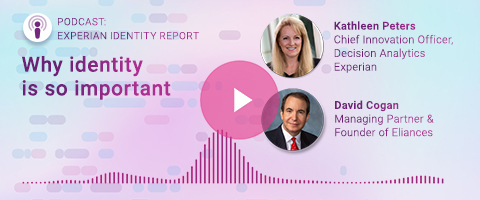
Kathleen Peters, Chief Innovation Officer, Decision Analytics for Experian, was recently featured on the Eliances Heroes podcast as part of the new weekly segment, the “Experian Identity Report.” In the introductory show, podcast host David Cogan, spoke with Kathleen about why identity is so important to our society. Listen to the podcast for the full discussion and see the transcript below. Learn more about Experian Identity David Cogan: How critical is it? Well, I’ll tell you. Payment fraud will exceed $206 billion in the next five years and let’s face it. Managing one’s personal identity is very complicated on its own and if the business enterprise managing customer identities in a strategic and secure way and scale across countless interaction is extremely complicated. And it’s only going to get more complex with the future from what I understand and all the technology that’s coming out if not by the day, by the hour. And that’s why we’re bringing this to you. Interviews with the world’s leading experts on the game changing impact of identity and the need to use reliable data to make confident decisions that securely accelerate customer engagement and that’s why we’re honored here today to have with us Kathleen Peters, Chief Innovation Officer, Experian Decision Analytics North America. Kathleen Peters: Thanks so much David, it’s great to be here with you. DC: $206 billion of payment fraud in the next five years? I mean who’s going to want to turn on their computer after this. That is a serious number. What do we do? KP: It’s really important that we get our arms around this both as consumers as well as businesses because we want to engage online. So much of what we’re doing is digital. It especially started in COVID when we were having our groceries delivered and everything else and even our grandparents are having to do their banking transactions online. The world is changing, and fraudsters take notice of that as well. Fraudsters are opportunistic and when they see a bunch of folks doing stuff online that they’ve never done before, they’re seeing that as an opportunity too. DC: You know the days of people horseback riding and overtaking trains are long gone and now it’s all digital. KP: It’s a lot easier these days. DC: Why is identity so important to our daily digital lives and in business? KP: It’s a great question, David. And as a consumer myself, you, and I when we transact online whether that’s to have food delivered, or I’m buying something for my kids or I’m even paying a bill, I want to be able to trust that my information will be safe, that my privacy will be protected and that my experience will be as smooth as possible. I think that’s what we all want. So as consumers and as businesses, how do we enable all the opportunities this new digital world is presenting to us in a way that we are safe and also businesses can transact with us securely and have confidence on who’s engaging with them online. DC: Let’s talk about identity. What really makes identity so challenging to manage at a business enterprise level especially with how complex the business portion is? KP: Absolutely. It really comes down to there are so many elements that comprise our identity. It’s multidimensional. So historically, when we think about identity, we probably think about the things that were on our DL or passport the kind of information that’s pretty static – name, address, SSN, date of birth – those kinds of things. Once we get online, that identity becomes a little more challenging. We’re not necessarily physically in front of the business that we’re engaging with so the business needs to determine if the person is who we say we are. There’s a famous Far Side comic from years ago where a dog is sitting in front of the computer and he says “On the internet, no one knows you’re a dog.” And that still rings true in that you need to be able to ensure that the customer that’s coming to your business online is a real person and not a bot, is a person with good intent and not a fraudster. You need to look no farther than some of the recent controversies around Twitter and Elon Musk’s on-again, off-again, on-again intent to buy the company. A few months ago he had pulled back because he wanted to know definitively how many users on Twitter are humans versus bots and sometimes determining that can be really hard. And that comes down to managing all these new definitions of identity. DC: That’s very important. The thing is businesses and consumers want to know really what to be able to do. So, what kinds of things is Experian able to offer to help with all of that? KP: We’re in a great position as Experian because we have such a depth and breadth of identity data. We have the analytics horsepower and really touchpoints that are really unique when it comes to thinking about identity. So we’ve been talking about these traditional identity elements and digital, online identity. When you think about it, Experian also really understands your financial identity. So when you bring those things together and a consumer is looking to maybe understand what their financial identity means, their credit score or even how to improve their credit score, Experian’s there. We’ve got a robust direct to consumer business, we’ve got offerings like Boost and Go that help people establish and build their credit. We’ve got marketplaces for cards, insurance, etc. And then when consumers want to open a new account at a financial institution, or a fintech, or a retailer, or even maybe buy some crypto or log into a business, Experian can bring that wealth of capability to help our clients, help businesses, separate those good consumers with good intent from the fraudsters and do that very quickly and efficiently so that consumers can have a great experience and build that trust with who they’re engaging with. DC: Kathleen, that’s really amazing. Alright, now with all of that going on, what is Experian doing now with innovating for the identity space? KP: This is a real passion of mine David and this is where I spend a lot of my time. We’re always looking ahead to see what is the new data, new capabilities that can help us improve that consumer experience and engagement, help clients find the right consumers online to engage and target, and really allow our clients to grow their businesses safely. So, we’re building some products in house, where we’re connecting new pieces that might be new to Experian like linking some of that traditional identity data with particular payment instruments. Is this Kathleen’s credit card? Is this my bank account? When I come and try to do transactions online. But we’re also partnering with new companies. There are a number of startups that are being formed that have been in business looking at new ways to stop fraud and new ways to help identify and authenticate users online. So, as we innovate, we’re building some things in house, we’re partnering, we’re investing in young companies, and sometimes we’re even acquiring. So, bringing together that breadth of data, analytics, really trying to think about what will be the next way that we’ll think about identifying ourselves online is some of the ways we’re innovating. DC: Well, we’re very fortunate to have you and your company here to be able to do that because it’s growing by leaps and bounds. I’m amazed by the number $206 billion which is probably going to go higher, so we’re very fortunate that Experian is around and really identifying this issue and trying to do something now. What do you think our audience will learn about these weekly, critical chats about identity with Experian experts? KP: These are going to be great conversations that we’re going to be able to share and talk about how rapidly things are changing and evolving and how this really relates to our daily lives and the things that are going on in this very dynamic economic climate, digital climate, the way things are changing the way we’re engaging. I think people are also going to learn a lot about Experian’s mission around financial inclusion and opportunity creation. We’re a very mission driven company and we’re the consumer’s bureau, so we want to do this journey in partnership with consumers so that you can take an active part in protecting yourself, understanding what’s going on, helping us fight fraud, but also just really be able to take advantage of all of these new opportunities in a safe way.

You walk into your home, flick the light switch, head to the fridge and grab a glass of cold water. Suddenly, you feel a chill and turn the thermostat up. These habitual acts are basic, but fundamental to our lives. Unfortunately, not everyone has equal access to such luxuries. There is a substantial amount of people who are impacted by heavy energy burdens. What is an energy burden? An energy burden is the percentage of gross household income that goes towards energy costs. Two families can have similar energy bills, but different household incomes. Like many other industries, the utility sector is shifting its’ focus toward equitable outcomes and establishing and implementing effective efficiency programs. Who do energy burdens impact? Due to the energy burden, many communities of color have been historically underserved by energy efficiency and clean energy programs. The energy burden can also impact those who rent, have less efficient appliances or live in older homes. According to the U.S. Census Bureau, as of August, 2022, 23.1% of U.S. adults lived in households that were unable to pay an energy bill in the last 12 months. Additionally, The American Council for Energy-Efficient Economy (ACEE) found that low-income Black, Hispanic and Native American households face dramatically higher energy burdens than average. How can Experian be a partner for energy equity? As the “Consumer’s Bureau,” Experian is deeply committed to putting consumers’ best interests first as we make key decisions to support our clients. Like the energy industry, Experian wants to lessen the energy burden for underserved and low-income communities. This is a business of critical consequence, and we are focused on helping our clients accelerate progress and equity within the communities they serve. As we navigate along this inclusion journey together, we can assist with three core areas: Measure and track: Understand geographies and audience segments containing the largest opportunities for inclusion within the communities you serve. Benchmark and track progress towards your internal diversity and inclusion goals. Determine who qualifies for energy efficiency programs by getting a more accurate view of the communities you serve. Include and reach: By incorporating supplementary data sources, we can help you identify and reach underserved consumers and small business owners who are often excluded from the traditional credit ecosystem. Inform and empower: Develop and educate vulnerable populations, offering the tools and support needed to advance their financial health journey. Enabling your consumers to obtain the assistance they need. By leveraging our leading data assets, businesses can obtain a more holistic consumer view to drive better outcomes and opportunities while making smarter decisions and minimizing risk. With accurate data you can effectively prioritize field work, get correct assessment of household income, increase productivity of field personnel, and improve field collection rates. We care about doing the right thing and are here to ensure you meet your energy efficiency and equity goals. Together, we can make a positive impact on our communities and consumers. To learn more about how Experian is helping the utility industry drive inclusion and bring equity to energy, visit us or request a call. Access the infographic Energy Burden Research. Aceee.org. (2022). Household Pulse Survey. Census.gov. (2022). Low-Income Households, Communities of Color Face High Energy. Aceee.org. (2022). Experian and Oliver Wyman find expanded data and advanced analytics can improve access to credit. Experian plc. (2022).

Written by: Mihail Blagoev As there is talk about the global economy potentially heading into a recession, while some suggest that it has already started, there is an expectation that many of the world's countries will see their economic output decline in the next couple of months or a year. Among the negative trends that can occur during a recession are companies making fewer sales and people losing their jobs. Unfortunately, just like any other economic crisis, fraud is expected to go in the opposite direction as criminals continue finding innovative ways to attack consumers when they’re most vulnerable. There is also a concern that first-party fraud attempts might rise as genuine consumers are pushed over the edge by inflation and economic uncertainty. With that in mind, here are six fraud trends that are likely to happen during a recession: Fraudsters exploiting the vulnerable It is well-documented that fraudsters found numerous ways to exploit the vulnerable during the pandemic. Unfortunately, this is expected to happen again in the coming months. As the cost of living rises, criminals will try to use that in their favor by looking for people who can't pay their utility bills or can't afford the price of gas or even food. Fraudsters will try to exploit that by offering them deals, discounts, refunds, or just about anything that will make people believe they are paying less for something that has increased in value or is out of reach at its normal price. Fraudsters have two main goals behind these tactics – stealing personal information to use in other crimes or gaining immediate financial benefits. Although their tactics are well-known – applying pressure on their victims to make quick decisions or offering them something that sounds like a great deal, but in truth, it isn't – that won't prevent them from trying. These scams show that, unlike in other industries, criminals do not rely on high success rates to achieve their goals. All they need is one or two victims out of every few hundred to fall for their schemes. Loan origination fraud Periods of financial instability often result in an increase in first-party fraud, among others. This could take many forms, and there is a possibility for an increase in fraudulent loan applications by genuine consumers to be among the most popular ones. In this type of fraud, bad actors lie on registration forms or applications to gain access to funds they wouldn't normally receive if they added their real information. That could be done by lying about their income and employment information, usually inflating their salaries, extending the amount of time they worked for a certain company, or simply adding a company they have never worked for. Other popular forgeries include anything from supplying fake phone numbers and addresses to providing fake bank statements and utility bills. Money mules Recessions can result in layoffs or people looking for work not being able to find any. That's another opportunity for fraudsters to exploit the vulnerable by offering them “jobs.” This could be achieved by posting job ads on real employment websites or social media. Once recruited, people are asked to open new bank accounts or use their previously opened accounts to transfer funds to accounts that are in the possession of criminals. In the end, the funds get laundered, while the genuine account holder receives a fee for the service. People of all ages are a possible target, but this is especially true for younger generations who often don't understand the consequences of their activities. Friendly fraud Another type of first-party fraud that could go up as a result of the increased economic pressures could be friendly fraud. In this type of fraud that mostly affects the retail industry, consumers charge back genuine payments made by them in order to end up with both the product purchased and the funds for it back in their possession. They could then keep the product or quickly resell it for less than its original value. Luxury goods and electronics could be especially attractive for this type of fraud. Claiming non-deliveries or transactions not being recognized could be among the top reasons used for charging back the transactions. Investment fraud During times of economic hardship, people are often looking for ways to keep their savings from getting eaten by inflation. Investments in property could be one solution, but as it is not affordable for everyone, people are also looking for other ways to invest their money. While this isn’t exactly a vulnerability, it is something that criminals are looking to exploit greatly. They usually reach out to potential victims through social media while also presenting them with fake websites that mimic those by real investors. The opportunities being offered can range from cryptocurrency to various schemes and products that don’t exist or are worthless. However, after the criminals obtain possession of the funds, they discontinue their contact with the victims. Fake goods While this shouldn't happen to the same extent that was seen in 2020, there is a chance that some goods might disappear from certain markets. There could be a variety of reasons for that, from companies limiting their production or going out of business due to inability to pay their bills or shortage in sales to issues with supply chains due to the high gas and oil prices. Expect fraudsters to be the first to move in if there are shortages and start offering fake products or goods that will never arrive. It is still difficult to measure if or when a recession will hit each corner of the world or how long it will take for the next phase in the financial cycle to begin. However, one thing that is certain is that the longer it takes the economy to settle, the more opportunities criminals will have to benefit from their schemes and come up with new ways to defraud people. Businesses should monitor the fraud environment around them closely and be ready to adjust their fraud management strategies quickly. They should also understand the complexity of the problems in front of them and that they will likely need a mixture of capabilities to sort them out while keeping their customer base happy. This is where fraud orchestration platforms could help by offering the needed solutions to solve multiple fraud issues and the flexibility to turn any of these tools on and off when needed. Contact us

External fraud generally results from deceptive activity intended to produce financial gain that is carried out by an individual, a group of people or an entire organization. Fraudsters may prey on any organization or individual, regardless of the size or nature of their activities. The tactics used are becoming increasingly sophisticated, requiring a multilayered fraud mitigation strategy. Fraud mitigation involves using tools to reduce the frequency or severity of these risks, ultimately protecting the bottom line and the future of the organization. Fraud impacts the bottom line and so much more According to the Federal Trade Commission, consumers reported losing more than $10 billion to fraud in 2023, a 14% increase over the previous year and the highest dollar amount ever reported. These costs extend beyond the face value of the theft to include fees and interest incurred, fines and legal fees, labor and investigation costs and external recovery expenses. Aside from dollar losses and direct costs, fraud can also pose legal risks that lead to fines and other legal actions and diminish credibility with regulators. Word of deceptive activities can also create risk for the brand and reputation. These factors can, in turn, result in a loss of market confidence, making it difficult to retain clients and engage new business. Leveraging fraud mitigation best practices As the future unfolds, three things are fairly certain: 1) The future is likely to bring more technological advances and, thereby, new ways of working and creating. 2) Fraudsters will continue to look for ways to exploit those opportunities. 3) The future is here, today. Organizations that want to remain competitive in the digital economy should make fraud mitigation and prevention an integral part of their operational strategy. Assess the risk environment While enhancing revenue opportunities, the global digital economy has increased the complexity of risk management. Be aware of situations that require people to enforce fraud risk policies. While informed, experienced people are powerful resources, it is important to automate routine decisions where you can and leverage people on the most challenging cases. It is also critical to consider that not every fraud risk aligns directly to losses. Consider touchpoints where information can be exposed that will later be used to commit fraud. Information that crooks attempt to glean from idle chatter during a customer service call can be a source of unexpected vulnerability. These activities can benefit from greater transparency and automated oversight. Create a tactical plan to prevent and handle fraud Leverage analytics wherever possible to streamline decisions and choose the right level of friction that’s appropriate for the risk, and palatable for good customers. Consumers and small businesses have come to expect a customized and frictionless experience. Employee productivity, and ultimately revenue growth, requires the ability to operate with speed and informed confidence. A viable fraud mitigation strategy should incorporate these goals seamlessly with operational objectives. If not, prevention and mitigation controls may be sidelined to get legitimate business done, creating inroads for fraudsters. Look for a partner who can apply the right friction to situations depending on your risk appetite and use existing data (including your internal data and their own data resources) to better identify individual consumers. This identification process can actually smooth the way for known consumers while providing the right protection against fraudsters and giving consumers who are new to your organization a sense of safety and security when logging in for the first time. It's equally important that everyone in your organization is working together to prevent fraud. Establish and document best practices and controls, beginning with fostering a workplace culture in which fraud mitigation is part of everyone's job. Empower and train all staff to identify and report suspicious activity and ensure they know how to raise concerns. Consider implementing ways to encourage open and swift communication, such as anonymous or confidential reporting channels. Stay vigilant and tap into resources for managing risks It is likely impossible to think of every threat your organization might face. Instead, think of fraud mitigation as an ongoing process to identify and isolate any suspected fraud fast — before the activity can develop into a major threat to the bottom line — and manage any fallout. Incorporating technology and robust data collection can fortify governance best practices. Technology can also help you perform the due diligence faster, ensuring compliance with Know Your Customer (KYC) and other regulations. As necessary, work with risk assessment consultants to get an objective, experienced view. Learn more about fraud risk mitigation and fraud prevention services. Learn more

What is elder abuse fraud? Financial abuse is reportedly the fastest-growing form of elder abuse, leaving many Americans vulnerable to theft scams, and putting businesses and other organizations on the frontlines to provide protection and help prevent fraud losses. Financial elder abuse fraud occurs when someone illegally uses a senior’s money or other property. This can be someone they know, or a third party – like fraudsters who are perpetrating romance scams Older consumers and other vulnerable digital newbies were prime targets for this type of abuse during the start of the pandemic when many of them became active online for the first time or started transacting in new ways. This made them especially attractive targets for social engineering (when a fraudster manipulates a person to divulge confidential or private information) and account takeover fraud. While most of us have become used to life online (in fact, there’s been a 25% increase in online activity since the start of the pandemic), some seniors still have risky habits such as poor password maintenance, that can make them more attractive targets for fraudsters. What is the impact of elder abuse fraud? According to the FBI’s Internet Crime Complaint Center (IC3), elder abuse fraud cost Americans over the age of 60 more than $966 million in 2020. In addition to the direct cost to consumers, elder abuse fraud can leave organizations vulnerable to the fallout from data breaches via account takeover, and lost time and money spent helping seniors and other vulnerable Americans recoup their losses, reset accounts, and more. Further, the victim may associate the fraud with the bank, healthcare provider, or other businesses where the account was taken over and decide to stop utilizing that entity all together. How can organizations prevent elder abuse fraud? Preventing elder abuse fraud can take many forms. Organizations should start with a robust fraud management solution that can help prevent account takeover, first-party, synthetic identity fraud, and more. This platform should also include the ability to use data analysis to detect and flag sudden changes in financial behavior, online activities, and transaction locations that could indicate abuse or takeover of the account. With the right fraud strategy in place, organizations can help prevent fraud and build trust with older generations. Given that 95% of Baby Boomers cite security as the most important aspect of their online experience, this step is too important to miss. To learn more about how Experian is helping organizations develop and maintain effective fraud and identity solutions, be sure to visit us or request a call. Contact us