Data & Analytics

In today’s competitive mortgage environment, lenders are under constant pressure to move faster and reduce costs while delivering a seamless borrower experience. Yet one persistent challenge continues to impact efficient operations and profitability: buying duplicate income and employment verifications. The Cost of Uncertainty: Why Unnecessary Verification Orders Happen When lenders cannot confidently determine whether employment data is available through a specific provider, they face a difficult choice: Take a chance on one provider, risking delays if records aren’t available Order from multiple providers to ensure coverage, but increasing costs This uncertainty adds up. Over time, the cost of ordering extra verification orders can lead to increased operational expenses and reduce overall loan profitability. In a high-volume lending environment, even small inefficiencies scale quickly, leading to increased costs. The lack of upfront transparency into employment data availability can make it difficult to control verification costs while maintaining speed and certainty in the loan process. Introducing the Experian Verify™ Preview Report With 10 to 12% of consumers holding multiple jobs, lenders often feel compelled to check both Experian Verify and higher-cost competitors to find complete employment records. Experian’s Verify Preview Report eliminates that uncertainty, accelerating loan decisions, cutting costs, and streamlining the borrower’s experience. Available at no cost to existing Experian mortgage clients, the report gives an upfront view of which employers are associated with a consumer within a configured lookback period—before committing to buying a report. The Experian Verify Preview Report provides lenders with instant visibility into employer records tied to a borrower—before they purchase a full Verification of Income and Employment (VOIE) report. With a Verify Preview Report, lenders can: See a list of employer names associated with the borrower Confirm which records are available for instant verification through Experian Verify Determine whether ordering a full VOIE report will add value The result? Fewer unnecessary orders, lower verification costs, and a smarter, more efficient verification workflow. This availability empowers lenders to start the verification process confidently. When the employer information lenders need is present, they can move forward with a lower cost report, accessing the same data as other providers but at a better price. And when records aren’t available, alternative providers remain a fallback. The Experian Verify Preview Report makes it clear that Experian Verify has the instant employment data lenders need, which could lead to improved outcomes and operational efficiency. How it works The Experian Verify Preview Report offers a seamless implementation process. There is no new integration required. Lenders already using Experian Verify Instant can request the Preview Report using the same API connection. The only difference is which report type you request. Here’s how it works: Request the Preview Report via your current Experian Verify Instant integration by selecting the Preview Report type. Receive instant visibility into employer names associated with the consumer for your configured timeframe (e.g., 24 months). Proceed confidently by confirming availability before placing a full VOIE order, only when it adds value. Because the API is already in place, using the Verify Report is a frictionless process. Lenders simply request this specific report type and immediately gain the benefits of upfront clarity into employment records. Move from preview to proof with confidence The Experian Verify Preview Report is not a replacement for a full VOIE report—it’s a strategic first step. Once lenders confirm that relevant employment records are available, they can move from preview to proof by ordering the full VOIE report through the same integration. In an environment where margins and efficiency matter, having visibility before you buy isn’t just helpful—it’s essential. With the Experian Verify™ Preview Report, lenders can eliminate guesswork, control costs, and move from preview to proof with confidence. To learn more about how Experian Verify Preview Report, contact us and visit us online.

Key takeaways from recent Chrisman Commentary podcast The mortgage industry is in the middle of a pivotal moment, one defined by credit modernization, improved data usage, and a renewed focus on how lenders can better serve today’s consumers without increasing risk. In a recent episode of the Chrisman Commentary podcast, host Robbie Chrisman sits down with Michele Bodda, who leads Housing and Verification Solutions at Experian, and Shelley Leonard, President of Xactus, for a candid and wide-ranging conversation on what’s changing, what’s coming, and what lenders should be doing now. Key Findings A central theme of the discussion is the industry’s ongoing journey toward modern credit scoring, including the FHFA’s approval of VantageScore 4.0. As Shelley explains, this isn’t simply a score change; it’s part of a broader credit modernization effort that touches lenders, investors, technology providers, and ultimately consumers. While adoption across the GSE landscape is still evolving, lenders are actively testing, learning, and preparing their systems, so they’re ready when the time comes. Michele adds an important perspective: these conversations are prompting a healthy industry-wide introspection. From originators to capital markets, stakeholders are re-examining longstanding underwriting practices, the data that informs them and who those decisions impact. That scrutiny, she notes, is a good thing, especially as better data and analytics create opportunities to responsibly expand access to homeownership. Beyond credit scores, the discussion highlights another critical opportunity: workflow optimization. Both Michele and Shelley stress that success isn’t about ordering more data; it’s about ordering the right data at the right time. With advancements in analytics, AI, and machine learning, lenders can reduce waste, cut costs, improve cycle times, and still maintain a safe and sound mortgage market. The episode also tackles persistent myths in the industry, including misconceptions about competition and how credit data actually flows through the mortgage ecosystem. In reality, the space is highly competitive, a dynamic that continues to drive innovation and better outcomes for lenders and borrowers alike. The conversation closes on two powerful notes. First, a call to action for lenders: don’t stick your head in the sand. Change is already here, and doing nothing is no longer an option. Second, in recognition of Women’s History Month, Michele and Shelley reflect on the importance of representation, mentorship, allies, and shared responsibility in building a stronger, more inclusive industry. It’s an honest, thoughtful discussion that underscores one thing clearly: the future of mortgage lending will be shaped by curiosity, collaboration, and the courage to rethink how things have always been done. 🎧 Listen to the full episode of Chrisman Commentary to hear the complete conversation.
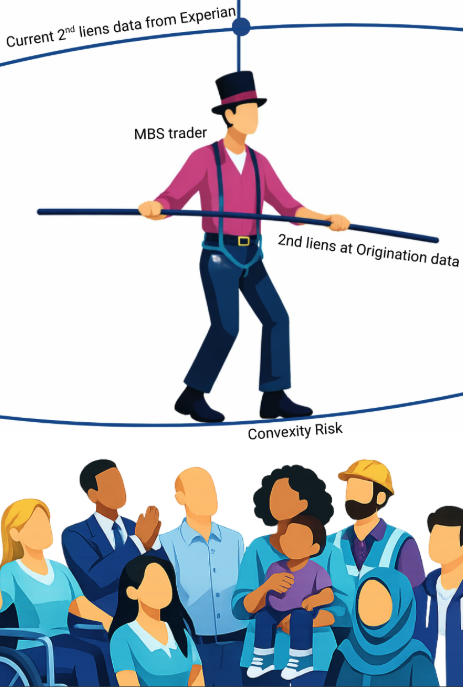
As a follow‑up to our January post on Freddie Mac’s Loan-Level Directed Collateral (LLDC) program and its use of new loan‑level data fields from Experian’s Mortgage Loan Performance (MLP) dataset, we’re highlighting another newly available field: current second lien balance. What kind of data moves markets? Before diving into the new second lien field, we’ll outline the criteria we use to determine whether a new data field has the potential to move MBS markets—and therefore warrants the time and effort required to prepare and deliver it to our institutional investor clients. These criteria will apply to all new fields discussed in future posts. Over the past decade, rapid technological innovation, combined with financial markets’ increasing focus on data and AI, has led to a steady stream of new market data and analytical products. Most of these releases don’t materially impact how MBS trade. As discussed in prior posts, two notable exceptions stand out: The introduction of pool‑level data in the 1980s enabled the rise of specified (“spec”) pools. The public release of agency MBS loan‑level data in 2013 ushered in a new era of advanced analytics and precision modeling. So, what criteria must be met for new, incremental data to change how MBS trades? We believe three requirements must be met: New: Provides information not available in existing datasets (i.e., orthogonal to currently available data). Material: Impacts a sizeable portion of the MBS universe. Significant: Differentiates collateral performance by a large enough margin to influence trading and risk management decisions. With these criteria in mind, we turn to one of several new fields from Experian’s MLP that meet all three: current second lien balance. Subsequent Second Liens: An ‘Invisible’ CPR Throttle MLP contains several fields related to open second liens, with each loan linked to both the individual borrower and the specific property. This structure allows visibility into a borrower’s full set of open second lien loans, even across multiple properties. For the illustrative exercise below, we focus on one field: the total balance on open second‑mortgage trades reported in the past three months. Does this field meet the first criteria—New? Yes, the current presence of junior liens is new information in agency MBS markets. In standard agency and Government National Mortgage Association (GNMA) disclosures, second‑lien information appears only at the time of first‑lien origination. Any subsequent second liens remain unreported, preventing accurate calculations of current combined LTV post-origination. The material blind spot: Missing junior‑lien data The absence of updated junior lien status represents a material blind spot for investors seeking to predict prepayment behavior of the associated first lien in agency MBS. Current combined LTV, inclusive of subsequently opened second liens and adjusted for home price appreciation (HPA), is one of the most important drivers of both prepayment and credit performance. Without supplementary data from MLP, information on newly originated second liens go unobserved. As a result, prepayment and credit forecasts become overly aggressive, and prepayment call protection is therefore mispriced. In addition to information regarding the junior lien loan, Experian’s MLP dataset includes a monthly refreshed AVM value for each property, ensuring an accurate current CLTV value. Having established newness, is current junior lien data material? Yes, particularly in the current environment of record-high home equity. Approximately 16% of active mortgages carry second liens, representing roughly $522 billion in outstanding balances—and growing (Source: Experian MLP dataset). In 2024 alone, second-lien originations exceeded $100 billion and continued to trend upward (Source: Experian MLP dataset). Second liens added after primary‑mortgage origination, often layered onto low‑LTV agency MBS, aren’t captured in standard GSE data. Their impact is especially pronounced in periods of moderate or negative HPA. Borrowers who take on new second liens and then experience negative HPA may be unable to refinance due to re‑subordination limits, which materially affect prepayment behavior and call protection. Investors relying on standard agency disclosure have no visibility into post‑origination junior liens. Is current junior‑lien data significant? After having established newness and materiality, is the current junior lien data significant? Yes—Figure 1 illustrates the impact of new second-lien balances on prepayments. This field is independent of other collateral characteristics available in standard GSE data, as the decision to take out a new second lien is made by the borrower after the primary mortgage has closed. As shown in Figure 1, prepayments decline materially as new second-lien balances increase. On average, if approximately 20% of mortgages carry second liens and the CPR differential for in-the-money (ITM) mortgages with and without new second liens are 10 CPR, then new second liens account for roughly 2 CPR of prepayment impact on average (10 CPR × 20%). This CPR-throttling effect is significantly more pronounced for mortgages with a current CLTV of around 80%. These loans may be effectively locked out of refinancing due to re-subordination constraints, yet they appear highly callable when evaluated using only standard GSE data, leading to materially overstated prepayment expectations. Fig 1. Prepayments S-Curve: New Second Liens Balance Source: Experian Mortgage Loan Performance Dataset, hosted on the IVolatility MBS Data-Driven Portal _____________________________________________________ Michael Pyatski advises MBS traders, portfolio managers, quants, risk managers, loan originators, and technology professionals on making informed, data-driven business decisions that drive revenue growth, enhance risk management, and reduce trading costs. With more than 15 years of experience as an Agency RMBS trader—including serving as Head of the Proprietary Trading Desk at BNP Paribas—Michael developed and successfully implemented relative-value, data-driven profitable trading strategies to capture market opportunities embedded in data but not fully priced by the market. His trading experience, combined with a Ph.D. in econometrics, led him to found the Data-Driven Portal (https://datadrivenportal.com/), a platform that provides advanced technology for MBS trading and risk management. The platform’s No-Model Data-Driven technology leverages big data, econometric analysis, and AI to help traders identify relative-value opportunities in RMBS markets and generate above-market, risk-adjusted returns. _____________________________________________________

As the U.S. rental housing market moves through 2026, renters, landlords, and property management companies face an increasingly complex operating environment. Elevated housing costs, economic uncertainty, slowing construction activity, and a rapidly evolving fraud landscape are converging to reshape both risk and opportunity across the rental ecosystem. At the same time, advances in data, analytics, and verification technologies are equipping housing professionals with new tools to adapt — shifting decision‑making from reactive to proactive at a moment when precision matters most. Mortgage rates continue to constrain housing mobility One of the most significant structural forces supporting rental demand remains the cost of homeownership. In early 2025, the average 30‑year fixed mortgage rate hovered near 7%, with Freddie Mac’s weekly survey reporting a rate of 7.04% for the week of January 16, 2025. The report also showed the year beginning near 7% before ending at 6.15% (Freddie Mac, 2025a, 2025b). This environment has created a pronounced lock‑in effect: homeowners with pandemic‑era low fixed mortgage rates are reluctant to sell, limiting for‑sale inventory and suppressing turnover (Federal Housing Finance Agency [FHFA], 2024; Bankrate, 2025). For renters, this results in longer tenures and fewer pathways to homeownership. For landlords and lenders, it reinforces expectations that rental demand will remain elevated well into 2026, even if mortgage rates ease modestly. Rental housing supply faces structural constraints Despite strong rental demand, rental housing supply growth remains uneven. Multifamily development has slowed as financing costs and construction expenses have risen. Industry data indicate that multifamily units under construction fell roughly 20% year over year by early 2025, while completions have outpaced new starts—approximately 1.5 apartments completed for every one that begins construction on a three‑month moving‑average basis (Nanayakkara Skillington, 2025). Forecasts from Yardi Matrix pointed to elevated completions in 2025, followed by a notable slowdown in 2026, with starts continuing to slump (Dale, 2025). Absent a meaningful acceleration in new construction, these dynamics are likely to sustain pressure on rents and intensify affordability challenges, particularly in high‑growth and high‑migration markets (Joint Center for Housing Studies, 2025). Fraud risk is escalating in a digital-first rental market As rental transactions increasingly move online, fraud has become a fast‑growing operational risk for property managers and owners. The Federal Trade Commission’s Consumer Sentinel data show sustained reports of identity theft and imposter scams (Federal Trade Commission [FTC], 2024), while industry surveys identify account takeover, payment fraud, and synthetic identities as some of the most frequently encountered issues (Experian, 2023). From 2024 to 2025, housing and real estate professionals reported rising exposure to AI‑enabled schemes—including deepfake voices, manipulated documents, and increasingly sophisticated application fraud (Housing Wire, 2025; Veriff, 2025; First American, 2025). As digital leasing accelerates, robust identity verification and fraud prevention have become core components of sustainable portfolio management. FTC Consumer Sentinel data continue to highlight persistent patterns of identity theft and imposter scams (FTC, 2024), and industry research consistently shows that account takeover, payment fraud, and synthetic identities remain significant operational threats (Experian, 2023). Between 2024 and 2025, housing professionals noted a growing prevalence of AI‑enabled fraud techniques, such as deepfake audio, falsified documents, and advanced application manipulation (HousingWire, 2025; Veriff, 2025; First American, 2025). Data and analytics are becoming the defining advantage Access to high‑quality data and real‑time insights is increasingly decisive. Data‑driven solutions enable rental housing professionals to move beyond static screening and manual processes, supporting continuous risk assessment and smarter decision‑making. These capabilities allow housing providers to evaluate applicants and portfolios with greater accuracy, reduce operational friction, and respond more proactively to emerging risks—making data and analytics a defining advantage across the rental housing ecosystem. Rent reporting as a credit building and risk signal building and risk signal Rental payment history has emerged as a valuable indicator of consumer financial behavior. Surveys and evaluations show strong renter interest in having on‑time rent payments included in credit scores, and many participants experience measurable benefits. For example, Fannie Mae reports that more than 80% of renters want rent payments factored into credit scoring models (Fannie Mae, n.d.). Randomized trials also demonstrate increased credit visibility and movement into near‑prime tiers for previously unscorable consumers (Theodos, Teles, & Leiberman, 2025; Credit Builders Alliance, 2025). For property managers and owners, this creates a dual benefit: renters gain meaningful credit‑building opportunities, while housing providers gain a deeper, more reliable signal of payment behavior beyond traditional credit files. Smarter screening and verification Income and employment verification remain among the most critical—and historically inefficient—steps in the rental lifecycle. Digital verification tools that leverage payroll and employment databases, along with consent‑based bank data, significantly reduce friction, deliver faster decisions, and help mitigate fraud by validating applicant information at the source (Truework, 2024; MeasureOne, n.d.; U.S. Government Accountability Office [GAO], 2025). As application volumes rise, automated verification is becoming a baseline requirement rather than a competitive differentiator. These tools enhance accuracy, streamline workflows, and strengthen fraud prevention—capabilities that are increasingly essential as application tactics grow more advanced. What to watch as the market moves into 2026 Looking ahead, three trends are likely to shape the rental housing market over the next 12 to 18 months: Sustained rental demand amid elevated mortgage rates and constrained for‑sale inventory, as higher borrowing costs continue to limit mobility and suppress housing turnover (Freddie Mac, 2025a; Federal Housing Finance Agency [FHFA], 2024). Widening affordability gaps, with rent‑to‑income pressures intensifying—particularly in high‑cost and high‑growth regions (Joint Center for Housing Studies, 2025). Data‑driven decision‑making is becoming standard across screening, pricing, fraud prevention, and portfolio monitoring, reflecting broader industry adoption of automated tools and analytics (U.S. Government Accountability Office [GAO], 2025; Snappt, 2025). Final perspective The U.S. rental housing market in 2026 is defined by both complexity and opportunity. Success will depend on the ability to adapt quickly, manage risk proactively, and deploy data‑driven solutions with precision. For renters, tools such as rent reporting offer pathways to greater financial stability and transparency. Ultimately, this moment is about resilience, readiness, and the systems that will shape rental housing outcomes well into the next cycle. Organizations that invest now in smarter data, stronger controls, and forward‑looking strategies will be best positioned to navigate what comes next—for themselves and for the broader rental housing ecosystem.

Mortgage rates remain elevated by historical standards: the average 30-year fixed rate ended 2025 at 6.15% (Freddie Mac’s PMMS), after spending much of the year closer to 7% (52-week high ≈ 7.04%) (Freddie Mac, 2025; Mortgage News Daily, 2025). At the same time, the Federal Reserve’s December 2025 Summary of Economic Projections signaled a modest easing path into 2026 (median fed funds projection 3.4% at end-2026), reinforcing expectations of lower borrowing costs ahead rather than an immediate return to pre-2022 conditions (Federal Reserve, 2025). Affordability pressures persist and vary widely by metro and region: rent-to-income ratios in many Midwestern markets are below 30%, while parts of the Northeast (e.g., New York City) exceed 50% of income for a typical renter household (Moody’s Analytics, 2023; 2025). Given this fragmentation, national averages no longer provide sufficient guidance. Lenders need a data-driven playbook that translates insight into action across the lending lifecycle. Pillar 1: Borrower insights Today’s renter profile skews younger: Gen Z already accounts for ~30.5% of renters and, together with younger millennials (under 35), represents over half of the rental population (Experian, 2025). Zillow’s Consumer Housing Trends Report similarly shows Gen Z makes up 25% of all renters and 47% of recent movers—evidence that the next cohort of first-time buyers is emerging from today’s rental pool (Zillow Research, 2024). Traditional credit files can miss reliable payment behavior. Both Fannie Mae and Freddie Mac now consider positive rent payment history in automated underwriting—using bank or payroll-verified data to augment limited credit histories—improving access for qualified renters (Fannie Mae, 2025; Freddie Mac, 2025). Data-driven edge: Broader borrower views—incorporating verified rent payments, student loan performance, and alternative credit signals—help identify “hidden prime” consumers and responsibly expand the addressable market. Pillar 2: Operational efficiency Margin pressure is persistent, and manual income/employment verification remains a top pain point: manual methods can take 30 minutes to several days, raise costs, and increase drop-offs (MeridianLink, 2025). Modern VOE/VOI solutions—e.g., Mastercard Open Finance (Finicity/Argyle), Truework—deliver GSE-accepted digital verifications that reduce friction, lower per-loan costs, and provide rep/warranty relief when validations succeed ( Mastercard; Business Wire/Morningstar). Data-driven edge: Verification and documentation automation enables speed, consistency, and scalability without proportional staffing or risk increases. Pillar 3: Geographic precision Affordability is deeply local. The national rent-to-income ratio has recently eased back toward ~27–30%, but disparities persist: several Midwest markets track below 30%, while New York City reaches ~67% and Miami exceeds 40% (Moody’s Analytics, 2023; 2025). Recent rent reports also show metros like Miami ranking as least affordable and others (e.g., Austin) more affordable for typical renter incomes, underscoring the need for metro-level targeting (Realtor.com, 2025). Data-driven edge: Market-level data—local affordability, migration, inventory, and labor trends—helps focus growth where demand is most likely to convert and perform over time. Pillar 4: Refinance readiness Refinance activity is muted but not gone. With rates dipping from 2025 highs, millions are positioned to benefit: as of Nov. 2025, about 4.1 million mortgage holders were “in the money” (≥ 75 bps savings), including 1.7 million highly qualified candidates; the cohort could grow toward ~5 million with small additional rate declines (ICE Mortgage Technology, 2025). Homeowners also held $11.2 trillion in tappable equity entering Q4 2025, supporting additional refinance and home-equity lending opportunities (ICE Mortgage Technology, 2025). Data-driven edge: Segment portfolios by rate sensitivity, pre-model operational capacity, and streamline digital processes to capture volume quickly while preserving experience. Bringing it together These four pillars—borrower insights, operational efficiency, geographic precision, and refinance readiness—form a unified framework for outperforming peers in today’s housing market. Lenders that operationalize this approach will be better positioned to: • Serve more borrowers responsibly by leveraging verified rent and payroll data to expand access (Fannie Mae; Freddie Mac). • Manage risk with greater precision through automated verifications and underwriting validations (Mastercard). • Build sustainable regional strength by deploying resources in metros where affordability and demand align (Moody’s; Realtor.com). • Capture refinance demand at scale as candidates and tappable equity expand when rates ease (ICE Mortgage Technology). The housing market is shifting—not back to what it was, but toward something more fragmented and data-dependent. Lenders who build strategy on insight rather than instinct will define the next generation of market leaders. References Experian. (2025, January 10). The shifting demographics of today’s renters. https://www.experian.com/blogs/insights/the-shifting-demographics-of-todays-renters/ Federal Reserve Board. (2025, December 10). Summary of Economic Projections (Table PDF). https://www.federalreserve.gov/monetarypolicy/files/fomcprojtabl20251210.pdf Freddie Mac. (2025, December 31). Primary Mortgage Market Survey® (PMMS®) weekly data. FRED series MORTGAGE30US. https://fred.stlouisfed.org/series/MORTGAGE30US/ Fannie Mae. (2025, January). FAQs: Positive rent payment history in Desktop Underwriter. https://singlefamily.fanniemae.com/originating-underwriting/faqs-positive-rent-payment-history-desktop-underwriter ICE Mortgage Technology. (2025, November 10). November 2025 Mortgage Monitor (press release & report). https://mortgagetech.ice.com/resources/data-reports/november-2025-mortgage-monitor Mastercard. (2024, June 25; updated September 23, 2024). How data-enabled income and employment verifications deliver smarter, seamless financial experiences. https://www.mastercard.com/us/en/news-and-trends/Insights/2024/data-enabled-income-and-employment-verifications-deliver-smarter,-seamless-financial-experiences.html MeridianLink. (2025, April 8). Instant verification: Rethinking income and employment tools. https://www.meridianlink.com/blog/its-time-to-take-a-new-look-at-income-and-employment-verification-tools/ Moody’s Analytics. (2023, November 27). 30% of income on rent remains the norm in U.S. metros (Data story). https://www.moodys.com/web/en/us/insights/data-stories/q3-2023-us-rental-housing-affordability.html Moody’s CRE. (2025, March 11). Q4 2024 housing affordability update. https://www.moodyscre.com/insights/cre-trends/q4-2024-housing-affordability-update/ Mortgage News Daily. (2026, January 2). Freddie Mac mortgage rates—weekly survey (historic table). https://www.mortgagenewsdaily.com/mortgage-rates/freddie-mac Realtor.com Economics. (2025, October 14). September 2025 rental report: Rental affordability improved compared to a year ago. https://www.realtor.com/research/september-2025-rent/ Zillow Research. (2024, October 14). Renters: Results from the Zillow Consumer Housing Trends Report 2024. https://www.zillow.com/research/renters-housing-trends-report-2024-34387/

As the U.S. housing market enters a new phase, the 2026 State of the U.S. Housing Market Report from Experian provides a data-driven overview for lenders, servicers, and property managers. This article synthesizes findings related to mortgage originations, affordability pressures, home equity utilization, credit risk, and generational sentiment, with implications for lender strategy in 2026 (Experian, 2026). Mortgage market in flux: Opportunity amid transition The mortgage market presents mixed signals. Rate moderation in late 2025 contributed to renewed demand, while the product mix continued to evolve. Conventional loans remained dominant at approximately 72% of originations, yet Veterans Affairs (VA) loans experienced the highest growth between 2023 and 2025, reaching 10.8% market share (Experian, 2026). At the same time, second mortgages and home equity lines of credit (HELOCs) gained momentum as homeowners sought liquidity without refinancing out of historically low interest rates. This trend reflects growing demand for equity-based solutions that preserve favorable first-mortgage terms (Experian, 2026). Pull-through challenges: Only 34% of inquiries become loans Conversion efficiency remains a key challenge. Only 34% of first-mortgage hard credit inquiries resulted in a completed mortgage origination, highlighting friction between borrower interest and loan fulfillment (Experian, 2026). Consumer research reinforces this gap. In an Experian survey, 50% of respondents reported that understanding what they could qualify for would be the most helpful step in their homeownership journey, suggesting that improved prequalification tools could materially increase pull-through rates (Experian, 2026). Affordability pressure goes beyond the mortgage Between 2021 and 2025, property taxes increased by 15.2%, while non-tax escrow costs—primarily homeowners' insurance—rose by 67.4% nationwide (Experian, 2026). State-level variation further complicates affordability assessments. Florida recorded the highest average non-tax escrow expenses at $430 per month largely due to sharp increase in home insurance costs. California, by contrast, exhibited the highest average property tax burden at $626, largely driven by elevated home values despite lower statutory tax rates (Experian, 2026). These dynamics underscore the importance of holistic cost modeling, particularly for first-time buyers. Home equity: A lender’s growth frontier Home equity remains a significant growth opportunity. An estimated 96.2 million consumers reside in owner-occupied homes, with substantial portions owning their homes outright or holding more than 20% equity (Experian, 2026). HELOC usage is increasing, particularly among younger borrowers, 50% of whom utilize more than 60% of their available HELOC credit, compared with 36% of older borrowers (Experian, 2026). Market share shifts are also notable. Fintech lenders experienced a 140.2% increase in HELOC originations from 2023 to 2025, significantly outpacing banks and credit unions. These gains suggest that digital-first experiences and streamlined workflows are increasingly decisive factors for borrowers (Experian, 2026). Risk and resilience: What credit and property data reveal Overall delinquency rates eased slightly; however, near-prime and prime borrowers demonstrated early signs of stress, particularly within first-mortgage portfolios (Experian, 2026). Property-level risk is also intensifying. Flood exposure increased by 3.7% nationally, with 26.4% of Florida homes identified as at risk. Rising exposure has contributed to escalating insurance costs, further affecting affordability and credit performance (Experian, 2026). From a credit hierarchy perspective, secured debt—especially mortgages and auto loans—continued to show the lowest delinquency rates. In contrast, student loans and credit cards exhibited higher delinquency risk, particularly among financially constrained renters and homeowners (Experian, 2026). Generational optimism versus macroeconomic constraints Despite affordability headwinds, consumer optimism persists. Approximately 47% of renters believe they will be ready to purchase a home within four years, increasing to 67% within eight years (Experian, 2026). Structural constraints remain significant. Roughly 70% of homeowners hold mortgage rates below 6%, contributing to limited housing inventory as current owners remain rate-locked. With 30-year mortgage rates still above that level and a softening labor market, even modest increases in unemployment could further pressure affordability (Experian, 2026). Implications for lenders Experian’s analysis highlights several strategic priorities for housing industry stakeholders: Expand access to credit. Incorporate alternative data sources, such as cash-flow analytics and rental payment history, to responsibly extend credit to underserved but qualified borrowers (Experian, 2026). Capitalize on equity demand. Develop HELOC offerings that are fast, flexible, and digitally enabled to meet the needs of equity-rich, rate-locked homeowners (Experian, 2026). Enhance risk precision. Integrate credit, property, and behavioral data to identify emerging risk early, particularly among near-prime segments, and to support more accurate pricing and portfolio management (Experian, 2026). Conclusion The 2026 housing market reflects a complex interplay of macroeconomic pressure, shifting borrower behavior, and growing reliance on home equity solutions. Agility and data-driven decision-making will be essential for lenders navigating this environment. The 2026 State of the U.S. Housing Market Report offers critical insight to support growth while managing risk in an evolving landscape (Experian, 2026). 📘 Access the full report here: Experian 2026 State of the U.S. Housing Market Report References Experian. (2026). 2026 state of the U.S. housing market report. Experian.

Since 1996, The Internal Revenue Service (IRS) has issued more than 27 million individual taxpayer identification numbers (ITINs) – a 9-digit number used by individuals who are required to file or report taxes in the United States but are not eligible to obtain a Social Security number (SSN). Across the country, ITIN holders are actively contributing to their communities and the U.S. financial system. They pay bills, build businesses, contribute billions in taxes and manage their finances responsibly. Yet despite their clear engagement, many remain underrepresented within traditional lending models. Lenders have a meaningful opportunity to bridge the gap between intention and impact. By rethinking how ITIN consumers are evaluated and supported, financial institutions can: Reduce barriers that have historically held capable borrowers back Build products that reflect real borrower needs Foster trust and strengthen community relationships Drive sustainable, responsible growth Our latest white paper takes a more holistic look at ITIN consumers, highlighting their credit behaviors, performance patterns and long-term growth potential. The findings reveal a population that is not only financially engaged, but also demonstrating signs of ongoing stability and mobility. A few takeaways include: ITIN holders maintain a lower debt-to-income ratio than SSN consumers. ITIN holders exhibit fewer derogatory accounts (180–400 days past due). After 12 months, 76.9% of ITIN holders remained current on trades, a rate 15% higher than SSN consumers. With deeper insight into this segment, lenders can make more informed, inclusive decisions. Read the full white paper to uncover the trends and opportunities shaping the future of ITIN lending. Download white paper

Growth, risk and the rise of "hidden" business accounts As inflation remains elevated and early signs of labor market cooling emerge, the credit card landscape is entering its next phase. Over the past few weeks, policy actions and discussions around potential interest-rate caps have driven increased uncertainty across the credit card industry and broader global markets. Lenders face a careful balancing act: capturing growth opportunities while maintaining disciplined risk oversight. Our second annual State of Credit Cards Report explores the macroeconomic forces influencing the market, key shifts in originations and delinquency trends, and lender mix. New this year, the report also digs into an often‑overlooked segment: business accounts hidden inside consumer credit card portfolios. Additionally, the report offers actionable strategies to help lenders segment risk and drive disciplined growth more effectively. Key insights include: 30+ DPD delinquency rates remained above pre-pandemic levels in 2025, underscoring the need for disciplined asset‑quality monitoring. Fintechs continue to gain ground, posting a 71% YOY increase in account originations. Business accounts masked in the consumer credit card universe represent roughly 14% of balances and are more than 50% larger than the business card universe — a material segment with distinct risk and profitability dynamics that many lenders are not explicitly managing today. The report also outlines practical strategies to: Identify and segment business behavior within consumer portfolios. Align underwriting and account management with actual usage patterns. Capture targeted growth while protecting long‑term portfolio performance. Ready to dive deeper? Download the full 2026 State of Credit Cards Report to uncover insights that can help your organization manage risk more precisely and grow with confidence. Download report

The digital acceleration of the mortgage and rental industries has transformed how we verify income and employment—but it has also elevated the risks. As fraud grows in sophistication, lenders and verification providers alike must re-examine how they source, validate, and secure consumer data. In this new landscape, real-time trust requires real-time data. That’s why Experian Verify (EV) has embraced a transactional, on-demand approach—often referred to as the “Go Fetch” model—which we believe is fundamental to building a safer, more resilient verification infrastructure. Why Legacy Models Leave Gaps Many verification providers still rely on a “data-at-rest” model, where employment or income data is stored indefinitely in static databases. This approach creates a prime target for attackers and increases the risk of data becoming outdated, incomplete, or even manipulated by bad actors. Reducing the number of places where employment data is stored significantly strengthens security. Traditional models that maintain large databases can also introduce confirmation bias. They often send both the individual’s personally identifiable information (PII) and employer name to data partners, which can open the door to synthetic identities or fraudulent employer match backs. In fact, synthetic ID fraud accounted for 27% of business fraud cases in 2023, and by 2024, more than 70% of U.S. businesses identified deepfakes and AI-generated fraud as top threats. (https://www.experianplc.com/newsroom/press-releases/2024/new-experian-report-reveals-generative-ai--deepfakes-and-cybercr) Some legacy verification providers still transmit both PII and employer details when requesting information. At Experian, we take a different approach: we search based on the consumer rather than the employer, and we pin—that is, cross‑check—the submitted consumer data against Experian credit file information to verify authenticity from the start. Experian Employer Services maintains a secure copy of payroll data provided by our clients and updates it regularly. We have live, ongoing connections with employers and refresh data every two weeks directly from the source when payroll information is received. We never use stale data; every search pulls fresh, verified information. The “Go Fetch” Model: Built for a Modern Threat Environment In contrast, Experian Verify uses a real-time “Go Fetch” model, requesting data directly from the sources of truth at the time of the inquiry. No stale databases. No guessing games. This method reduces the window for fraud and ensures accuracy by design. For each Experian Verify transaction, the following ‘Go Fetch’ approach and controls are applied: Employment and income data are sourced in real-time with APIs from employers via Experian Employer Services (EES) and vetted payroll partners. The PII data from the inquiry and the PII data returned from each data provider each undergo a pinning process, which cross-references the multiple PII data elements with Experian credit data to validate the identity of the individual and confirm the correct individual's data is being returned by each data provider, for each employment record returned. Any income/employment data for which the second pin (based on data from the data provider) does not match the original first pin (from the inquiry) is disregarded to mitigate any risk of fat fingers/human error resulting in an incorrect consumer’s data on a VOIE report. This multi-stage pinning process is more robust than a hard match on SSN and results in fewer errors. This not only minimizes the risk of bad data—it blocks it before it enters the pipeline. More Than Technology: Trust Through Governance Trustworthy data isn’t just about speed—it’s about the quality and integrity of the source. Experian Verify only partners with enterprise payroll providers and employers who pass rigorous onboarding and credentialing requirements to connect to Experian systems. This ensures we’re sourcing data from legitimate entities, helping prevent “fake employer” vectors used in synthetic employment schemes. On top of this, data reasonability checks are run on every response, flagging anomalies like: End dates before start dates Net income exceeding gross income Illogical or invalid birthdates Any inconsistencies prompt an internal investigation, and where necessary, Experian Verify works directly with the data provider to resolve discrepancies—further reducing the propagation of fraudulent data. Further, minimum field checks are performed on every response, which ensures the minimum data necessary is returned before delivering to the client. This helps provide an additional safeguard on the data received from Data Providers, providing reasonable assurance that the data delivered to clients can be used in their decisioning flow. Industry Recommendation: A Call for Real-Time Integrity As more lending moves online and fraudsters grow more creative, the verification industry must evolve. Experian advocates for a new standard, built on these principles: Fetch data in real-time from sources of truth—don’t store it at rest. Avoid employer name matching, which can inadvertently validate fake entities. Validate PII match using multiple data elements instead of any hard match logic. Automated reasonability & minimum field checks, monitored and investigated by human oversight for flagged issues. Final Thought: Secure Growth Requires Secure Data In an era where risk moves fast, stale data is a liability. Real-time models like Experian Verify’s “Go Fetch” approach do more than deliver speed—they help lenders make decisions with greater confidence, mitigate exposure to fraud, and ultimately, protect both borrowers and the institutions that serve them. If trust is the foundation of lending, then real-time integrity must be the framework we build it on.

Manual employment and income verification remain a persistent challenge in today’s digital-first financial ecosystem. Despite advances in technology, many organizations still rely on processes that are slow, fragmented, and vulnerable to fraud. These inefficiencies not only strain operational resources but also create friction for consumers seeking timely financial decisions. Why Manual Income and Employment Verification Falls Short Traditional income and employment verification methods often involve back-and-forth communication with employer HR departments, unclear documentation requirements, and delays that can stretch from hours to days. Beyond inconvenience, these processes introduce risks such as: Inaccurate or incomplete data Exposure to fraud through forged documents Coverage gaps for gig workers and the self-employed Operational inefficiency that diverts attention from higher-value tasks As the workforce evolves—particularly with the rise of the gig economy—these shortcomings become even more pronounced. Emerging Solutions: From Consumer Permission Data (CPD) to AI The industry is responding with innovations that prioritize speed, security, and inclusivity: Consumer-Permissioned Data (CPD): This approach allows individuals to securely share payroll data directly from their provider, reducing manual follow-ups and improving trust through consent-driven access. Secure Document Upload: For workers without digital payroll systems, document upload offers a practical alternative. Pay stubs, W-2s, and 1099s can be submitted through secure portals, enabling verification for freelancers and small business owners. AI-Enhanced Verification: Artificial intelligence adds a critical layer of protection and efficiency. Automated scanning detects anomalies, while fraud indicators such as tampered entries are flagged in real time—accelerating review and strengthening accuracy. Why This Matters The gig economy is projected to reach $2.145 trillion by 2033, underscoring the need for verification models that accommodate diverse income streams. By integrating CPD, document upload, and AI document verification, organizations can move beyond the limitations of manual employment verification toward systems that are: Faster and more scalable Resilient against fraud Inclusive of non-traditional employment types Looking Ahead Manual income and employment verification may still have a role for businesses using niche payroll platforms, but the trajectory is clear: the future of employment and income verification is intelligent, consumer-driven, and built to scale. For lenders and verification providers, embracing these tools isn’t just about efficiency—it’s about setting a new standard for transparency and trust.

In today’s evolving labor market, the employment screening landscape is undergoing a significant transformation. The traditional methods of verifying income and employment are being reimagined to keep pace with economic shifts, digital expectations, and the growing complexity of workforce dynamics. As organizations contend with an influx of applications, resume discrepancies, and evolving workforce structures, the demand for accurate, secure, and efficient verifications has never been more pressing. A Workforce in Transition The current employment environment is marked by a distinct shift toward lower-wage industries, which now account for nearly 88% of job growth in 2024. White-collar job creation, in contrast, has declined. Industries such as retail, staffing, food services, education, and healthcare are driving employment gains, while sectors like technology and professional services experience stagnation or contraction. (Experian, 2024) Geographically, unemployment remains concentrated in regions impacted by remote work trends and industry-specific slowdowns. These changes in job distribution and employment types underscore the need for more adaptive and inclusive verification processes that can accommodate a broader spectrum of worker experiences—from traditional W-2 employees to gig economy participants. The Verification Bottleneck At the core of employment screening lies a critical step: verification. While often overlooked, verification has a profound impact on hiring outcomes, onboarding timelines, and organizational risk. The risks of poor verification—from hiring the wrong candidate to facing compliance pitfalls—are high. Resume inconsistencies are increasingly common, making robust verification processes essential to mitigate liability and protect organizational integrity. Recruiters are also grappling with scale. Many employers report receiving thousands of applications, often from automated tools, creating noise and reducing the signal necessary to identify truly qualified candidates. In high-volume hiring environments, the absence of efficient screening tools can quickly lead to operational inefficiencies and hiring errors. Modernizing Research Verifications The industry is at an inflection point. Legacy methods of verification—manual phone calls, faxed documents, and mailed records—are no longer viable at scale. As a result, the sector has shifted toward instant digital verifications sourced directly from employers and payroll providers. These methods, supplemented by consumer-permissioned workflows, offer a scalable and more accurate alternative. However, not all employees can be verified through instant or consumer-permissioned methods, especially those in small businesses or with multiple jobs. This is where research verifications, long considered a fallback option, are being reengineered. Today, a digital-first approach is transforming research verifications into a strategic asset. This evolution includes multi-channel support: call centers for live interactions, online smart forms for asynchronous data entry, and conversational AI that guides users through the process intuitively. Such flexibility ensures that verifications are accessible, efficient, and reflective of how people communicate in the digital age. Consumer Engagement as a Verification Tool A key innovation in the verification space is the rise of consumer-permissioned access. These workflows empower individuals to authorize access to their payroll or earnings data directly—often through secure, embedded interfaces or mobile prompts. This not only broadens the verification net to include gig workers and contractors but also strengthens data integrity by retrieving information from the source. Interestingly, many hourly and gig workers are already familiar with this kind of access, given their reliance on apps for earnings and scheduling. As comfort with these tools grows, so too does the potential for consumer-permissioned verifications to become a mainstream standard. Nevertheless, it's important to acknowledge that not every candidate is willing or able to engage with digital verification methods. That’s why the ongoing development of research verifications remains critical. Ensuring that all candidates—regardless of role, industry, or digital fluency—can be verified effectively is essential to creating an equitable hiring process. Toward a Holistic Verification Ecosystem Looking ahead, the employment screening industry is poised to adopt a more comprehensive approach. Income and employment verifications are no longer standalone processes—they are part of a broader ecosystem that includes identity verification, fraud prevention, and compliance validation. Integrating these components through automation and modern digital infrastructure enhances both security and decision-making. Organizations now play dual roles in this ecosystem: as both verifiers (providing information about current and former employees) and consumers (seeking data for new hires). This dual perspective fosters greater alignment around the need for transparency, efficiency, and data integrity. The vision for the future is clear. Verification processes must be fast, flexible, and fair—capable of handling the complexity of today’s labor market without compromising on accuracy or candidate experience. By reimagining research verifications through the lens of innovation and inclusivity, the industry is not only solving present-day problems but also laying the groundwork for a more agile and resilient workforce infrastructure. Explore the Future of Employment Screening Want to dive deeper into the trends and innovations shaping modern employment verification? Watch the full webinar, Reimagining Research Verifications for Employment Screening, featuring industry experts from Experian. 👉 Watch the webinar now Troy Huff, Director of Product Management, Experian Employer Services, Reimagining Research Verifications for Employment Screening webinar, 2024. According to Hoff, in 2024, nearly 88% of new job growth occurred in lower-wage industries, highlighting a significant shift in workforce composition post-COVID.

Early warning signs: Are you prepared for a shift in mortgage delinquencies? As the mortgage industry enters the final quarter of 2025, signs of stress are emerging beneath what still appears, on the surface, to be a relatively stable housing market. Recent mortgage performance data indicates a notable increase in late-stage mortgage delinquencies, particularly among loans reaching 120 days past due (DPD)—a critical inflection point in the credit lifecycle that often precedes more serious default outcomes. (Smith, 2025) While early-stage delinquencies (30 DPD) have remained volatile but directionally flat, the acceleration observed in later-stage delinquency signals a more concerning trend: a growing cohort of borrowers is struggling to recover once they fall behind. Historically, sustained increases at the 120-day mark have been a leading indicator of elevated 180-day delinquencies and higher foreclosure activity in subsequent quarters. (Smith, 2025) For lenders and servicers, this shift highlights the importance of taking action before risk becomes fully realized. A tale of two products: mortgages vs. HELOCs Interestingly, this deterioration is not evenly distributed across product types. Home equity lines of credit (HELOCs) have continued to show relative stability, with both early- and late-stage delinquency rates holding steady through mid-2025. This resilience likely results in stronger borrower equity positions, more conservative underwriting, and greater borrower flexibility in managing revolving credit obligations. However, stability should not be mistaken for immunity. Elevated consumer debt, persistent inflationary pressures, and the resumption of certain deferred obligations (including student loans) could introduce risk into home equity portfolios with little advance notice. The divergence between first-lien mortgage performance and HELOCs reinforces a critical reality: portfolio risk is no longer uniform. Mortgage risk is increasingly segmented Today’s risk environment demands more granular analysis. Borrower performance varies significantly based on loan vintage, equity position, income volatility, and broader household debt burdens. Late-stage mortgage delinquency growth is particularly concentrated among specific borrower segments rather than broadly distributed across portfolios. This fragmentation means lenders can no longer rely solely on aggregate delinquency metrics. Instead, risk strategies can be differentiated by: Product type (first mortgage vs. HELOC) Delinquency stage (early vs. mid vs. late) Borrower behavior and payment hierarchy Local economic and labor market conditions Modern risk frameworks increasingly rely on portfolio-specific modeling, continuous monitoring, and forward-looking indicators, rather than relying on lagging performance metrics. Moving from reactive to predictive risk management In a market defined by rapid shifts, reactive servicing strategies are no longer sufficient. The most effective lenders are transitioning toward predictive risk management, using near-real-time data to identify stress earlier in the delinquency curve. Advanced risk monitoring capabilities enable lenders to: Detect emerging risk before accounts reach irreversible delinquency stages. Prioritize outreach and loss-mitigation resources more effectively. Align intervention strategies with borrower behavior and the likelihood of recovery. Targeted engagement—whether through proactive borrower communication, modified repayment options, or tailored servicing workflows—can significantly improve outcomes when applied during the mid-stage delinquency window, particularly between 60 and 120 days past due. Strategic insight: Focus on the middle of the curve Many risk strategies concentrate on two extremes: fully current accounts and severely delinquent loans. However, the greatest opportunity for loss avoidance often exists in the middle. Borrowers in the 60–120 DPD range are frequently still recoverable, especially when interventions are informed by behavioral data rather than static credit attributes. Understanding which borrowers are likely to self-cure versus those trending toward deeper delinquency allows lenders to deploy capital and servicing resources more efficiently. (Smith, 2025) A data-driven approach to mid-stage delinquency management can help lenders: Improve loan-level profitability Reduce servicing and loss-mitigation costs Limit downstream foreclosure exposure Strengthen long-term portfolio performance The bottom line The recent rise in late-stage mortgage delinquencies is not merely a short-term anomaly—it is an early warning signal. At the same time, stable HELOC performance highlights how risk dynamics can vary significantly across products and borrower segments. (Smith, 2025) As the market moves through the remainder of 2025, lenders that adopt differentiated, predictive, and data-driven risk strategies will be far better positioned to navigate volatility, protect portfolio performance, and respond decisively as conditions evolve. The question is no longer whether risk is changing, but whether your organization is equipped to identify and manage it before losses materialize. Part of the Series: New Players, New Rules: How Direct Mail Is Reshaping Mortgage and Equity Lending References Smith, J. (2025). Mortgage delinquency trends. Journal of Housing Finance, 12(3), 45-60. Doe, A. (2025). HELOC performance stability. Real Estate Economics Review, 18(2), 101-115.

The Quiet But Real Shift in Mortgage Marketing Despite the media’s focus on digital advertising, the mailbox is quietly becoming a major battleground again for mortgage and home equity lenders. The environment is ripe for this: interest rates are stabilizing near 7 % (which opens up refinance & home equity demand), and consumer credit profiles remain robust yet tightening in certain segments. For lenders, precision outreach is now a key differentiator. Why Direct Mail Still Works — and Why It Matters Now According to a 2025 industry study, direct‑mail marketing continues to deliver the strongest ROI: for example, direct mail’s ROI is cited at ~$58 for every dollar spent, compared with ~$19 for PPC and ~$7 for email. PostGrid A separate piece notes that physical mail pieces still command attention: “Consumers are more likely to trust physical mail than digital ads … response rates can range from 2% to over 5% depending on targeting and message quality.” KYC Data+2Highnote+2 But the most important reason mail is working now: data + personalization. Lenders who combine accurate consumer/credit/property insight with mail campaigns are seeing better alignment of offers and borrowers. A recent article emphasizes that “when backed by high‑quality data sources and AI‑driven triggers, mortgage direct mail can outperform digital‑only campaigns.” Megaleads For mortgage & home‑equity marketers specifically, Experian’s data shows direct mail and refined segmentation remain growth levers in a market where originations are modest, but competition for good borrowers is intense. Experian+1 Why this matters now, for lenders: With rates comparatively high, many borrowers are choosing to postpone purchases or full refinances—but still open to tapping equity. That makes mail‑based offers (especially those tailored with relevant property/equity/credit data) very timely. Digital advertising is crowded, algorithmic, and increasingly expensive — mail provides a differentiated channel. The exit or pull‑back of certain large players in home equity creates opportunity gaps. The Data Speaks: From ITA to Prescreen — and What’s Changing Here’s a breakdown of key shifts: In May 2025, for mortgage and home‑equity offers: Mortgage ITA (Invitation to Apply) volume: ~29.2 million Home Equity ITA volume: ~25.8 million Mortgage Prescreen volume: ~15.6 million Home Equity Prescreen volume: ~19.0 million Experian Further, recent trends report that home equity direct mail offers have now surpassed first‑mortgage offers in some segments — driven by aggressive marketing and AVM‑based personalization. Experian The latest data from the ICE Mortgage Technology November 2025 Mortgage Monitor shows that falling mortgage rates have expanded the pool of homeowners who can reduce monthly payments via refinance or access home equity, which in turn supports more targeted direct‑mail outreach. Mortgage Tech What this means for campaign strategy: Prescreen (where the lender sends offers to pre‑qualified or high‑propensity segments) is edging into prominence over broad ITA campaigns — because it enables targeted, efficient spend and stronger conversion. Lenders can use property and credit data (e.g., equity levels, credit score, loan‑to‑value, tenure) to craft mail offers that align with actual borrower situations (not just “Dear Homeowner”). The gap left by large players exiting or backing off in home equity means agile lenders can expand mail volume and capture incremental market share. Market Movers: Who’s Winning — and Why In the direct mail and home-equity space, a mix of established players and newer entrants is reshaping the competitive landscape. Overall mortgage mail volume is being driven by institutions that lean heavily on prescreen strategies and sophisticated, data-driven segmentation. At the same time, leadership in ITA mail offers is shifting away from traditional incumbents toward organizations using more agile marketing approaches and refined offer logic. Notably, several non-traditional and alternative-model providers now rank among the top mailers in the home-equity category, signaling growing consumer interest in options such as shared equity or sale-leaseback structures. Fintech and digitally native lenders, in particular, are accelerating home-equity prescreen activity; their speed, experimentation, and product innovation are raising expectations for both relevance and simplicity in borrower outreach. Meanwhile, pullbacks and exits by some large financial institutions have opened meaningful white space in the home-equity market, creating opportunities for others to capture unmet demand. For lenders looking to compete, the playbook is becoming clearer: rapid testing and iteration, tight coordination between direct mail and digital follow-up, a strong focus on homeowner equity, and precise, data-driven targeting. The most effective campaigns align product design to well-defined segments – for example, borrowers with substantial equity, strong credit profiles, and established tenure – ensuring offers are both timely and highly relevant. Prescreen vs. ITA: Why Targeting Wins The shift from broad ITA to prescreen‑based campaigns might seem nuanced, but its implications are strategic: Prescreen advantages: Better alignment with borrower creditworthiness and property profile — because you are sending offers to those who meet risk and propensity criteria. Improved conversion and campaign efficiency — by reducing wasted mailings to low‑probability recipients. Lower marketing spend per funded loan — because you spend less to reach the right audience. Faster speed‑to‑market — thanks to platforms that allow weekly refreshed data and custom lists. For example, Experian’s self‑service prescreen platform offers weekly data updates and FCRA‑compliant targeting. Regulatory and operational clarity — prescreen infrastructure has matured, with aligned credit data, reason‑codes, and compliance built in. ITA (Invitation to Apply) still has use cases: When you want to cast a wider net (e.g., first‑time homebuyers, large volume builds) When brand awareness is a goal rather than immediate action When the product is straightforward and broader, not highly segmented But the winning strategy in 2025 and beyond is data‑driven prescreen + targeted direct mail, especially in home equity. As one blog post notes, direct mail campaigns that are personalized can deliver up to ~44% stronger conversions compared with less personalized campaigns. Megaleads Strategic Opportunities for Lenders & Marketing Teams Based on the data and competitive shifts, here are actionable recommendations: Expand Home Equity Prescreen Offers: With home equity direct mail offers now pushing ahead of first‑mortgage offers in volume (and with tappable equity reaching trillions), this channel is ripe. For instance, a recent BCG report estimates ~$18.3 trillion in tappable equity in the U.S. system. BCG Media Publications+1 Leverage the Player Exits: Large institutions reducing or exiting HELOC/home‑equity lines provide space for nimble lenders to increase direct‑mail volume and connect with households previously under‑targeted. Integrate Multi‑Channel Touchpoints: While mail is the vehicle, the journey often involves digital follow‑up, landing pages, and timely calls. Studies show layering direct mail with digital channels improves results. Highnote+1 Use Data for Targeting, Not Just Volume: Utilize property, credit, income, and behavioral data (from providers like Experian) to identify segments like: homeowners with >30% equity, 5–10 years of tenure, credit score 700+, and interest in renovations or cash‑out use cases. Speed Matters: Campaigns should be nimble. Weekly data refreshes, agile list creation, rapid mail deployment, and timely follow‑up matter in a competitive environment. Measure & Optimize: Track response, conversion, ROI per piece. For example, what are funded loans per 1,000 mail pieces? Which segments convert better? Optimize creative, offer, timing. Stay Compliant & Transparent: Prescreen offers must follow FCRA rules; mail pieces must clearly disclose terms. Consumers and regulators are increasingly sensitive to over‑targeting or over-personalization — balance personalization with respect and transparency.* Megaleads Putting It All Together: Rethinking Your Direct‑Mail Strategy If your marketing playbook still treats direct mail as a “safe‑bet, high‑volume fallback”, it’s time for an upgrade. Today’s borrowers expect relevance, personalization, and fast follow‑through. They are homeowners — not just buyers — and many are seeking home‑equity options rather than traditional purchase refis. Lenders that find success in this space are likely to: Use data and analytics (credit + property + behavior) to identify the right audience. Deploy prescreen‑based campaigns rather than generic blanket offers. Combine direct mail + digital + phone as an orchestrated funnel. Monitor performance in near real‑time and iterate quickly. Offer products aligned with what the borrower wants (e.g., interest‑only draw period HELOCs, fixed‑conversion options, etc). Operate with speed, precision, and compliance. As the market shifts, the channel is shifting too. Direct mail isn’t dead — it’s evolving, and those who invest in the right mix of data, targeting, creative, and execution stand to win. Call to Action Ready to elevate your direct‑mail and prescreen strategy? Contact Experian’s Mortgage & Housing solutions team to explore how our platform enables: Weekly refreshed, bureau‑grade credit + property data Self‑service prescreen campaign build and list generation Custom segmentation using credit, equity, tenure, and product propensity Compliance‑ready reason codes and targeting workflows* Visit: experian.com/mortgage or speak with your Experian account executive today. Next in the Series Blog Post 3 – “Beyond the HELOC: Why the Future of Home Equity Might Not Involve Loans at All” *Clients are responsible for ensuring their own compliance with FCRA requirements.

Rental affordability in the U.S. isn’t just about rising prices—it’s about where those increases are happening. Some cities and states are becoming increasingly unaffordable compared to others, and renters are feeling the financial pressure differently across the country. Not all rent increases are equal National rent prices have increased by about 16% in two years, but where you live plays a huge role in how much of your paycheck goes toward housing. In places like California and Massachusetts, the average renter now spends over 56% of their income on rent. That’s nearly double the “affordable” threshold of 30%. But even traditionally affordable states are feeling the heat. Oklahoma, Kentucky, and Louisiana all saw rent hikes between 6% and 10%—with Oklahoma topping out at 9.7%. These increases are hitting renters in places that used to be considered “safe” from housing inflation. Regional breakdown: Here’s how the rent-to-income ratio compares across regions: West: Rent-to-income ratio of 46.4% Northeast: 48.1% South: 43% (but fastest-growing burden) Midwest: 37.7% (still below the national average, but climbing fast) Florida, for example, saw its rent-to-income ratio jump by 12.1% since 2023. Arizona isn’t far behind, with an 11.7% increase. These changes are tied to migration patterns—many people moved to these states during the pandemic, and now demand is far outpacing supply. City-level surprises Some of the biggest rent increases are happening in cities you might not expect: Miami, FL: Up 21.1% YOY Kansas City, MO: Up 16.7% Louisville, KY: Up 14.2% Chicago, OH: Up 13% On the flip side, a few cities have seen rent drops: Jacksonville, FL: Down 3% Atlanta, GA: Down 2.2% Austin, TX: Essentially flat These shifts show how local economic factors and population trends can quickly change a market’s affordability. More renters are moving—and struggling to settle Another sign of pressure: renters are on the move. The percentage of renters with more than one lease has jumped since 2023, especially among Gen X and older millennials. People are relocating more often—sometimes chasing affordability, sometimes being priced out. At the same time, vacancy rates are rising—from 6.6% to 7.1% nationally. That may sound good for renters, but it’s often a sign of mismatch: more units are being built, but not always where people can afford them. The bottom line If you’re a landlord or investor, these geographic insights matter. Rent pressure isn’t universal—but knowing where it’s concentrated can help you adjust screening, pricing, and retention strategies. For renters, this means being more informed and prepared before moving or signing a lease. In our final post, we’ll explore the macro trends shaping the future—like mortgage rates, construction slowdowns, fraud risks, and how better data is helping landlords and lenders keep up.

Every credit decision relies on data, but traditional credit information may capture only part of a consumer’s financial story. Some of that story is reflected in credit reports, the loans repaid, the cards managed, and the steady progress toward financial goals. Others live quietly in bank statements and transaction histories, like the rent paid on time, the savings set aside, and the bills managed responsibly. Yet for millions of consumers, that second story has rarely been part of the credit conversation. Expanding the credit conversation can give lenders and financial institutions an edge, helping them separate genuine risk from missed opportunity. In a lending environment defined by volatility and evolving consumer habits, having a more complete picture of each applicant can help make the difference between sustainable growth and risk management. At the same time, open-banking frameworks and consumer-permissioned data have made it possible to understand financial health more clearly than traditional models. That’s where Experian’s Credit + Cashflow Score comes in. A unified view of credit and cash flow The Credit + Cashflow Score is the first-of-its-kind model combining multiple data sources into a single score. Based on our pre-production analytics, early results demonstrate a 40% improvement in predictive accuracy compared with conventional credit models. It unites our proprietary and industry-leading credit data, alternative credit insights, 24 months of trended behavior, and consumer-permissioned cashflow information into a single score ranging from 300 to 850.* This goes beyond cashflow-augmented models that rely primarily on transaction data layered over credit files. The result is a data-rich assessment of creditworthiness that allows lenders to strengthen portfolio performance, maintain disciplined risk management, and help identify qualified borrowers that traditional credit models might overlook. Better risk control and stronger growth Today’s lending landscape is being reshaped by rising interest rates, increased capital costs, and heightened regulatory oversight. These pressures are prompting institutions to tighten underwriting standards and reassess risk strategies as they navigate an uncertain economy. At the same time, competition for qualified borrowers continues to intensify, creating pressure to drive sustainable growth without compromising credit quality. Meanwhile, on the consumer side, people are earning income through gig work or multiple income streams and using alternative financial products. According to our recent market estimates, 62 million U.S. consumers are thin-file or credit-invisible1. This is making it harder for lenders to assess true financial capacity using credit data alone. Traditional credit scores continue to remain important, but they can potentially miss key indicators of stability and affordability that appear only in transactional data. The Credit + Cashflow Score bridges that gap, helping enable lenders to expand approvals responsibly while maintaining disciplined risk management. See what's next As credit markets continue to evolve, lenders are looking for new ways to balance growth with risk. Having the whole financial picture may allow organizations to grow stronger portfolios, reach more qualified borrowers, and bring financial opportunity to more people. Partner with Experian to leverage decades of credit expertise, the nation’s largest alternative credit bureau, and industry-leading open-banking solutions to help lenders innovate responsibly. The Credit + Cashflow Score is built to deliver measurable performance lift, model transparency, and ease of integration through the Experian Ascend Platform. Learn more about the Experian Credit + Cashflow Score * New score available in pre-production for analytics 1https://www.experian.com/thought-leadership/business/the-roi-of-alternative-data