Client penetration for your relationship management process

by Guest Contributor 1 min read March 25, 2009

By: Prince Varma

Part 2

Two additional tactics that you should incorporate into your relationship management penetration strategy include:

  • Conducting relationship reviews in addition to loan reviews; and
  • Identifying and proactively monitoring changes in client behavior.

Relationship reviews
Relationship reviews are a comprehensive and thorough examination of the client’s business and should be the foundation for your relationship management process. They seek to provide both the client and the relationship manager with a roadmap for the upcoming 14- to 16-month period by identifying specific goals and concerns, as well as constructing a snapshot of the client today. The purpose of a relationship review is to understand the broader direction.  Bluntly put, an annual loan review is not a penetration activity. Its primary focus is to verify the ongoing credit worthiness of an existing deal in the books. More details will come about this topic in a future blog.

Monitoring changes in behavior
Monitoring changes in client behavior through the use of “activity thresholding” is quickly becoming a mainstay in the financial industry. The idea isn’t new; however, the application of the concept to penetration is. Instead of having changes in credit score trigger an alert related to risk management and mitigation, we would instead look at thresholds related to line usage, number of deposit transactions, changes in average deposit amount and credit card transactions.

These kinds of client behaviors and activities provide insight into what is occurring within a clients business and as such, allow us to provide recommendations for products and services that are meaningful and appropriate.
Related Posts

2027 Data Breach Forecast: Why Trust Is Becoming the Next Cybersecurity Battleground

AI, digital doppelgängers and growing consumer skepticism could reshape the data breach landscape in 2027. Here’s what to prepare for.

September 29, 2026 by Laura Burrows
2026 Fintech Identity and Fraud Report

Explore the Fintech Identity and Fraud Report for insights on AI-driven fraud threats, identity protection and the evolving fraud landscape.

September 28, 2026 by Laura Davis
Who’s Driving What? How Fuel Loyalty and Generational Preferences are Shaping the Vehicle Market

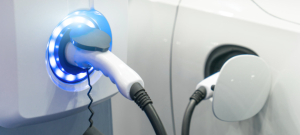
Take a look around at any road, parking lot, or highway, and you’ll see just how diverse today’s vehicle landscape has become. Within that evolving mix, electric vehicles (EVs) have seen years of rapid growth, and while the market is seemingly entering a new phase, interest remains. So, with several vehicles and fuel types to choose from, what keeps drivers coming back to electrified vehicles? Experian Automotive’s Automotive Market Trends Report: Q2 2026 found that among EV owners who returned to the market in the last 12 months, majority (72.2%) replaced their EV with another EV, while 18.5% switched to a gasoline vehicle. Hybrid buyers also showed considerable loyalty to electrification, with 55.7% of gas-hybrid owners staying with the same fuel type when replacing their vehicle, and 32.7% swapping for a gasoline vehicle. Consumers are seemingly remaining loyal to EVs and hybrids because they are attracted to the benefits that fit their everyday lifestyle, such as lower fuel or charging costs amid the elevated gas prices. For some, it could also be tied to convenience, as drivers who have found a reliable charging routine or appreciate the efficiency of a hybrid may have little reason to switch back to a traditional gasoline vehicle. Generations are taking different paths to electrification Generational differences also influence hybrid and EV loyalty, with younger consumers generally showing greater openness to alternative fuel types. While older generations tend to have greater familiarity with traditional gasoline vehicles, hybrid and EV adoption is increasing across all age groups as these options become more accessible and mainstream. Millennials, in particular, showed the strongest inclination toward electrified vehicles. Through Q2 2026, they accounted for the highest EV share at 8.2%, compared with Gen X at 5.5%, Gen Z (4.7%), and Baby Boomers (4.7%). The difference becomes even more pronounced when hybrids are in the mix, as 23.1% of Millennial registrations were gas-electric hybrids or plug-in hybrids, versus 16.7% for Gen X, 16.8% for Gen Z, and 18.0% for Baby Boomers. For automotive professionals, these differences make understanding who is driving what, and what they may choose next, increasingly important. The future of the automotive market may be less about consumers choosing one vehicle type over the other and more about understanding the distinct patterns and preferences of each generation. As the market continues to evolve, those insights can help automotive professionals better meet consumers where they are. To learn more about vehicle market trends, view the full Automotive Market Trends Report: Q2 2026 presentation on demand.

September 24, 2026 by John Howard

Subscribe to our Newsletter

Enter your name and email for the latest updates.

This site is protected by reCAPTCHA and the Google Privacy Policy and Terms of Service apply.

Subscribe to our Newsletter

Don't miss out on the latest industry trends and insights!
Subscribe