
Understanding Today’s First-time Homebuyers: Diverse Buyers and Needs

by Scott Hamlin 3 min read May 30, 2024

Mortgage lenders looking to attract first-time homebuyers must understand their needs, wants, and finances, especially as the economic environment and evolving generational trends shift. Understanding who this buyer segment is and what they buy unlocks growth potential for today’s attentive mortgage lenders.

Financial diversity defines first-time homebuyers

First-time homebuyers are searching for the attainable, which is not easy today. High interest rates, low housing inventory, and individual financial circumstances contribute to the hardships the housing market presents. Even with ups and downs and difficulties in the marketplace, first-time homebuyers continue to show their grit.

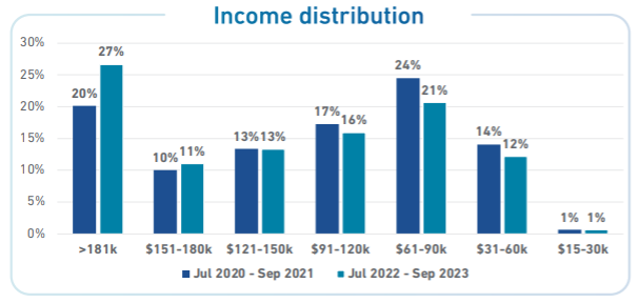
Over two-thirds of first-time homebuyers have an annual household income over $90k, with 27% having household income over $180k.
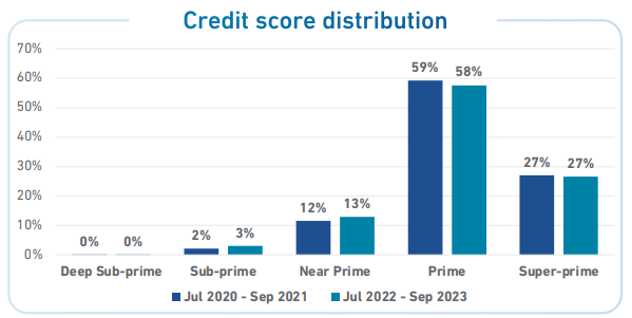
Additionally, Experian Housing research shows that 85% of first-time homebuyers have prime or super-prime credit scores.
While credit and income play critical roles in evaluating borrower risk, they’re not the only factors. The mortgage lending market is slowly leaning into the use of alternative credit data, such as rental payment information, to determine a borrower’s creditworthiness. These changes are crucial in our industry’s effort to support consumers on their journey towards homeownership.

Financial realities impact property choices

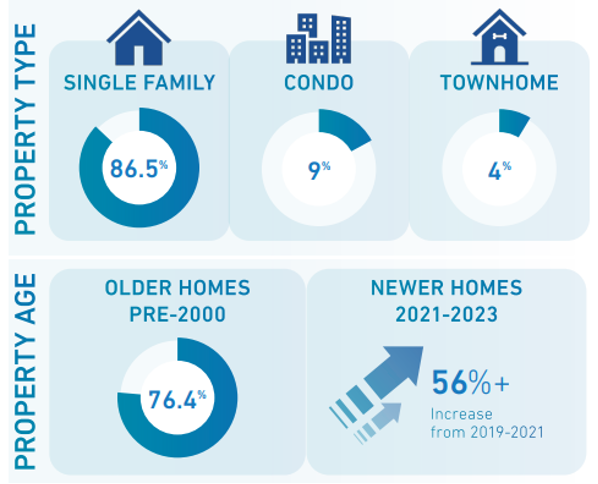
Experian Housing’s recent white paper looking at first-time purchasers shows over 85% buying single-family homes, with roughly 70% of these buyers belonging to Generation Y (Gen Y) and Generation Z (Gen Z). While starter homes suggest impermanence, Gen Y and Gen Z buying habits reflect their values and overall desire for stability.

These motivated buyers that understand the economic woes, are adjusting and looking for options. More than three-fourths of first-time purchases are older homes, built before 2000. However, Experian’s same research showed sales of new construction homes (2021-2023) increased over the prior two years, particularly among first-time buyers. Builder credits and other incentives make new builds more appealing, and lenders leveraging their mortgage market expertise will be able to discuss options customized to the borrower, helping them make the decision best fitting their needs.
Especially among younger generations, first-time homebuyers are considering different housing options in their path to homeownership. From multigenerational housing and co-owning a home with friends and family to smaller homes and moving further away for affordability reasons, options are on the table.1

Untapped potential for savvy lenders

The modern mortgage landscape offers thoughtful lenders opportunities to drive growth. Diversity in the first-time homebuyer profiles means that lenders who distinguish themselves by tailoring their services to the borrower’s needs. This may include, but is certainly not limited to:

For more information about the lending possibilities for first-time homebuyers, download our white paper and visit us online.

Download white paper Learn more

1 “Several Generations Under One Roof,” census.gov; “What to Know About Co-Buying A House,” myhome.freddiemac.com


Related Posts

Infographic – The Mortgage Conversion Opportunity: How Finding the Right Borrowers Drives More Closings

With only one in three mortgage shoppers who submit a hard credit inquiry ultimately closing, lenders have an opportunity to rethink how they identify and engage prospective borrowers. This post explores why credit scores alone may not provide a complete picture of borrower readiness and how broader financial insights can help lenders identify consumers who may be more prepared to move forward, prioritize engagement, and improve mortgage conversion.

September 10, 2026 by Royce Chang
Workflow Automation for Financial Services

Manual processes are quietly expensive. Every handoff between teams, every file transfer waiting in a queue and every decision that sits on someone's desk adds cost, introduces risk and slows the customer experience. For financial institutions, those delays translate directly into lost revenue and eroded margins. That’s why workflow automation is becoming critical for financial institutions looking to stay competitive. Done well, it doesn't just make existing tasks faster. It reshapes how decisions get made across the entire customer lifecycle, from the first marketing touch to account servicing and beyond. What is workflow automation? Workflow automation is the use of technology to run a sequence of tasks, decisions and handoffs with minimal manual intervention. Instead of a person moving work from one step to the next — pulling data, applying a rule, routing an account and sending a communication — software executes those steps automatically based on defined logic and real-time data. For financial institutions, workflow automation usually combines four ingredients: Data Connecting to the internal and external data sources that inform a decision. Analytics Scores, models and attributes that turn raw data into insights. Decisioning A rules engine that determines the right action for each customer or account. Execution The operational layer that carries out the action, whether that's an offer, a credit line change or outreach. The benefits of workflow automation The value of automation goes well beyond "doing the same thing faster." The benefits financial institutions consistently see include:Greater efficiency and lower operating costsAutomation frees underwriters, analysts and agents to focus on exceptions and high-value work rather than repetitive processing. Faster, more consistent decisionsA credit application that once waited in a queue can be assessed in real time against consistent, auditable policies, improving both the applicant's experience and portfolio quality. Better customer experiencesAutomation enables financial institutions to personalize communications at the point of interaction and offer the self-service options that many people now prefer. Improved compliance and governanceReduce the risk of costly compliance failures with built-in controls, audit trails and guided workflows. ScalabilityRespond to changing volumes without sacrificing speed, consistency or the customer experience. Where workflow automation makes the biggest difference Workflow automation tends to deliver the most value where decisions are frequent, repeatable and informed by data. In financial services, those opportunities exist across the customer lifecycle. Onboarding Onboarding is a customer's first experience of your organization, and it's also where friction can cause customers to abandon the process and turn to another provider. Forty percent of U.S. consumers have considered walking away from opening a new account when the process felt burdensome.1 An automated onboarding workflow can bring together document verification, device intelligence, behavioral analytics, credit attributes and more, then orchestrate them into a single decision. The result is a lower-friction experience for the customer and a consistent, auditable process. Once customers are on the books, serving them well means making continuous, high-volume decisions: credit line changes, cross-sell and up-sell opportunities, risk monitoring and retention actions. Automation makes it practical to run these recurring decisions consistently across an entire portfolio, using a holistic view of each customer that draws on multiple scores and attributes. Lending The underwriting process is a great example of how workflow automation can help prevent applicants from waiting days for an answer. Loan origination and credit decisioning capabilities are designed to create a seamless review process across consumer and commercial lending. After automating originations with our solutions, Michigan State University Federal Credit Union cut application processing time to under 24 hours. Fraud Financial institutions are checking fraud at every touchpoint, and the standard for AI fraud detection continues to rise as fraudsters use AI to slip under the thresholds of any single detection tool. Rather than running fraud checks in isolation, an automated workflow can run multiple fraud and identity verification services in parallel and weigh signals together. A fraud decisioning platform connects signals across internal systems, Experian data and third-party services, allowing teams to stay on top of evolving threats. Build a strong foundation for workflow automation Workflow automation can connect these stages, creating a consistent decisioning framework. What ultimately separates good automation from great automation is the quality of the data and decisioning software underneath it. An automated workflow is only as good as the information feeding it. That's where our comprehensive credit, alternative and identity data with the tools financial institutions need to act on it. Learn more here FAQs How does automated decisioning improve credit decisions? Automated decisioning applies consistent logic to every account in real time or in bulk, enabling faster and more informed decisions, quicker responses to market and regulatory changes at the point of interaction. What is workflow automation in financial services? It's the use of software to execute sequences of data gathering, analysis, decisioning and action. Does workflow automation replace human judgment? No. The goal is to automate routine, high-volume decisions so skilled staff can focus on the exceptions and complex cases that genuinely require human judgment. For example, a sensitive collections conversation or a nuanced underwriting call. Are we still compliant with regulations if we use an automated workflow process? Well-designed platforms include built-in governance, audit trails and compliance controls that help institutions align with requirements like the Fair Credit Reporting Act (FCRA) and other regulatory guidelines improving compliance compared with manual processes. How long does it take to implement? It varies by solution and scope, but modern cloud-based platforms are designed for fast onboarding and limited IT involvement. 1Global Fraud Snapshot 2025: Opportunities and challenge in identity, fraud and financial crime

September 9, 2026 by Zohreen Ismail
Expanding the Prescreen View with Alternative Credit Data

Start with a simple question Credit prescreen is an important tool in many lenders’ growth strategies. But the precision of any prescreen strategy depends on the data behind it. What financial behavior might traditional credit data alone not reveal? With Clarity data now available for Instant Prescreen decisioning, lenders can bring alternative credit insights into their targeting strategy, helping them identify prospects who may align with their established criteria, refine targeting strategies and explore additional acquisition opportunities while maintaining control over their risk thresholds. Additional insights alongside traditional credit data For many consumers, a traditional credit file tells a rich and reliable story. But it doesn't always tell the whole story. Consumers may also be using alternative financial products, such as small-dollar installment loans, single-payment loans, auto title loans or rent-to-own agreements and building payment histories that provide additional signals about their financial behavior. For lenders, those unseen signals can represent untapped opportunities. With more than 60 million unique subprime identities, Clarity's database helps lenders gain a more complete view of their applicant pool. Clarity data adds another dimension to that view, providing alternative credit insights that can help lenders better understand consumers whose financial behavior may not be fully represented by traditional credit data alone. How Clarity data sharpens instant prescreen decisioning Clarity provides specialty alternative credit data, with insights into subprime and near-prime consumer activity that may not appear in traditional credit files. And because Clarity is part of Experian, those insights can now be brought directly into Instant Prescreen decisioning. That means lenders can incorporate additional attributes and scores into their credit decisioning strategies without managing a separate data feed or stitching together disconnected sources. It has quickly become a visibility gap lenders can't ignore. Additional data may help support more granular segmentation and targeting strategies. Lenders remain in control of their criteria and risk thresholds while gaining additional information to inform their prescreen strategies. When considered alongside traditional credit data, alternative credit insights can support several aspects of prescreen decisioning: Identify more opportunities: Surface qualified prospects who may be harder to identify using traditional credit data alone. Refine targeting: Add alternative credit insights to help differentiate consumers with greater precision. Inform offer strategies: Use a broader view of financial behavior to help align consumers with appropriate offers. Expand intelligently: Explore incremental audience opportunities while maintaining control over your established risk criteria. Simplify execution: Access Experian and Clarity insights within a connected Instant Prescreen decisioning environment. See more opportunity in your prescreen strategy Growth doesn’t always require looking for an entirely new audience. Sometimes, it starts with seeing more in the audience already in front of you. By bringing Clarity data into Instant Prescreen, lenders can add another layer of insight to their decisioning, helping identify incremental opportunities, refine targeting and support acquisition decision processes across a broader range of consumers. Explore prescreen solutions

September 3, 2026 by Zohreen Ismail

Subscribe to our Newsletter

Enter your name and email for the latest updates.

This site is protected by reCAPTCHA and the Google Privacy Policy and Terms of Service apply.

Subscribe to our Newsletter

Don't miss out on the latest industry trends and insights!
Subscribe