Search Results for: synthetic id

One of the most difficult parts of combating fraud is the ability to distinguish between the variety of fraud types. To properly manage your fraud efforts, you need to be able to differentiate between first party fraud and third party fraud so you can determine the best treatment. After all, if you’re treating first party fraud as though it’s third party fraud, the customer you’re contacting for verification will give whatever information they need to in order to continue their criminal actions. So how do you verify each type of fraud without adding additional overhead or increasing the friction experienced by your customers? Combating Fraud During an Economic Downturn Particularly in times of economic uncertainty, the ability to detect and identify individual fraud types allows you to work to prevent them in the future. Through proper identification, you can also apply the correct treatments to maximize the effectiveness of your fraud response teams, since the treatment for first and third party fraud is different. During the economic upswing, first party fraud was a secondary concern. Businesses were easing friction to help continue growth. Now, the same customers that businesses thought would drive growth are hurting and unable to help offset the losses caused by bad actors. Now is the time to revisit existing fraud prevention and mitigation strategies to ensure that fraud is properly identified, and the correct treatments are applied. Introducing Precise ID® Model Suite Experian’s Precise ID Model Suite combines identity analytics with advanced fraud risk models to: Protect the entire customer journey again fraud – across account opening, login, maintenance and transactions Distinguish first-party, third-party, and synthetic identity fraud to determine the best next action Enable agility during changing market conditions Maintain regulatory compliance (including: KYC, CIP, GLBA, FCRA, FFIEC, PATRIOT Act, FACTA, and more) Improve overall fraud management strategies and reduce losses Precise ID Model Suite allows you to detect and distinguish types of fraud with a single call – enabling your business to maximize efficiency and eliminate redundancy across your fraud prevention teams. By accurately recognizing risk, and in particular, recognizing that first party fraud is in fact a type of fraud distinct from credit risk, you’re able to protect your portfolio and your customers. Learn more

This is the next article in our series about how to handle the economic downturn – this time focusing on how to prevent fraud in the new economic environment. We tapped two new experts—Chris Ryan, Market Lead, Fraud and Identity and Tischa Agnessi, Go-to-Market Lead, Decisioning Software—to share their thoughts on how to keep fraud out of your portfolio while continuing to lend. Q: What new fraud trends do you expect during the economic downturn? CR: Perhaps unsurprisingly, we tend to see high volumes of fraud during economic downturn periods. First, we anticipate an uptick in third-party fraud, specifically account takeover or ATO. It’ll be driven by the need for first-time users to be forced online. In particular, the less tech-savvy crowd is vulnerable to phishing attacks, social engineering schemes, using out-of-date software, or landing on a spoofed page. Resources to investigate these types of fraud are already strained as more and more requests come through the top of the funnel to approve new accounts. In fact, according to Javelin Strategy & Research’s 2020 Identity Fraud Study, account takeover fraud and scams will increase at a time when consumers are feeling financial stress from the global health and economic crisis. It is too early to predict how much higher the fraud rates will go; however, criminals become more active during times of economic hardships. We also expect that first party fraud (including synthetic identity fraud) will trend upwards as a result of the deliberate abuse of credit extensions and additional financing options offered by financial services companies. Forced to rely on credit for everyday expenses, some legitimate borrowers may take out loans without any intention of repaying them – which will impact businesses’ bottom lines. Additionally, some individuals may opportunistically look to escape personal credit issues that arise during an economic downturn. The line between behaviors of stressed consumers and fraudsters will blur, making it more difficult to tell who is a criminal and who is an otherwise good consumer that is dealing with financial pressure. Businesses should anticipate an increase in synthetic identity fraud from opportunistic fraudsters looking to take advantage initial financing offers and the cushions offered to consumers as part of the stimulus package. These criminals will use the economic upset as a way to disguise the fact that they’re building up funds before busting out. Q: With payment stress on the rise for consumers, how can lenders manage credit risk and prevent fraud? TA: Businesses wrestle daily with problems created by the coronavirus pandemic and are proactively reaching out to consumers and other businesses with fresh ideas on initial credit relief, and federal credit aid. These efforts are just a start – now is the time to put your recession readiness plan and digital transformation strategies into place and find solutions that will help your organization and your customers beyond immediate needs. The faceless consumer is no longer a fraction of the volume of how organizations interact with their customers, it is now part of the new normal. Businesses need to seek out top-of-line fraud and identity solutions help protect themselves as they are forced to manage higher digital traffic volumes and address the tough questions around: How to identify and authenticate faceless consumers and their devices How to best prevent an overwhelming number of fraud tactics, including first party fraud, account takeover, synthetic identity, bust out, and more. As time passes and the economic crisis evolves, we will all adapt to yet another new normal. Organizations should be data-driven in their approach to this rapidly changing credit crisis and leverage modern technology to identify financially stressed consumers with early-warning indicators, predict future customer behavior, and respond quickly to change as they deliver the best treatment at the right time based on customer-specific activities. Whether it’s preparing portfolio risk assessment, reviewing debt management, collections, and recovery processes, or ramping up your fraud and identity verification services, Experian can help your organization prepare for another new normal. Experian is continuing to monitor the updates around the coronavirus outbreak and its widespread impact on both consumers and businesses. We will continue to share industry-leading insights to help financial institutions differentiate legitimate consumers from fraudsters and protect their business and customers. Learn more About Our Experts [avatar user="ChrisRyan" /] Chris Ryan, Market Lead, Fraud and Identity Chris has over 20 years of experience in fraud prevention and uses this knowledge to identify the most critical fraud issues facing individuals and businesses in North America, and he guides Experian’s application of technology to mitigate fraud risk. [avatar user="tischa.agnessi" /] Tischa Agnessi, Go-to-Market Lead, Decisioning Software Tischa joined Experian in June of 2018 and is responsible for the go to market strategy for North America’s decisioning software solutions. Her responsibilities include delivering compelling propositions that are unique and aligned to markets, market problems, and buyer and user personas. She is also responsible for use cases that span the PowerCurve® software suite as well as application platforms, such as Decisioning as a ServiceSM and Experian®One.

As our society becomes ever more dependent on everything mobile, criminals are continually searching for and exploiting weaknesses in the digital ecosystem, causing significant harm to consumers, businesses and the economy. In fact, according to our 2018 Global Fraud & Identity Report, 72 percent of business executives are more concerned than ever about the impact of fraud. Yet, despite the awareness and concern, 54 percent of businesses are only “somewhat confident” in their ability to detect fraud. That needs to change, and it needs to change right away. Our industry has thrived by providing products and services that root out bad transactions and detect fraud with minimal consumer friction. We continue to innovate new ways to authenticate consumers, apply new cloud technologies, machine learning, self-service portals and biometrics. Yet, the fraud issue still exists. It hasn’t gone away. How do we provide effective means to prevent fraud without inconveniencing everyone in the process? That’s the conundrum. Unfortunately, a silver bullet doesn’t exist. As much as we would like to build a system that can detect all fraud, eliminate all consumer friction, we can’t. We’re not there yet. As long as money has changed hands, as long as there are opportunities to steal, criminals will find the weak points – the soft spots. That said, we are making significant progress. Advances in technology and innovation help us bring new solutions to market more quickly, with more predictive power than ever, and the ability to help clients to turn these services on in days and weeks. So, what is Experian doing? We’ve been in the business of fraud detection and identity verification for more than 30 years. We’ve seen fraud patterns evolve over time, and our product portfolio evolves in lock-step to counter the newest fraud vectors. Synthetic identity fraud, loan stacking, counterfeit, identity theft; the specific fraud attacks may change but our solution stack counters each of those threats. We are on a continuous innovation path, and we need to be. Our consumer and small business databases are unmatched in the industry for quality and coverage, and that is an invaluable asset in the fight against fraud. It used to be that knowing something about a person was the same as authenticating that same person. That’s just not the case today. But, just because I may not be the only person who knows where I live, doesn’t mean that identity information is obsolete. It is incredibly valuable, just in different ways today. And that’s where our scientists come into their own, providing complex predictive solutions that utilize a plethora of data and insight to create the ultimate in predictive performance. We go beyond traditional fraud detection methods, such as knowledge-based authentication, to offer a custom mix of passive and active authentication solutions that improve security and the customer experience. You want the latest deep learning techniques? We have them. You want custom models scored in milliseconds alongside your existing data requests. We can do that. You want a mix of cloud deployment, dedicated hosted services and on-premise? We can do that too. We have more than 20 partners across the globe, creating the most comprehensive identity management network anywhere. We also have teams of experts across the world with the know how to combine Experian and partner expertise to craft a bespoke solution that is unrivaled in detection performance. The results speak for themselves: Experian analyzes more than a billion credit applications per year for fraud and identity, and we’ve helped our clients save more than $2 billion in annual fraud losses globally. CrossCore™, our fraud prevention and identity management platform, leverages the full breadth of Experian data as well as the data assets of our partners. We execute machine learning models on every decision to help improve the accuracy and speed with which decisions are made. We’ve seen CrossCore machine learning result in a more than 40 percent improvement in fraud detection compared to rules-based systems. Our certified partner community for CrossCore includes only the most reputable leaders in the fraud industry. We also understand the need to expand our data to cover those who may not be credit active. We have the largest and most unique sets of alternative credit data among the credit bureaus, that includes our Clarity Services and RentBureau divisions. This rich data helps our clients verify an individual’s identity, even if they have a thin credit file. The data also helps us determine a credit applicant’s ability to pay, so that consumers are empowered to pursue the opportunities that are right for them. And in the background, our models are constantly checking for signs of fraud, so that consumers and clients feel protected. Fraud prevention and identity management are built upon a foundation of trust, innovation and keeping the consumer at the heart of every decision. This is where I’m proud to say that Experian stands apart. We realize that criminals will continue to look for new ways to commit fraud, and we are continually striving to stay one step ahead of them. Through our unparalleled scale of data, partnerships and commitment to innovation, we will help businesses become more confident in their ability to recognize good people and transactions, provide great experiences, and protect against fraud.

Managing your customer accounts at the identity level is ambitious and necessary, but possible Identity-related fraud exposure and losses continue to grow. The underlying schemes have elevated in complexity. Because it’s more difficult to perpetrate “card present” fraud in the post–chip-and-signature rollout here in the United States, bad guys are more motivated and getting better at identity theft and synthetic identity attacks. Their organized nefarious response takes the form of alternate attack vectors and methodologies — which means you need to stamp out any detected exposure point in your fraud prevention strategies as soon as it’s detected. Experian’s recently published 2018 Global Fraud and Identity Report suggests two-thirds, or 7 out of every ten, consumers want to see visible security protocols when they transact. But an ever-growing percentage of them, fueled in no small part by those tech-savvy millennials, expect to be recognized with little or no friction. In fact, 42 percent of the surveyed consumers who stated they would do more transactions online if there weren’t so many security hurdles to overcome were — you guessed it — millennials. So how do you implement identity and account management procedures that are effective and, in some cases, even obvious while being passive enough to not add friction to the user experience? In other words, from the consumer’s perspective, “Let me know you know me and are protecting me but not making it too difficult for me when I want to access or manage my account.” Let’s get one thing out of the way first. This isn’t a one-time project or effort. It is, however, a commitment to the continued informing of your account management strategies with updated identity intelligence. You need to make better decisions on when to let a low-risk account transaction (monetary or nonmonetary) pass and when to double down a bit and step up authentication or risk assessment checks. I’d suggest this is most easily accomplished through a single, real-time access point to myriad services that should, at the very least, include: Identity verification and reverification checks for ongoing reaffirmation of your customer identity data quality and accuracy. Know Your Customer program requirements, anyone? Targeted identity risk scores and underlying attributes designed to isolate identity theft, first-party fraud and synthetic identity. Fraud risk comes in many flavors. So must your analytics. Device intelligence and risk assessment. A customer identity is no longer just their name, address, Social Security number and date of birth. It’s their phone number, email address and the various devices they use to access your services as well. Knowing how that combination of elements presents itself over time is critical. Layered passive or more active authentication options such as document verification, biometrics, behavioral metrics, knowledge-based verification and alternative data sources. Ongoing identity monitoring and proactive alerting and segmentation of customers whose identity risk has shifted to the point of required treatment. Orchestration, workflow and decisioning capabilities that allow your team to make sense of the many innovative options available in customer recognition and risk assessment — without a “throw the kitchen sink at this problem” approach that will undoubtedly be way too costly in dollars spent and good customers annoyed. Fraud attacks are dynamic. Your customers’ perceptions and expectations will continue to evolve. The markets you address and the services you provide will vary in risk and reward. An innovative marketplace of identity management services can overwhelm. Make sure your strategic identity management partner has good answers to all of this and enables you to future-proof your investments.

Despite rising concerns about identity theft, most Americans aren’t taking basic steps to make it harder for their information to be stolen, according to a survey Experian conducted in August 2017: Nearly 3 in 4 consumers said they’re very or somewhat concerned their email, financial accounts or social media information could be hacked. This is up from 69% in a similar survey Experian conducted in 2015. Nearly 80% of survey respondents are concerned about using a public Wi-Fi network. Yet, barely half said they take the precaution of using a password-protected Wi-Fi network when using mobile devices. 59% of respondents are annoyed by safety precautions needed to use technology — up 12% from 2015. When your customer’s identity is stolen, it can negatively impact the consumer and your business. Leverage the tools and resources that can help you protect both. Protect your customers and your business>

Customer Experience during the holiday shopping season During the holidays, consumers transact at a much greater rate than any other time of the year. Many risk-management departments respond by loosening the reins on their decision engines to improve the customer experience — and to ensure that this spike does not trigger a response that would impede a holiday shopper’s desire to grab one more stocking stuffer or a gift for a last-minute guest. As a result, it also is the busy season for fraudsters, and they use this act of goodwill toward your customers to improve their criminal enterprise. Ultimately, you are tasked with providing a great customer experience to your real customers while eliminating any synthetic ones. Recent data breaches resulted in large quantities of personally identifiable information that thieves can use to create synthetic identities being published on the Dark Web. As this data is related to real consumers, it can be difficult for your identity-authentication solution to determine that these identities have been compromised or fabricated, enabling fraudsters to open accounts with your organization. Experian’s Identity Element Network™ can help you determine when synthetic identities are at work within your business. It evaluates nearly 300 data-element combinations to determine if certain elements appear in cyberspace frequently or are being used in combination with data not consistent with your customer’s identity. This proven resource helps you manage fraud across the Customer Life Cycle and hinder the damage that identity thieves cause. Identity Element Network examines a vast attribute repository that grows by more than 2 million transactions each day, revealing up-to-date fraud threats associated with inconsistent or high-risk use of personal identity elements. Our goal is to provide the comfort of knowing that you are transacting with your real customers. Don’t get left in the cold this holiday season — fraudsters are looking for opportunities to take advantage of you and your customers. Contact your Experian account executive to learn how Identity Element Network can help make sure you are not letting fraudsters exploit the customer experience intended for your real customers. Learn more about the delicate balance between customer and criminal by viewing our fraud e-book.

Experian recently contributed to a TSYS whitepaper focused on the various threats associated with first party fraud. I think the paper does a good job at summarizing the problem, and points out some very important strategies that can be employed to help both prevent first party fraud losses and detect those already in an institution’s active and collections account populations. I’d urge you to have a look at this paper as you begin asking the right questions within your own organization. Watch here The bad news is that first party fraud may currently account for up to 20 percent of credit charge-offs. The good news is that scoring models (using a combination of credit attributes and identity element analysis) targeted at various first party fraud schemes such as Bust Out, Never Pay, and even Synthetic Identity are quite effective in all phases of the customer lifecycle. Appropriate implementation of these models, usually involving coordinated decisioning strategies across both fraud and credit policies, can stem many losses either at account acquisition, or at least early enough in an account management stage, to substantially reduce average fraud balances. The key is to prevent these accounts from ending up in collections queues where they’ll never have any chance of actually being collected upon. A traditional customer information program and identity theft prevention program (associated, for example with the Red Flags Rule) will often fail to identify first party fraud, as these are founded in identity element verification and validation, checks that often ‘pass’ when applied to first party fraudsters.

The digital acceleration of the mortgage and rental industries has transformed how we verify income and employment—but it has also elevated the risks. As fraud grows in sophistication, lenders and verification providers alike must re-examine how they source, validate, and secure consumer data. In this new landscape, real-time trust requires real-time data. That’s why Experian Verify (EV) has embraced a transactional, on-demand approach—often referred to as the “Go Fetch” model—which we believe is fundamental to building a safer, more resilient verification infrastructure. Why Legacy Models Leave Gaps Many verification providers still rely on a “data-at-rest” model, where employment or income data is stored indefinitely in static databases. This approach creates a prime target for attackers and increases the risk of data becoming outdated, incomplete, or even manipulated by bad actors. Reducing the number of places where employment data is stored significantly strengthens security. Traditional models that maintain large databases can also introduce confirmation bias. They often send both the individual’s personally identifiable information (PII) and employer name to data partners, which can open the door to synthetic identities or fraudulent employer match backs. In fact, synthetic ID fraud accounted for 27% of business fraud cases in 2023, and by 2024, more than 70% of U.S. businesses identified deepfakes and AI-generated fraud as top threats. (https://www.experianplc.com/newsroom/press-releases/2024/new-experian-report-reveals-generative-ai--deepfakes-and-cybercr) Some legacy verification providers still transmit both PII and employer details when requesting information. At Experian, we take a different approach: we search based on the consumer rather than the employer, and we pin—that is, cross‑check—the submitted consumer data against Experian credit file information to verify authenticity from the start. Experian Employer Services maintains a secure copy of payroll data provided by our clients and updates it regularly. We have live, ongoing connections with employers and refresh data every two weeks directly from the source when payroll information is received. We never use stale data; every search pulls fresh, verified information. The “Go Fetch” Model: Built for a Modern Threat Environment In contrast, Experian Verify uses a real-time “Go Fetch” model, requesting data directly from the sources of truth at the time of the inquiry. No stale databases. No guessing games. This method reduces the window for fraud and ensures accuracy by design. For each Experian Verify transaction, the following ‘Go Fetch’ approach and controls are applied: Employment and income data are sourced in real-time with APIs from employers via Experian Employer Services (EES) and vetted payroll partners. The PII data from the inquiry and the PII data returned from each data provider each undergo a pinning process, which cross-references the multiple PII data elements with Experian credit data to validate the identity of the individual and confirm the correct individual's data is being returned by each data provider, for each employment record returned. Any income/employment data for which the second pin (based on data from the data provider) does not match the original first pin (from the inquiry) is disregarded to mitigate any risk of fat fingers/human error resulting in an incorrect consumer’s data on a VOIE report. This multi-stage pinning process is more robust than a hard match on SSN and results in fewer errors. This not only minimizes the risk of bad data—it blocks it before it enters the pipeline. More Than Technology: Trust Through Governance Trustworthy data isn’t just about speed—it’s about the quality and integrity of the source. Experian Verify only partners with enterprise payroll providers and employers who pass rigorous onboarding and credentialing requirements to connect to Experian systems. This ensures we’re sourcing data from legitimate entities, helping prevent “fake employer” vectors used in synthetic employment schemes. On top of this, data reasonability checks are run on every response, flagging anomalies like: End dates before start dates Net income exceeding gross income Illogical or invalid birthdates Any inconsistencies prompt an internal investigation, and where necessary, Experian Verify works directly with the data provider to resolve discrepancies—further reducing the propagation of fraudulent data. Further, minimum field checks are performed on every response, which ensures the minimum data necessary is returned before delivering to the client. This helps provide an additional safeguard on the data received from Data Providers, providing reasonable assurance that the data delivered to clients can be used in their decisioning flow. Industry Recommendation: A Call for Real-Time Integrity As more lending moves online and fraudsters grow more creative, the verification industry must evolve. Experian advocates for a new standard, built on these principles: Fetch data in real-time from sources of truth—don’t store it at rest. Avoid employer name matching, which can inadvertently validate fake entities. Validate PII match using multiple data elements instead of any hard match logic. Automated reasonability & minimum field checks, monitored and investigated by human oversight for flagged issues. Final Thought: Secure Growth Requires Secure Data In an era where risk moves fast, stale data is a liability. Real-time models like Experian Verify’s “Go Fetch” approach do more than deliver speed—they help lenders make decisions with greater confidence, mitigate exposure to fraud, and ultimately, protect both borrowers and the institutions that serve them. If trust is the foundation of lending, then real-time integrity must be the framework we build it on.

E-commerce is booming. Global online sales continue to rise with forecasts predicting growth to $7.89 trillion by 2028. Unfortunately, with any lucrative market comes fraudulent activity. As e-commerce grows by leaps and bounds, so do fraud incidents. E-commerce fraud is defined as any illegal or deceptive activity conducted during an online transaction with the intent to steal money, goods or sensitive information. As digital shopping flourishes, the tactics criminals use to exploit vulnerabilities in payment systems, customer accounts and merchant operations is rapidly expanding. According to Experian’s tenth annual Identity & Fraud Report, nearly 60% of U.S. businesses reported higher fraud losses in 2025, driven by more sophisticated attacks and legacy security gaps. The same report highlighted the damage from e-commerce fraud goes beyond the loss of revenue, directly impacting consumer trust. The survey found that only 13% of consumers feel fully secure opening new accounts. Chief amongst their concerns, 68% of consumer worry about identity theft, while 61% are fearful of stolen credit card data. The constant threat of e-commerce fraud has placed tremendous pressure on merchants and retailers to take robust steps in mitigating these attacks. In addition to protecting the bottom line, such measures are essential to earning consumer trust. According to Experian’s merchant-focused edition of our Identity & Fraud Report, consumers consistently perceive physical and behavioral biometrics tools as the most secure authentication methods — yet merchants are slow to adopt them. This gap highlights a key opportunity for businesses to strengthen security practices and build trust without adding friction to the user experience. After all, 74% of consumers say security is the most important factor when deciding to engage with a business.3 E-commerce fraud comes in many shapes and sizes E-commerce fraud is an umbrella term for a variety of attacks that target merchants and retailers. Amongst these is chargeback fraud, which occurs when a customer makes a legitimate purchase and then falsely disputes the charge with their credit card issuer, claiming the item never arrived or the transaction was unauthorized. The merchant loses both the product and the payment. Another is account takeover fraud, which happens when cybercriminals gain access to a customer’s online account, often through stolen login credentials, and use it to make unauthorized purchases, change shipping details or withdraw loyalty points. In card-not-present (CNP) fraud, attackers use stolen credit card information to make purchases online or by phone, where the physical card isn’t required. Because identity verification is limited, merchants bear the financial losses. This type of fraud includes BIN attacks, targeting the Bank Identification Number (BIN) on a credit or debit card that identifies the issuing financial institution. The goal of a BIN attack is to discover valid card numbers that can be used for fraudulent transactions. There are also refund fraud attacks, which involve scammers exploiting return or refund policies — such as claiming an item didn’t arrive or sending back a different or counterfeit product for reimbursement. Together, different forms of e-commerce fraud cost businesses billions annually, demanding strong fraud detection, authentication and monitoring systems to combat them. E-commerce fraud prevention should be a priority for every merchant and retailer. E-commerce fraud prevention: Ways merchants can fight back Merchants report the highest rates of new account fraud, yet it ranks just 15th among their active investments for 2025. While fraudsters continue to find new and innovative ways to attack, merchants and retailers can better prepare by following industry best practices in e-commerce fraud prevention: Chargeback fraud: When it comes to preventing and managing chargeback fraud, merchants should ensure customers are fully aware of return and refund policies. Utilize Address Verification Services (AVS) and Card Verification Value (CVV2) verification for online and over-the-phone transactions to establish the validity of a purchase. Keeping meticulous records of all transactions can serve as compelling evidence to defend the transaction. Leverage advanced fraud detection tools, such as tokenization and machine learning and AI fraud detection solutions that flag potentially fraudulent transactions and detect suspicious spending patterns and anomalies. Account takeover fraud: Merchants can minimize the risk of account takeover fraud using holistic, risk-based identity and device authentication, as well as behavioral analytics or targeted, knowledge-based authentication. End-to-end fraud management solutions can help reduce manual processes and remove the risk of information silos. Card-not-present fraud: Mitigating the risk of CNP fraud can be accomplished by implementing additional security measures at the time of transaction. These can include requiring verification information, such as a CVV code or a billing zip code to further authenticate the card holder’s identity. Advanced e-commerce fraud prevention tools To stay ahead of the fraudsters, merchants and retailers should take a multilayered approach to e-commerce fraud prevention that takes advantage of the latest, most advanced tools. At Experian®, we offer innovative fraud management solutions that provide the right level of security without causing customer friction. Three advanced e-commerce fraud prevention tools that every merchant should have in their arsenal include: Experian LinkTM: This tool enhances credit card authentication by linking the payment instrument with the digital identity presented for payment. Experian Link enables merchants to quickly and accurately identify legitimate customers to reduce friction and increase acceptance rates, reduce operation costs by preventing fraudulent credit card use, make better risk decisions to protect legitimate customers, limit false declines and identify potential fraudsters. Behavioral analytics: With the growth of AI, fraudsters can now replicate static data, but mimicking human behavior remains challenging. Behavioral analytics detects subtle interaction patterns that are extremely difficult for GenAI-driven fraudsters, including fraud rings and next-generation fraud bots, to replicate. Powered by NeuroID, our behavioral analytics capabilities help organizations proactively mitigate fraud, reduce false positives and streamline risk detection, ultimately creating a secure and frictionless experience for trustworthy users — while locking out fraudsters earlier. Precise ID®: This advanced tool enables businesses to pursue growth confidently by providing robust, real-time identity verification, as well as the ability to accurately identify a wide range of fraud risks including identity theft, synthetic identity and first-party fraud, along with tools that facilitate confirmation when risks are detected. The threat of fraud never stops Merchants and retailers are under a constant and unrelenting threat of attacks by fraudsters. Vigilance is required to protect the customer experience and the bottom line. Fortunately, innovative tools are leveling the playing field, offering much needed e-commerce fraud protection. To learn how Experian can help you combat fraud and meet consumers’ demands for trust and privacy, explore our best-in-class fraud management solutions and download our latest report on closing the trust gap in e-commerce. Explore our solutions Download report

Lending fraud – what is it? Lending fraud is a deceptive practice in which individuals or entities intentionally provide false or misleading information during the loan application process to secure credit or financial gain. This can include using fake identities, inflating income, forging documentation, or applying for loans without the intention of repayment. The consequences are significant: lenders suffer financial losses, consumers experience identity theft or damaged credit scores, and the economic system bears increased risk and regulatory scrutiny. Loan fraud is a growing concern across consumer, commercial, and mortgage lending sectors, affecting institutions of all sizes. How do I safeguard my organization from loan fraud? Preventing lending fraud is a complex, ongoing challenge that requires a multi-layered and holistic approach. As fraud tactics become more sophisticated, especially with the rise of generative AI and digital lending channels, financial institutions must continually evolve their defenses. Strong identity verification is the first line of defense. Lenders should implement advanced authentication tools beyond basic KYC (Know Your Customer) checks. This includes biometric verification, document verification, and device intelligence —technologies that assess the authenticity of the user and the device used during the application process. These tools can help detect synthetic identities — false identities created using a blend of real and fabricated information — increasingly used in loan fraud schemes. Another crucial strategy is real-time data analytics and behavioral monitoring. Lenders can quickly identify anomalies that may indicate fraudulent activity by analyzing applicant behavior, credit history, device usage patterns, and geolocation data in real time. For example, if an applicant submits multiple loan applications from different IP addresses in a short time frame, that could raise a red flag for potential lending fraud. Employee training and awareness are also essential. Frontline staff must be equipped to identify warning signs, such as inconsistencies in application documents or rushed, high-pressure loan requests. Regular fraud prevention training helps employees stay alert and aligned with the organization’s risk management protocols. 57% of financial institutions reported direct fraud losses exceeding $500,000 in the past year, with 25% exceeding $1 million.1 Consumers reported losing more than $12.5 billion to fraud in 2024, which represents a 25% increase over the prior year.2 In addition, robust internal controls and auditing mechanisms are critical in prevention. Organizations should regularly audit loan origination processes and investigate unusual approval patterns to detect insider fraud or systemic vulnerabilities. Finally, consumer education is a vital, often overlooked, aspect of combating loan fraud. Lenders should provide resources to help customers understand the risks of identity theft, encourage them to monitor their credit reports regularly, and empower them to report any suspicious activity. A well-informed customer base can be a valuable early warning system for fraud. With digital lending becoming the norm, preventing lending fraud means staying ahead of increasingly tech-savvy fraudsters. Leveraging data, technology, and education together builds a stronger, more resilient fraud defense framework. Lending fraud + Experian – How we can help With access to the industry’s most advanced fraud detection and identity verification tools, partnering with us gives you a potent edge in combating lending fraud. As a global leader in data, analytics, and technology, our comprehensive and accurate sets of consumer information enable you to spot risks that might be invisible through conventional means. Our approach combines rich data insights with powerful machine learning algorithms, delivering fraud prevention tools that are intelligent, scalable, and highly adaptive. Our fraud detection technologies are designed to protect every stage of the lending lifecycle. From real-time identity verification and multi-factor authentication solutions to behavioral biometrics and device intelligence, so you can detect synthetic identities, manipulated applications, and other forms of loan fraud before they lead to financial loss. In an era where trust is currency, partnering with us doesn’t just help protect against lending fraud — it enhances your reputation as a secure, responsible lender. You gain the confidence of your customers by providing safe, streamlined lending experiences while meeting compliance requirements and reducing operational risk. With us, you’re not just reacting to fraud—you’re anticipating it, preventing it, and confidently growing your business. Learn more 1State of Fraud Benchmark Report. Alloy. (2024). 2New FTC Data Show a Big Jump in Reported Losses to Fraud to $12.5 Billion in 2024. Federal Trade Commission. (2025, March 10).

In early 2025, European authorities shut down a cybercriminal operation called JokerOTP, responsible for over 28,000 phishing attacks across 13 countries. According to Forbes, the group used one-time password (OTP) bots to bypass two-factor authentication (2FA), netting an estimated $10 million in fraudulent transactions. It's just one example of how fraudsters are exploiting digital security gaps with AI and automation. What is an OTP bot? An OTP bot is an automated tool designed to trick users into revealing their one-time password, a temporary code used in multifactor authentication (MFA). These bots are often paired with stolen credentials, phishing sites or social engineering to bypass security steps and gain unauthorized access. Here’s how a typical OTP bot attack works: A fraudster logs in using stolen credentials. The user receives an OTP from their provider. Simultaneously, the OTP bot contacts the user via SMS, call or email, pretending to be the institution and asking for the OTP. If the user shares the OTP, the attacker gains control of the account. The real risk: account takeover OTP bots are often just one part of a larger account takeover strategy. Once a bot bypasses MFA, attackers can: Lock users out of their accounts Change contact details Drain funds or open fraudulent lines of credit Stopping account takeover means detecting and disrupting the attack before access is gained. That’s where strong account takeover/login defense becomes critical, monitoring suspicious login behaviors and recognizing high-risk signals early. How accessible are OTP bots? Mentions of OTP bots on dark web forums jumped 31% in 2024. Bot services offering OTP bypass tools were being sold for just $10 to $50 per attack. One user on a Telegram-based OTP bot platform reported earning $50,000 in a month. The barrier to entry for fraudsters is low, and these figures highlight just how easy and profitable it is to launch OTP bot attacks at scale. The evolution of fraud bots OTP bots are one part of the rising wave of fraud bots. According to our report, The Fraud Attack Strategy Guide, bots accounted for 30% of fraud attempts at the beginning of 2024. By the end of the year, that number had risen to 80% — a nearly threefold increase in just 12 months. Today’s fraud bots are more dynamic and adaptive than before. They go beyond simple scripts, mimicking human behavior, shifting tactics in real time and launching large-scale bot attacks across platforms. Some bypass OTPs entirely or refine their tactics with each failed attempt. With generative AI in the mix, bot-based fraud is getting faster, cheaper and harder to detect. Effective fraud defense now depends on detecting intent, analyzing behavior in real time and stopping threats earlier in the process. Read this blog: Learn more about identifying and stopping bot attacks. A cross-industry problem OTP bots can target any organization that leverages 2FA, but the impact varies by sector. Financial services, fintech and buy now, pay later (BNPL) providers are top targets for OTP bot attacks due to high-value accounts, digital onboarding and reliance on 2FA. In one case outlined in The Fraud Strategy Attack Guide, a BNPL provider saw 25,000+ bot attempts in 90 days, with over 3,000 bots completing applications, bypassing OTP or using synthetic identities. Retail and e-commerce platforms face attacks designed to take over customer accounts and make unauthorized purchases using stored payment methods, gift cards or promo credits. OTP bots can help fraudsters trigger and intercept verification codes tied to checkout or login flows. Healthcare and education organizations can be targeted for their sensitive data and widespread use of digital portals. OTP bots can help attackers access patient records, student or staff accounts, or bypass verification during intake and application flows, leading to phishing, insurance fraud or data theft. Government and public sector entities are increasingly vulnerable as fraudsters exploit digital services meant for public benefits. OTP bots may be used to sign up individuals for disbursements or aid programs without their knowledge, enabling fraudsters to redirect payments or commit identity theft. This abuse not only harms victims but also undermines trust in the public system. Across sectors, the message is clear: the bots are getting in too far before being detected. Organizations across all industries need the ability to recognize bot risk at the very first touchpoint; the earlier the better. The limitations of OTP defense OTP is a strong second factor, but it’s not foolproof. If a bot reaches the OTP stage, it's highly likely that they've already: Stolen or purchased valid credentials Found a way to trigger the OTP Put a social engineering play in motion Fighting bots earlier in the funnel The most effective fraud prevention doesn’t just react to bots at the OTP step; it stops them before they trigger OTPs in the first place. But to do that, you need to understand how modern bots operate and how our bot detection solutions, powered by NeuroID, fight back. The rise of GenAI-powered bots Bot creation has become dramatically easier. Thanks to generative AI and widely available bot frameworks, fraudsters no longer need deep technical expertise to launch sophisticated attacks. Today’s Gen4 bots can simulate human-like interactions such as clicks, keystrokes, and mouse movements with just enough finesse to fool traditional bot detection tools. These bots are designed to bypass security controls, trigger OTPs, complete onboarding flows, and even submit fraudulent applications. They are built to blend in. Detecting bots across two key dimensions Our fraud detection solutions are purpose-built to uncover these threats by analyzing risk signals across two critical dimensions. 1. Behavioral patternsEven the most advanced bots struggle to perfectly mimic human behavior. Our tools analyze thousands of micro-signals to detect deviations, including: Mouse movement smoothness and randomness Typing cadence, variability and natural pauses Field and page transition timing Cursor trajectory and movement velocity Inconsistent or overly “perfect” interaction patterns By identifying unnatural rhythms or scripted inputs, we can distinguish real users from automation before the OTP step. 2. Device and network intelligenceIn parallel, our technology examines device and network indicators that often reveal fraud at scale: Detection of known bot frameworks and automation tools Device fingerprinting to flag repeat offenders Link analysis connecting devices across multiple sessions or identities IP risk, geolocation anomalies and device emulation signals This layered approach helps identify fraud rings and coordinated bot attacks, even when attackers attempt to mask their activity. A smarter way to stop bots We offer both a highly responsive, real-time API for instant bot detection and a robust dashboard for investigative analytics. This combination allows fraud teams to stop bots earlier in the funnel — before they trigger OTPs, fill out forms, or submit fake credentials — and to analyze emerging trends across traffic patterns. Our behavioral analytics, combined with device intelligence and adaptive risk modeling, empowers organizations to act on intent rather than just outcomes. Good users move forward without friction. Bad actors are stopped at the source. Ready to stop bots in their tracks? Explore Experian’s fraud prevention services. Learn more *This article includes content created by an AI language model and is intended to provide general information.
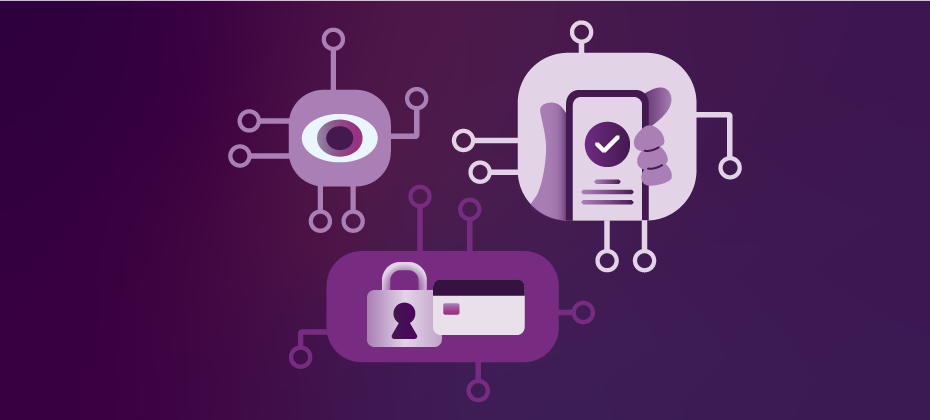
As we step into 2025, the convergence of credit and fraud risk has become more pronounced than ever. With fraudsters leveraging emerging technologies and adapting rapidly to new defenses, risk managers need to adopt forward-thinking strategies to protect their organizations and customers. Here are the top fraud trends and actionable resolutions to help you stay ahead of the curve this year. 1. Combat synthetic identity fraud with advanced AI models The trend: Synthetic identity fraud is surging, fueled by data breaches and advanced AI tooling. Fraudsters are combining genuine credentials with fabricated details, creating identities that evade traditional detection methods. Resolution: Invest in sophisticated identity validation tools that leverage advanced AI models. These tools can differentiate between legitimate and fraudulent identities, ensuring faster and more accurate creditworthiness assessments. Focus on integrating these solutions seamlessly into your customer onboarding process to enhance both security and user experience. 2. Strengthen authentication against deepfakes The trend: Deepfake technology is putting immense pressure on existing authentication systems, particularly in high-value transactions and account takeovers. Resolution: Adopt a multilayered authentication strategy that combines voice and facial biometrics with ongoing transaction monitoring. Dynamic authentication methods that evolve based on user behavior and fraud patterns can effectively counter these advanced threats. Invest in solutions that ensure digital interactions remain secure without compromising convenience. 3. Enhance detection of payment scams and APP fraud The trend: Authorized Push Payment (APP) fraud and scams are increasingly difficult to detect because they exploit legitimate customer behaviors. Resolution: Collaborate with industry peers and explore centralized consortia to share insights and develop robust detection strategies. Focus on monitoring both inbound and outbound transactions to identify anomalies, particularly payments to mule accounts. 4. Optimize Your Fraud Stack for Efficiency and Effectiveness The trend: Outdated device and network solutions are no match for GenAI-enhanced fraud tactics. Resolution: Deploy a layered fraud stack with persistent device ID technology, behavioral analytics, and GenAI-driven anomaly detection. Begin with frictionless first-tier tools to filter out low-hanging fraud vectors, reserving more advanced and costly tools for sophisticated threats. Regularly review and refine your stack to ensure it adapts to evolving fraud patterns. 5. Build collaborative relationships with fraud solution vendors The trend: Vendors offer unparalleled industry insights and long-tail data to help organizations prepare for emerging fraud trends. Resolution: Engage in reciprocal knowledge-sharing with your vendors. Leverage advisory boards and industry insights to stay informed about the latest attack vectors. Choose vendors who provide transparency and are invested in your fraud mitigation goals, turning product relationships into strategic partnerships. Turning resolutions into reality Fraudsters are becoming more ingenious, leveraging GenAI and other technologies to exploit vulnerabilities. To stay ahead of fraud in 2025, let us make fraud prevention not just a resolution but a commitment to safeguarding trust and security in a rapidly evolving landscape. Learn more

Bots have been a consistent thorn in fraud teams’ side for years. But since the advent of generative AI (genAI), what used to be just one more fraud type has become a fraud tsunami. This surge in fraud bot attacks has brought with it: A 108% year-over-year increase in credential stuffing to take over accounts1 A 134% year-over-year increase in carding attacks, where stolen cards are tested1 New account opening fraud at more than 25% of businesses in the first quarter of 2024 While fraud professionals rush to fight back the onslaught, they’re also reckoning with the ever-evolving threat of genAI. A large factor in fraud bots’ new scalability and strength, genAI was the #1 stress point identified by fraud teams in 2024, and 70% expect it to be a challenge moving forward, according to Experian’s U.S. Identity and Fraud Report. This fear is well-founded. Fraudsters are wasting no time incorporating genAI into their attack arsenal. GenAI has created a new generation of fraud bot tools that make bot development more accessible and sophisticated. These bots reverse-engineer fraud stacks, testing the limits of their targets’ defenses to find triggers for step-ups and checks, then adapt to avoid setting them off. How do bot detection solutions fare against this next generation of bots? The evolution of fraud bots The earliest fraud bots, which first appeared in the 1990s2 , were simple scripts with limited capabilities. Fraudsters soon began using these scripts to execute basic tasks on their behalf — mainly form spam and light data scraping. Fraud teams responded, implementing bot detection solutions that continued to evolve as the threats became more sophisticated. The evolution of fraud bots was steady — and mostly balanced against fraud-fighting tools — until genAI supercharged it. Today, fraudsters are leveraging genAI’s core ability (analyzing datasets and identifying patterns, then using those patterns to generate solutions) to create bots capable of large-scale attacks with unprecedented sophistication. These genAI-powered fraud bots can analyze onboarding flows to identify step-up triggers, automate attacks at high-volume times, and even conduct “behavior hijacking,” where bots record and replicate the behaviors of real users. How next-generation fraud bots beat fraud stacks For years, a tried-and-true tool for fraud bot detection was to look for the non-human giveaways: lightning-fast transition speeds, eerily consistent keystrokes, nonexistent mouse movements, and/or repeated device and network data were all tell-tale signs of a bot. Fraud teams could base their bot detection strategies off of these behavioral red flags. Stopping today’s next-generation fraud bots isn’t quite as straightforward. Because they were specifically built to mimic human behavior and cycle through device IDs and IP addresses, today’s bots often appear to be normal, human applicants and circumvent many of the barriers that blocked their predecessors. The data the bots are providing is better, too3, fraudsters are using genAI to streamline and scale the creation of synthetic identities.4 By equipping their human-like bots with a bank of high-quality synthetic identities, fraudsters have their most potent, advanced attack avenue to date. Skirting traditional bot detection with their human-like capabilities, next-generation fraud bots can bombard their targets with massive, often undetected, attacks. In one attack analyzed by NeuroID, a part of Experian, fraud bots made up 31% of a business's onboarding volume on a single day. That’s nearly one-third of the business’s volume comprised of bots attempting to commit fraud. If the business hadn’t had the right tools in place to separate these bots from genuine users, they wouldn’t have been able to stop the attack until it was too late. Beating fraud bots with behavioral analytics: The next-generation approach Next-generation fraud bots pose a unique threat to digital businesses: their data appears legitimate, and they look like a human when they’re interacting with a form. So how do fraud teams differentiate fraud bots from an actual human user? NeuroID’s product development teams discovered key nuances that separate next-generation bots from humans, and we’ve updated our industry-leading bot detection capabilities to account for them. A big one is mousing patterns: random, erratic cursor movements are part of what makes next-generation bots so eerily human-like, but their movements are still noticeably smoother than a real human’s. Other bot detection solutions (including our V1 signal) wouldn’t flag these advanced cursor movements as bot behavior, but our new signal is designed to identify even the most granular giveaways of a next-generation fraud bot. Fraud bots will continue to evolve. But so will we. For example, behavioral analytics can identify repeated actions — down to the pixel a cursor lands on — during a bot attack and block out users exhibiting those behaviors. Our behavior was built specifically to combat next-gen challenges with scalable, real-time solutions. This proactive protection against advanced bot behaviors is crucial to preventing larger attacks. For more on fraud bots’ evolution, download our Emerging Trends in Fraud: Understanding and Combating Next-Gen Bots report. Learn more Sources 1 HUMAN Enterprise Bot Fraud Benchmark Report 2 Abusix 3 NeuroID 4 Biometric Update

Today’s fast-paced, digital-first hiring environment calls for a more comprehensive approach to pre-employment screening. With growing pressure on employers and HR teams to make swift, accurate, and secure hiring decisions, having access to the tools and data to enhance efficiency and security is more important than ever. By evolving beyond traditional screening methods, background screeners can better meet these needs and deliver added value to their clients. Fraud remains a significant challenge. In fact, fraud scams resulted in a staggering $485.6 billion in losses in 20231 — and hiring teams aren’t exempt from these risks. Fraudulent resumes, synthetic identities, and the risk of non-compliance with evolving regulations create a challenging landscape for pre-employment verifications. What if there was a way to make smarter, faster, and more secure hiring decisions? This article explores how background screeners can optimize pre-employment verification processes, reduce fraud risks, and ensure compliance — all while delivering a positive candidate experience. What is pre-employment screening? Employers conduct pre-employment screenings to thoroughly evaluate job candidates and make informed hiring decisions. It’s designed to verify key details about candidates, such as their identity, employment history, and references among others to assess their suitability for a role and ensure compliance with industry regulations. Enhancing traditional screening processes For decades, pre-employment background checks have been a cornerstone of the hiring process. While effective, many traditional methods face challenges in keeping up with the evolving demands of modern hiring. Delays in hiring: Background checks can oftentimes rely on manual processes, which could extend timelines leading to delays of days or even weeks. This not only slows down hiring cycles but can make it harder for employers to compete for top talent in a tight labor market. Errors and inaccuracies: Human errors, incomplete data, and inconsistencies across systems can lead to missed insights or red flags. Fraudulent activity: As hiring becomes increasingly digital, identity theft and synthetic identities present growing challenges to verifying candidate-provided data. Regulatory challenges: With regulations like the Equal Employment Opportunity Commission (EEOC) and Fair Credit Reporting Act (FCRA), companies must navigate complex compliance requirements to avoid legal and financial repercussions. 1 in 3 HR professionals report losing top candidates due to slow pre-employment screening processes.2 These challenges highlight the opportunity to build on existing screening practices with tools that enhance speed, provide actionable insights and prevent fraud. Adapting to the evolving fraud landscape Employment fraud is becoming increasingly sophisticated, fueled by trends like the rise of remote work and digital applications. In fact, the employment sector accounted for 45% of all false document submissions in 2023, making it the most targeted industry for fraud.3 From fake references and degrees to synthetic identities created using stolen personal information, the risks are higher than ever. Synthetic identity fraud: This form of fraud — where fake identities are created by combining real and fabricated data — makes up more than 80% of all new account fraud.4 Fake credentials: Many candidates falsify qualifications or work histories to enhance their chances of securing a role. Compliance risks: Failure to verify candidate information accurately can result in legal penalties, brand reputation damage, or internal security breaches. Modernizing pre-employment screening The good news? Experian offers advanced solutions that complement existing screening processes, empowering background screeners to deliver more efficient, secure and reliable results for their clients looking to higher faster, and with greater confidence. Gain a more holistic view of a candidate’s risk profile: Experian’s nationwide database contains files on more than 245 million credit-active consumers, providing the most current, accurate, and comprehensive information available in the industry. Conduct real-time identity verification: Leverage a range of identity verification solutions to authenticate and verify a candidate’s identity by accessing a breadth set of non-credit and credit data sources to create a robust social footprint that defines each consumer as unique individuals. Integrate advanced fraud detection: Powered by purpose-built analytics and machine learning algorithms, Experian’s fraud detection tools can detect synthetic identities, inconsistencies, and other red flags while ensuring a seamless candidate experience. Enhance compliance efforts: Experian’s solutions are designed to help businesses navigate complex compliance requirements with ease. Fraud prevention playbook in preemployment Uncover essential strategies for fraud prevention and identity verification in employment screening. Download now The pre-employment screening landscape is evolving, and staying ahead requires tools that enhance the efficiency and effectiveness of your processes. Experian’s advanced solutions are designed to complement your existing screening services, helping you reduce fraud risks, maintain compliant, and deliver data-driven insights that empower smarter hiring decisions. Get started today Ready to transform your pre-employment verification process with fraud mitigation and identity verification solutions? Explore our innovative solutions today. Learn more 1 Nasdaq finds scams led to $486 billion in losses in 2023, 2024. 2 Research reveals Candidates’ Frustrations with Hiring Process, 2024. 3 Employment Identity Fraud: Do You Know Who You’re Hiring, 2024. 4 Report: Synthetic identity fraud is growing, 2024.

The digital domain is rife with opportunities, but it also brings substantial risks, especially for organizations. Among the innovative tools that have risen to prominence for fraud detection and online security is browser fingerprinting. Whether you're looking to minimize security gaps or bolster your fraud prevention strategy, understanding how this technology works can provide a significant advantage in today’s ever-evolving fraud and identity landscape. This article explores the concept, functionality, and applications of browser fingerprinting while also examining its benefits and relevance for organizations. How does browser fingerprinting work? Browser fingerprinting is a powerful technology designed to collect unique identifying information about a user’s web browser and device. By compiling data points such as browser type, operating system, time zone, and installed plugins, browser fingerprinting creates a distinct profile — or "fingerprint"— that allows websites to recognize returning users without relying on cookies. Here’s a breakdown of its key steps: Data collection: When a user visits a website, their browser sends information, such as user-agent strings or metadata, to the website's servers. This data provides insights about their browser, device, and system. Fingerprint creation: The collected information is processed to generate a unique ID or fingerprint, representing the user's specific configuration. Tracking and analyzing: These fingerprints enable websites to track and analyze user behavior, detect anomalies, and identify users without relying on traditional tracking mechanisms like cookies. For organizations, employing technology that leverages such fingerprints adds an additional layer to identity verification, detecting discrepancies that may indicate fraud attempts. What are the different techniques? Not all browser fingerprinting methods are identical; varying approaches offer different strengths. The most common techniques used today include: Canvas fingerprinting: This method utilizes the "Canvas" element in HTML5. When a website sends a command to draw a hidden image on a user's device, the way the image is rendered reveals unique characteristics about the device's graphics hardware and software. Font fingerprinting: Font fingerprinting involves analyzing the fonts installed on a user's system. Since computers and browsers render text in slightly different ways based on their configurations, the resulting variations aid in identifying users. Plugin enumeration: Browsers and devices often come equipped with plugins or extensions like Flash or Java. Analyzing which plugins are installed, their versions, and their order helps websites build unique fingerprints. What are the benefits of browser fingerprinting? For organizations, browser fingerprinting is not just a technical marvel — it’s a strategic asset. Benefits include: Enhanced fraud detection: Browser fingerprinting detects inconsistencies within user accounts, flagging unauthorized logins, synthetic identity fraud, or account takeover fraud without introducing significant friction for legitimate users. By identifying patterns that deviate from the norm, organizations can better prepare for malicious activities. Learn more about addressing account takeover fraud. Supports multi-layered security: A single security measure often isn't enough to combat advanced fraudulent schemes. Browser fingerprinting pairs seamlessly with other fraud management tools, such as behavioral analytics and risk-based authentication, to provide robust security. See how behavioral analytics can help organizations spot and stop next-generation fraud bots. Seamless user experience: Unlike cookies or authentication codes, browser fingerprinting operates passively in the background. Users remain unaware of the process, ensuring their experience is unaffected while still maintaining security. Level up with Experian's fraud prevention tools Browser fingerprinting offers organizations a game-changing tool to secure online interactions. However, given the growing complexity of fraud threats, organizations will need additional layers of insights and protection. Experian offers integrated, AI-driven fraud prevention solutions tailor-made to tackle challenges in the digital space. By leveraging advanced technologies like browser fingerprinting alongside Experian’s solutions, organizations can safeguard their operations and uphold customer trust while maintaining a frictionless user experience. Learn more about our fraud prevention solutions This article includes content created by an AI language model and is intended to provide general information.