
Small Business Matters is written and managed by the Experian Small Business team. Subscribe for business credit education, expert advice, and helpful articles to build a strong knowledge of business credit so you can scale and grow your business.

Business Credit Reports & Scores

Experian Business Credit Reports and Scores

Your business has a credit score too and it can be pivotal to your success. Learn more about building strong business credit.

Read more

Customer Testimonials

Experian Customer Testimonials

Hear what Experian small business customers have to say about our credit report subscriptions; and the difference it makes.

View Testimonials

News & Research

Experian News & Research

Stay ahead of the curve by being informed about industry trends and policies that impact small businesses.

Read more


The latest from our experts

Loading…
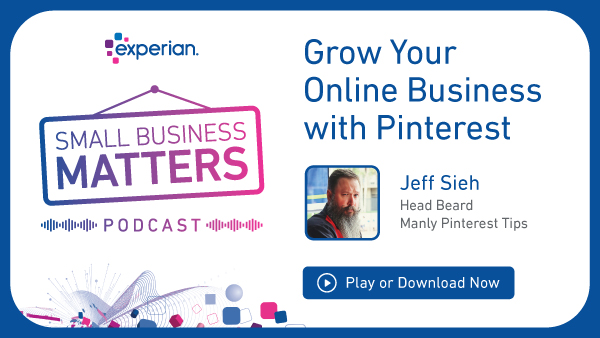
Pinterest Marketing with Jeff Sieh

Small Business Matters – Episode #18 If you are running an online store for your small business, you know how important organic traffic can be. So for this small business matter, we’re going to talk about Pinterest marketing, and why it has become such an important component for so many online resellers. Jeff Sieh is here to help us unpack all of that. Jeff is an international speaker and visual marketing consultant, specializing in Pinterest, visual marketing, and video. He hosts the Social Media News Live show and podcast and is also “Head Beard” at Manly Pinterest Tips. Jeff has worked with and produced content for many leading companies and influencers, including Guy Kawasaki, Kim Garst, Social Media Examiner, and Tailwind. Watch our interview What follows is a lightly edited transcript of our interview. Gary Stockton: Jeff, welcome to Small Business Matters. Jeff Seih: Man, I am so excited to be here, Gary. Thank you so much for having me. I'm excited to geek out with you a little bit on Pinterest. Gary Stockton: That's awesome. And I've been looking forward to this interview since we started talking about it a couple of weeks ago, and reading so much about what you've done with Pinterest and in social media as well. But can you tell us a little bit about how you got started focusing on Pinterest? Jeff Sieh: Yeah. So many moons ago, back in the day I was driving. I can't remember. I just launched a new blog post and I was listening to a podcast like I like to do on long trips. And I heard this girl on that was Social Media Examiner's podcast talking about Pinterest and how much traffic it had driven to her website. And I was like, man, I could really use some traffic. So I thought, Oh, I might as well start a Pinterest account. So I started doing that and I wrote this article called, when I started using Pinterest, called Manly Pinterest Tips, #1. And it was how I shared the secret board, because you can share boards with people and keep them secret, with my daughter, and we were sharing tips and crafts and that was when she was younger and stuff, and recipes. And that post did really well. And then I went on Pinterest and it did even better. And this was back in the day when Google Plus was all the rage and I was there. I had a lot of followers and actually started a live show that was back before Facebook live and all that stuff happened with four other guys, and we were able to interview people like Guy Kawasaki, who you mentioned, who I do his podcast for now, but also people like the guy who was the producer for "Pretty Woman" and "Under Seige" we got, it opened a lot of doors doing live video and then I turned it to a podcast and that led to working a lot with Social Media Examiner and speaking and all sorts of things. So yeah, it all started with a little blog about Pinterest back in the day on Google Plus. Gary Stockton: Wow. So what's unique about Pinterest marketing? What sets it apart from marketing on other social platforms? Jeff Sieh: So the founders, even the founders of Pinterest have said that it's not really a social platform. And I know it gets lumped in there with Facebook and, YouTube and Snapchat and all those things. But it is actually more of a search engine. So I would say it's more like YouTube than any of the other ones, all the social platforms, but they call it like a discovery engine and it's a place to go to discover new ideas and pin things you like. There's no fake news. There's no spammy stuff that comes out. It's a visual search engine, is what it is. And so that's what really sets it apart from every other thing. And the thing that really attracted me to it when I first started, and it's still true today. Is that the, like the shelf life for a tweet or a Facebook post is something like eight minutes. It's really small. Pinterest has this long term effect. Now it takes a little bit to get started and to go, but it's a search engine. So people are going and pinning your pins. And I think the average time for people like before they do something, it's three months. So it lasts for a long time. It's got this huge shelf life and, I don't know about you, Gary, but creating content is hard and, I want to get the most of it out of as I can, and Pinterest marketing made sense to me because it would surface back up. It's just really, it's that long term and it's that long tail that really was attractive to me. Gary Stockton: That's incredible because I spend, an inordinate amount of time distributing content and creating the content, yes, that's a big job, distributing it. And that half life of a tweet or a Facebook post, it's, you really have to think about that, you know what I mean? We do have to get our new content out there, yes, but the fact that Pinterest marketing is such a long term play it really makes sense if you double down on Pinterest. Is it hard to build an audience on there? Jeff Sieh: It's harder now than it's ever been before. So like when I first started, it's a lot harder now. But the thing about Pinterest marketing is so cool is that you don't have to have a lot of followers. You don't, because the algorithm is surfing your content, just like Google, you don't have to have a lot of followers on Google to make it successful. If you show up in the search results, the same thing with Pinterest. There's people who have 1500 or smaller audiences and they're killing it doing Pinterest marketing. They're making sales. They're getting traffic to their website because they're creating content that an audience on Pinterest really wants and it's surfacing up through the algorithm, what they call the smart feed, which is what you scroll through Pinterest and you see all those pins. That's what the algorithm is serving you. And if you strike a nerve or you're pinning content that really resonates on Pinterest, you don't have to have a huge number of followers. So I have, I think, I have I haven't checked in a while, but 30,000 followers on Pinterest, but my monthly views for my content is like over a million. And some of those smaller people who don't even have 30, 000, they can even have a lot more than I have. And it's not so much followers that you want on Pinterest. It's not like Instagram or anything like that. I'm always in it for the clicks. I want people to click on it and go back to my website. The whole reason I'm there is for traffic. And you got to remember your audience on Pinterest. They're not coming to Pinterest to, like hunt for likes or, to see what everyone else is doing. They're looking to find what they love and what they want to save and maybe purchase or go read later. And It's almost a curation engine where they're going and let's say, Gary, you're decorating a man cave, like you've got a new garage and you're going to decorate it all out. And so you'll start going to Pinterest and going, Oh, I really like that workbench. Oh, I really like what they've done with that. That's how Pinterest marketing can help you here, if you're selling that stuff. That metal art, that would look great in my man cave, it and you pin it. And then later on, you go purchase it or you go and you find more stuff to add to it. It makes a lot of sense for, thinking about your audience and knowing that people are going there to dream and to be inspired by and, purchase things. I think they said that people on Pinterest are 30% more likely to purchase things because they're shoppers. That's why they're there. The other thing is, brands sometime have a hard time. Like on Facebook, they have, oh, there's a post from a brand. Nobody wants it. On Pinterest, they don't mind. They like it. There's a lot of stuff from brands. Target kills it on there. Home Depot, Lowe's. They do some really cool creative stuff and people enjoy it because they have tapped into a way that they're helpful to that audience, because they've devoted some time to Pinterest marketing. Gary Stockton: So we talked about finding products for a man cave. It's not just for… It's not just for men, right? And it's not just for women. And I think that's probably one of the biggest myths out there that we can bust right now, right? Jeff Sieh: Yeah. So the funny thing is, so when I started Manly Pinterest tips, I did it as a joke, because it was known, it was like, this is a platform for like nail art and braids and, maybe some recipes. And you had to dig a little bit deeper back in the day when I first started, but there's just all this content for, like I was saying, man cave, it's cigars and, cocktail recipes and all the barbecue and all this cool stuff. And so I was into Pinterest marketing for traffic because I knew it worked for traffic. And that's why I started and I actually started growing the beard back in the day. I was like, if this Manly Pinterest Tips thing doesn't work, I can always shave. And so it's been, gosh, I don't know, seven years, eight years now that I've had this big old hunk of facial hair. But yeah, it was known for that and it was mostly in the United States and the European countries there; it's still the fastest growing demographic, the male demographic is. And more people are getting into it. There's a lot of guys who use it, but don't admit that they use it. It's the thing like their girlfriend or their wife will give it to them and they'll start using it. And they're like, man, there's a lot of cool stuff on here. Like for my man cave or my garage or for whatever. I have a lot of woodworking stuff on there because I do a lot of woodworking that I get tons of content and some great ideas over on Pinterest. So yeah, it's still, people make fun of Pinterest and Oh, it's, it'll fit in a Mason jar, and all the quinoa recipes and all that stuff. But there is a lot of great content for men on there. So don't let that stereotype really sink in too deep. Gary Stockton: Thinking about the content, you really do have to be intentional. If you are photographing products and photographing it in a good way, and maybe making some initial investments in lighting if it's jewelry, for example, you would want to make sure that it's, it's not set down on a dinner table, you want to have it with a nice lighting. Are you doing that with your Pinterest channel? Jeff Sieh: So for the clients that I've worked with, yes. But I have a friend who's, you mentioned jewelry, and she creates jewelry, she's a silversmith and does this really great stuff. She's over in the UK, some gorgeous stuff, and she's killing it doing Pinterest marketing. She's doing a lot of cool stuff and you're right. Photography is very important, but when I first started the strategy was, you create content, you make a pin and you share it to all these different boards and you keep doing that over and over. That has changed now. So they really want fresh content on Pinterest. They also really want video. If you go through Pinterest now, you'll see a lot of video where before it was all static. They also have these things called idea pins. They were used to be called story pins and they're almost like stories like you find on Instagram, only they don't go away. They're attached to your account. And the point that I'm making is yes. Photography is super important, especially for static pins. You want to have really great video, but you also have now, this kind of behind the scenes thing that's going on that wasn't there before on Pinterest with these idea pins. Think of Instagram stories behind the scenes. And so this lady with her jewelry is taking it, and showing how she's making it, the molds for the silver and heating things up and bending it to fit and it's not glamorous, it's behind the scenes stuff, but they're killing it, because how cool is it that you see the jewelry that you are going to buy being made and how it's being made? That has a lot of people get really nostalgic about that, saying, you know in saving this video I saw how this was made. I saw she made it with her own two hands It wasn't just a machine that stamped it out. There's somebody behind this. That is really powerful now, so. Yes, you do have that. You want to have, those lifestyle shots you want to have, especially if you're doing, any sort of product, you want to see it out in the wild, but you also want to see a closeup of it. But then you also have this new kind of raw behind the scenes. Let me tell you a story and take you through the process that these idea pins are really working for people. And Pinterest is really highlighting them in the algorithm because they keep them on Pinterest. Gary Stockton: Yeah. I've I've seen a few of those. And I definitely agree. I think you've got to really show what life is like for you as a business owner. And it could be any business, really. I saw John Kapos, Chocolate Johnny. I saw him mixing up a new batch of, I think they were turtles. They were delicious. But he was having so much fun. Making up a new batch, and he was just coming out of lockdown and showing that they were getting back to work and, you really want him to succeed. So imparting what life is like for you behind the scenes. Very important. That's a great tip. Can you control who can pin to your curated boards? Jeff Sieh: So nobody can pin to your boards. Your curated boards are the ones that you create. Like I said, I had a woodworking board. I have a Twitter tips board. I have different boards that make sense for me and my business. Now, no one else can pin to those. They can go look at those boards and take pins and pin them to their board. But they can't pin anything to my account. That's your account. That's your business. That's what you do. Unless you have a group board or you're sharing it with somebody. So group boards are something that you can have different collaborations. Pinterest is devaluing those. So a lot of people aren't using those anymore because marketers, we break everything nice. We use it to destroy it. Gary Stockton: That's why we can't have nice things. Jeff Sieh: That's right. Exactly. We can't. But that being said, you can also, like I was talking about my daughter's board, you can have secret boards. And so you can, a lot of photographers will have boards with their clients. They'll pin something and say, give us ideas of what you want your shoot to look like. And they can go and collaborate inside of Pinterest. No one else can see it, but it's a way to have that group collaboration. What I've found really successful is to have just one or two people on a certain board, like Peg Fitzpatrick and I have a board called instant Instagram tips. And we pin Instagram content to that one. Just her and I, we don't let anybody else in on that board. And the cool thing is, that board ranks on Google. So if you search instant Instagram tips, we're like number three or four, I think last time I checked. So Pinterest works really good with another search engine, which is Google. So I know you've probably been searching for things before, and instead of kicking it to your content, it took you inside of Pinterest to a Pinterest board. That's how it works with Google. That's so powerful. Because people are expending a lot, I know that we are, people are expending a lot of energy on SEO and really trying to get pages to rank. But in a lot of cases, if you've just got a really well curated board that can be done, that's an investment that is going to pay off, but it's a long term investment too, an investment in Pinterest marketing. Once you get ranking on Google, it isn't something that's going to disappear overnight. And that's the thing is, it takes a while to get, it's not like Instagram, like Facebook or Facebook ads where you can just throw money behind it and boom, it's, it's out there and you're seeing some stuff. This is a long term organic play. Now, Pinterest does have Pinterest ads and that's a great way for companies to get a boost and get out there and having their content seen really quickly. It skips, jumps, it's a fast pass if you put it in a line like a Disney or something. And so it allows you to, it's not as robust as Facebook ads are, but it's getting more and more granular. So it's, if you do have a budget, I know a lot of people move some of their Facebook budget when they got hit with the iOS stuff to try out Pinterest marketing and found some success there. A lot of big brands are over there doing that. Whenever you're scrolling through the feed, if you see a promoted by, which there are a lot of them in the smart feed those are mostly by brands and you'll see their content come to the forefront. But it is, it's a long term play. And all it is really just taking that one extra step, when you're creating your blog images, if you're making an image in Canva or Easel or whatever, in Photoshop that, you just make that tall image and more people are getting accustomed to that because they're making that to put on their stories anyway. So take that content and put it to Pinterest, right? Create a board, use descriptions and some good keywords. You don't want to just, stuff your keywords and make it sound like a robot. You want to make it sound organic and add a pin description to your pin and pin that piece of content that you've created and put that in your process, continue doing that. And over time you will see some results. You'll start seeing, Oh, wow. This this Pinterest marketing thing, it's working; I keep seeing it show up in my Google analytics. The other thing is make sure if you're doing this, if you're hearing this podcast and you're like, man, this is a great idea, I want to do it. When you set up your Pinterest account, if you haven't set one up before, is that you make it a business account. Now I was, I had mine was a personal one and I was really freaked out. I was like, am I going to switch it? Am I going to lose a bunch of stuff? If you have one and you're switching it over, it's just a button you flip and then you get access to analytics. You get any access to ads, you get all this extra stuff. You won't lose anything. And if you're pinning business content and you have a personal account, you're actually breaking their terms of service. So make sure that if you are going to do this, that you do set it up as a business account, because you get a lot of extra benefit. The access to those tools that I was telling you about is a big deal. So don't be scared to do that, but yeah, set it up and get started pinning. And you'll see a lot of times when people set up and they verify their website, when they're doing the setup process, they'll see that people have already been pinning their content. They just didn't know what it was coming from. And they'll start to see those analytics and going, Oh, okay. I can see I'm already having some Pinterest marketing success! So just do it and put it to your workflow. Do not be scared to do that. If you're creating content already for Instagram stories repurpose that a lot of times when it first started, a lot of people were repurposed their Tik Tok content. The problem was as Pinterest, just Instagram has said that if we see that, that watermark of Tik Tok, they're going to devalue that in the algorithm, Pinterest has said the same thing. So download that content. Because you have that option when you create it in TikTok and get it without that watermark and then upload it to Pinterest and see how it does. Gary Stockton: Oh, yeah. That's a great suggestion. Let's talk about Social Media News Live. This show, you do this show–how long have you been doing social media news live, Jeff? Jeff Sieh: So we started at the beginning of 2021, I believe is when we started. So yeah, we're almost up to a year. So it's been a blast. And Gary, I really appreciate you always being there and all your support. It's a fun show. I really enjoy it. We get amazing guests on our show that we've, that I either meet or I've known, or they, we come in contact to who we know is an expert on some certain thing. Yeah, it's just, it's so much fun, I love it because I go and I learn something every time. And we try to pull in as much content from the audience as we can. Like we're using Ecamm right now. It's just a great way. My thing is, why do live video if you're not going to involve the audience? Otherwise just do a YouTube video. So I love trying to bring in comments as much as I can. Gary Stockton: But I think that's the thing that makes your show so different and unique. Is that you're very conscious of who people are watching and you get quite a group when you do the show; it's live 8 a.m. Pacific on Fridays, which is great because that's donut time for me. I get my social media news, live education, and it's just, it's fun to watch that. Thanks for hosting that show. It's a great show. Where can listeners find out about Manly Pinterest tips and also Social Media News Live. Yeah, manlypinteresttips.com is still there. A lot of great content on there. And there's a podcast that I haven't done for a while, but there's some really great guests on there for, 'cause you can use a lot of that evergreen content in your Pinterest marketing, so there's some still great episodes on there. You can listen to social media News Live, just socialmedianewslive.com. You can go and find past episodes because these guests, they're so good. We just have done a couple of podcasting ones. So if you're interested in starting a podcast with this new year, there's some great episodes on there. We did a Thanksgiving episode where I give a shout out to old Gary Stockton. And and that was a fun one to do. But yeah, so just, you can search it on any of your podcast players, just do a search for social media news live. We'd love for you guys to leave a rating review and let us know and show up live to the show and ask questions. That's half the fun of it. Yeah. We have a good time. Gary Stockton: Jeff, thanks so much for coming on and sharing all of this great information with us. And we'd love to have you come back on if you'd be able to come back and sharing more with us in the future. Jeff Sieh: Would love to Gary. Thank you so much for this show and all you do.

Aug 22,2023 by Gary Stockton

Separating business and personal finances: Why It’s important

The entrepreneurial spirit often starts with bootstrapping: using your personal resources to fuel the initial spark. But as your business grows, separating business and personal finances becomes crucial, not just for legal and tax implications, but for the very future and success of your business. The Shield of Protection: Safeguarding Your Assets One of the most compelling reasons to separate business and personal finances is personal liability protection. Your chosen business structure determines the level of protection offered: Sole Proprietorship: Offers no separation. Your personal and business assets are intertwined, meaning your car, house, and savings could be at risk if your business faces lawsuits or debts. Limited Liability Company (LLC): Creates a legal barrier. In most cases, your personal belongings remain safe even if your business encounters financial difficulties. Corporation: Provides the strongest shield. The corporation is treated as a separate legal entity, and your personal assets are generally shielded from business liabilities. (more details about a sole proprietorship vs. LLC) Building Business Credit: The Key to Growth Establishing separate business credit unlocks valuable opportunities for your venture. When seeking loans, lines of credit, or equipment financing, lenders heavily rely on your business's creditworthiness, not just your personal score. Using dedicated business accounts and responsibly managing credit cards builds a strong financial reputation for your company, independent of your personal history. Clarity and Control: Keeping Your Finances Organized Intermingled finances make it difficult to track your business's financial health. Separating business and personal finances offers numerous benefits: Clearer Cash Flow Management: You can accurately assess your business's financial performance by monitoring dedicated accounts. This visibility helps you make informed decisions about investments, expenses, and growth strategies. Simplified Recordkeeping: Maintaining separate records becomes essential for tax compliance and financial reporting. Dedicated software or professional services can streamline this process and ensure accuracy. Enhanced Tax Efficiency: Segregated finances simplify tax preparation and potentially unlock tax deductions specific to business expenses. Consult a tax professional for guidance on maximizing your tax benefits. Beyond Basics: Specialized Features for Business Needs Business accounts offer distinct advantages over personal ones: Robust Payment Tools: Streamline your operations with features like online bill pay, automated invoicing, and integrated merchant services.Advanced Security Measures: Business accounts often come with enhanced security protocols to protect your financial information.Tailored Services: Banks offer specialized services catering to your industry's specific needs, such as international banking or cash management solutions. Taking Action: Steps to Financial Separation Now that you understand the "why," let's delve into the "how": Choose the Right Business Structure: Consult with an attorney and accountant to select the structure that best aligns with your liability protection needs and tax implications.Obtain an Employer Identification Number (EIN): Even if you operate as a sole proprietor, acquiring an EIN helps build business credit and separates your finances. Apply online through the IRS website.Open a Business Bank Account: Research different banks and compare features, fees, and services to find the perfect fit for your business.Consider a Business Credit Card: Choose a card aligned with your spending habits and rewards preferences. Responsible usage builds your business credit score.Maintain Accurate Records: Utilize accounting software or hire a bookkeeper to meticulously track your income, expenses, and financial transactions.Check your business credit score and monitor your business credit report: Making sure you understand your business credit score and what appears on your business credit report, and staying current on that information, can help your business get access to better loan rates and tradelines, as well as attract quality employees. Building a Secure Future: The Bottom Line Separating business and personal finances is not just an option, it's a vital step towards safeguarding your assets, building a strong credit foundation, and gaining control over your business's financial health. By following these steps and seeking professional guidance, you can ensure a secure and prosperous journey for your entrepreneurial endeavor. Remember, this journey starts with clear financial boundaries, empowering you to focus on what truly matters: your business's success. Where to start? Have you checked your business credit score?

Aug 15,2023 by Gary Stockton

Pet Services Business Owner Uses Experian To Protect Identity and Credentials

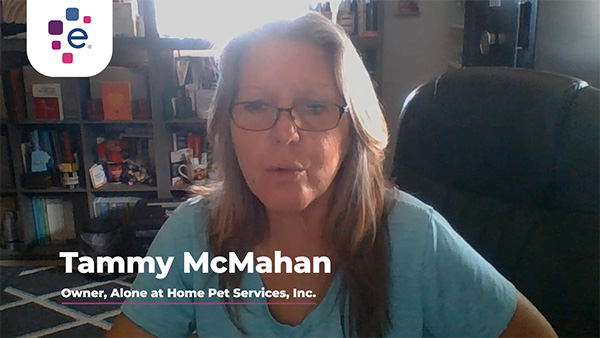
Alone at Home Pet Services Inc. has been in business for 26 years. They are a pet sitting, pet care services business that goes into people's homes. The owner,  Tammy McMahan is a veterinary nurse and certified veterinarian. She told Experian that business credentials are essential to what they do. Experian helps them with credentialing their credit profile. It’s critically important. They have to have good credentials and no fraud alerts to remain credible and trustworthy with their clients. Two years ago they were hacked on social media. Someone tried to takeover their business. So it is critical that ongoing monitoring is part of how they do business to safeguard their reputation. Experian Business Credit Advantage empowers Alone at Home Pet Services with all of the information about their business. It alerts them any moment information about their business appears on the Dark Web. Tammy McMahan feels empowered with the ongoing monitoring of her small business. She tells us her Business Credit Advantage subscription enables her company to check their credit reports frequently and maintain their good credit health, and peace of mind. About Business Credit Advantage Before you can start improving your business credit score, you have to know what it is — and what's in your company credit profile. That's where Business Credit Advantage can help. It gives you unlimited access to your business's credit report and score so you'll always know what's in your company credit profile and be able to make it work to your advantage. Learn more

Jul 14,2023 by Gary Stockton

Small Business Valuation with Richard Goeldner

With so many small businesses being bought and sold, and record numbers of people quitting jobs and starting new businesses, we thought it would be a time to sit down with an accredited expert on business valuation and dig into the art and science of placing an accurate value on a small business. In this episode of the Small Business Matters podcast, Richard Goeldner from FairValue Advisors shares his expertise. What follows is a lightly edited transcript of our talk. [Gary]: If you were thinking of buying or selling a business, 2022 is shaping up to be very busy. According to BizBuySell's Insight Report, a leading resource that tracks and analyzes businesses for sale. The number of businesses being bought in Q1 2022 grew by 24% over the previous year; this watermark comes in just 3.7% shy of Q1 2019 before COVID-19 shocked the market. The market of buying and selling businesses has been rising at a steady pace since dropping 39% in Q2 2020. Whether you're buying a business or selling a business, value matters. So, for this small business matter, we will be speaking to Rich Goldner. He's an accredited senior appraiser who has provided valuation advisory services since the early nineties, and he specializes in the valuation of privately held companies and intangible assets. Rich has worked with a wide range of companies from fortune 500 companies, family businesses, as well as private equity firms, M&A firms, and the IRS, and made numerous public appearances on the topic. His writings on business valuation issues have been published in local business journals and the business valuation review. Rich, welcome to the small business matters podcast. [Richard]: Thanks, Gary. Thanks for having me on. [Gary]: Well with so many people taking the opportunity to quit their day jobs during the pandemic. Are you seeing people buy businesses or do you think they're starting their own? [Richard]: I think I'll say it's a tough question. I certainly believe that they're buying businesses, you know, starting businesses in this environment. Certainly, I think has been a challenge particularly given the economic conditions, although as you cited earlier, you know, the conditions are improving in terms of business transaction activity. [Gary]: For a small business owners listening and who are considering selling their business. What are some of the biggest mistakes that you see business owners making prior to a sale? [Richard]: With business owners, I would say a lack of preparation is probably the biggest mistake in many smaller businesses. The business is so dependent upon the owner, and if there isn't a second level of management, a middle management, the risk to the buyer can be quite significant because once that business is purchased, you know, are the customers going to stay are the employee is going to stay? And oftentimes that owner is the glue that makes that business really stick. So, putting plans in place and building out your management team well prior to selling your business, I think can certainly pay dividends. Another area is customer dependence. If you have a business that is dependent upon one or two customers for you know, 30 to 50% of your revenue, that's going to be viewed as significant risks to a potential buyer. [Gary]: So, you want to really be building that business so that it can be assumed by somebody else. You don't really want to have yourself so entangled with it that it's going to fall apart whenever the sale is made. Is that what I'm hearing? [Richard]: Exactly. Exactly. And with those risks that translates into a lower price multiple, and a low, usually a lower offer for the business or some kind of an earn-out where the owner is obligated to stay on for a longer period of time to ensure a smooth transition. And of course, many business owners, the reason they're selling their business is they don't want to do it anymore. So again, it can be a little problematic. [Gary]: When I watch Shark Tank, as I'm sure you have, the sharks always mention this formula for calculating business value. Can you explain that to us a little? [Richard]: Sure. Yeah. I love shark tank and you know; I think one of the price multiples that they will bat around on the show is a multiple of revenues. And sometimes the numbers are really, high, like, you know, 20 times revenue, and, you know, most smart investors like the sharks, they're not buying revenues. You can't put revenues in your pocket. Investors are buying, you know, the profits or the future cash flows of the business. And on Shark Tank, you'll see that the sharks are jotting down notes in their little black notebooks, their little note pads. And we don't get the benefit of seeing exactly what they're thinking or what they're jotting down, but they're probably estimating how long it's going to be until those businesses become stable and earn profits. And they're looking at discounting what that value might be for the risk and the amount of time needed to get that business to stabilization. Now, the example that I just went through is for a business that's young and a lot of the businesses on Shark Tank are very young businesses. There are times when a more mature business will come on Shark Tank for various reasons. And you'll note that at that point, the sharks are talking about a multiple of profits EBITDA, for example, which is earnings before interest tax depreciation and amortization, it's a profit measurement, and they'll be talking about a multiple of earnings. And that's more common in the valuation of businesses and in the sale of businesses. Again, unless you're talking about ones that are more of a startup, of course, also with the sharks, the sharks know that they have the backing of, of their name and their experience. So, the businesses that they're investing in, you know, generally have a greater chance of success as well. [Gary]: Yeah. So, so what methods, when, whenever you go into value of business or appraise a business, what methods are a commonly used? [Richard]: Sure. There are three approaches really, which are like the approaches that are used in real estate appraisal. The first is a cost or asset-based approach, which estimates what the business would be worth if liquidated. Think of the going out of business sale, you know, turn out the lights, the party's over. This approach gives very little value or no value to the good will of the business or the intangible assets like name, reputation, customer relationships, you know, the existing personnel. So, the cost approach is typically appropriate for businesses that are in financial distress, where a buyer simply isn't going to pay more than what the hard assets are worth. So that's approach. Number one. The second approach is a market approach. And we were talking about Shark Tank and multiples of revenue or profits. And that type of approach is a market approach where you're estimating the value based on comparing the business to similar businesses that have sold. And this is frequently called a price multiple. Again, multiple profits, which is more popular than a multiple of revenue. And then the third approach is an income approach, which estimates the value by basically estimating the future profits and cashflow of the business in the future. How much could this business make annually? And then discounting those cash flows to a present value based on the risk involved in achieving those expectations. And with this approach, I would say, think of a time value of money concepts. For healthy businesses, that market approach and that income approach are going to be the most frequently used. And of course, finding good data about businesses that have sold can be challenging. So, the market approach can be a little difficult at times. You could say that businesses that are unique can be very valuable, but businesses that are unique will probably not have very many comparable businesses that have sold. [Gary]: So, what drives the value of a business? [Richard]: I see really six factors that drive the value of a business. One is revenue growth. You know, you must have revenues to get the profits, right? [Gary]: Yes. [Richard]: And profit margins, are they stable or improving? This is when I say profit margins. I mean, as a profits, as a percentage of revenue, is that stable or improving over the years? Asset utilization or asset usage. That's our third key factor. You generally must reinvest more of your profits in asset intensive businesses. These would be businesses that have perhaps a lot of machinery or equipment that needs to be replaced frequently. Those will tend to have a lower price multiple because you're not able to take out as much of the profit into your pocket each year. And then there is a debt leverage. You know, some business owners are very aggressive with the use of debt. They have too much of it. And some business owners elect not to use that very much. And so, for those that are very light on debt that increases business value. And of course, those that have a real high debt level, you know, the value of the business is going to be lower. And then there is a business risk. This goes back to our conversation earlier about key person dependence or customer dependence. Those are examples of business risks that will impact value. And the last one we really don't have much control over and that's market conditions. Are we operating in an economic recession or perhaps in a growing economy? So clearly, you know, having lived through the COVID recession and I realize COVID is still with us, but you know, the economy has certainly bounced back, but you know, market conditions and the timing of that is really a factor that impacts value, but we really don't have that much control over it. [Gary]: Yeah. Marcus Lemonis from "The Profit", he appears to have a sixth sense when it comes to valuing businesses, he's looking to invest in, what do you think we could learn from him? [Richard]: I love Marcus, I love the show. He preaches People, Process and Product. And when he goes in to look at a business, usually one or more of those three issues, one or more are broken, either the people, the process, or the product. And if one of those three is broken, it depresses profits. And obviously you end up with a business that could be in distress. And that's where Marcus comes in. So, in many cases, Marcus finds the people relationships to be broken in some way. And so, in many of his shows, you'll see, he's trying to sort out the dynamics between family members and between employees to see what the problems are from a people perspective. And to see if he can fix those. Sometimes he finds processes that are inefficient or inconsistent where the quality, you know, just isn't there every time. And of course, he also looks at products to see whether those products are serving the customer's needs in a good way. And so I like his people, process, product mentality. [Gary]: Yeah. He seems to approach things with a great deal of empathy. I mean, when he's having those hard conversations with the owners or partners, he has a way of just putting things out there in a plainly spoken way. He isn't afraid to have the hard conversation and keep it real. And I love the show too. I think we could all learn a lot from, from him just by watching. [Richard]: I'd say it's amazing how he's able to diffuse situations. He really, really does a great job. [Gary]: So, you've been involved in valuating businesses and appraising businesses for some time. Is there a business that stands out to you maybe as the most interesting or most unusual that you had your hand in a buying or selling? [Richard]: The most interesting? Boy I've had several. I'm going to go back to one that was very early in my career, a business where the owner died and the son inherited the business and he was an attorney, the son, and he wanted to go to seminary to become a priest, an Episcopal priest. And he hadn't shared that with his father before his father died. And this business has landed in his lap, and he didn't really know much about the business or how to run it. And so, for about a year after his father died, we watched the business just gradually decline. And it was very sad to see. It was a company that specialized in cleaning manufacturing equipment in a particular sector. And so, I found the niche to be very interesting in terms of the type of business it was, but it was really the story of what happened to that business that stands out the most me. And what I didn't know at the time is they had obviously failed to plan the exit. And nowadays exit planning is very popular. That term is bounced around, but exit planning is something that's been around probably ever since there's been a business, but a lack of planning can damage the business and what you're able to get out of it. And so that's, that's why I think of that one situation. [Gary]: Wow, that's interesting. My sister-in-law was going to take over a business, a shoe repair business for her father, and she did it for some time. She was taking real estate classes at the time, but she was known as the Huntington Beach Shoe Lady. Her business cards had the shoe, "The Lady That Lives in a Shoe", but in the end it was not a fit for her really for environmental reasons because California was changing the regulations on the glues that you can use to repair shoes. And those types of things just became a very regulatory, I guess, risky place for her to be operating. And she got her real estate license and has now got a thriving real estate career. So sometimes the business, you know, just may not be the right fit for a variety of reasons. [Richard]: Absolutely. And the example you gave, one of the major business risks was a regulatory risk. [Gary]: Yeah. So, any closing thoughts for small business owners contemplating selling or, or buying a business? [Richard]: Sure, sure. I would say, for many owners, your business is your most asset, but you won't find the value of your business listed on your brokerage account statement. And so, if the real value of your business matters to you, I recommend investing in getting a business valuation, a formal business valuation so that you know where you stand and you can do that well in advance of selling your business. You don't need a business broker if you're looking at selling in, three to five years, but you might want to know where you stand now so that you can look at ways to improve the value of your business over the next few years, as you prepare to sell. [Gary]: Excellent advice, Richard Goeldner, where can people learn more about you? [Richard]: Well,  simply search for FairValue Advisors online. You'll find our website. [Gary]: Awesome stuff, Richard, thanks so much for coming on Small Business Matters and sharing your knowledge with us we really appreciate it. [Richard]: Thank you so much. I've enjoyed it.

Jul 11,2023 by Gary Stockton

Buying or Selling a Business

Getting the best deal when buying or selling your business We focus in on the small business matter of buying or selling a business in our latest episode of the Small Business Matters podcast. We sit down with Accredited Senior Appraiser, Richard Goeldner with FairValue Advisors to learn helpful tips for getting the best deal. Watch our interview Key Takeaways: Business acquisitions grew by 4.8% in Q1 2023, approaching pre-pandemic levels. When selling a business, lack of preparation and customer dependence are common mistakes that can reduce value. Valuing a business involves multiple methods, including cost-based, market-based, and income-based approaches. Factors that drive business value include revenue growth, profit margins, asset utilization, debt leverage, business risk, and market conditions. Learning from experts like Marcus Lemonis can provide insights into assessing the people, process, and product aspects of a business. According to Biz Buy Sell's Insight Report, a leading resource that tracks and analyzes businesses for sale, the number of business acquisitions grew in Q1 2023 by 4.8% of the prior quarter. And while this bounce follows three consecutive declines, the market for buying or selling a business has almost reached pre-pandemic levels. Whether you're buying or selling a business, value matters. So for this small business matter, we will be speaking with Richard Goeldner. He's an Accredited Senior Appraiser who's provided valuation advisory services since the early nineties, and he specializes in the valuation of privately held companies and tangible assets. He's worked with Fortune 500 companies. Family businesses, middle market companies, as well as private equity firms, M&A firms, and the IRS and made numerous public appearances on the topic. What follows is a lightly edited transcript of our interview: Gary Stockton: Richard, welcome to Small Business Matters. Richard Goeldner: Thanks Gary. Thanks for having me on. Gary Stockton: With so many people taking the opportunity to quit their day jobs during the pandemic, are you seeing people buying or selling a businesses, or do you think they're starting their own? Richard Goeldner: I think that's a, it's a tough question. I certainly believe that they're buying businesses starting businesses in this environment certainly, I think has been a challenge particularly given the economic conditions. Although, as you cited earlier, their, the conditions are improving in terms of business transaction activity. "I would say lack of preparation is probably the biggest mistake in many smaller businesses the business is so dependent upon the owner, and if there isn’t a second level of management, a middle management, the risk to the buyer can be quite significant." Richard Goeldner ASP CBA CVA Gary Stockton: For small business owners listening and who are considering buying or selling a business. What are some of the biggest mistakes that you see business owners making prior to a sale? Richard Goeldner: Business owners, I would say lack of preparation is probably the biggest mistake in many smaller businesses the business is so dependent upon the owner, and if there isn't a second level of management, a middle management, the risk to the buyer can be quite significant. Because once that business is purchased, you know, are the customers going to stay? Are the employees going to stay? And oftentimes that owner is the glue that makes that business really stick. Putting plans in place and building out your management team well prior to selling your business, I think can certainly pay dividends. Another area is customer dependence. If you have a business that is dependent upon one or two customers for, 30 to 50% of your revenue that's gonna be viewed as significant risk to a potential buyer. Gary Stockton: So you wanna really be building that business so that it can be assumed by somebody else. You don't really want to have yourself so entangled with it, that it's gonna fall apart whenever the sale is made. Is that what I'm hearing? Richard Goeldner: Exactly. Exactly. And with those risks that translates into a lower price multiple and a low, usually a lower offer for the business or some kind of an earn out where the owner is obligated to stay on for a longer period of time to ensure a smooth transition. And of course, many business owners, the reason they're selling their business is, I don't wanna do it anymore. Again it can be a little problematic. Gary Stockton: When I watch Shark Tank, as I'm sure you have, the Sharks always mentioned this formula for calculating business value. Can you explain that to us a little? Richard Goeldner: Sure. Yeah. I love Shark Tank and I think one of the, one of the price multiples that they will bat around on the show is a multiple of revenues. And sometimes the numbers are really high 20 times a revenue. And most smart investors like the sharks, they're really not buying revenues. You can't put revenues in your pocket. Investors are buying, the profits or the future cash flows of the business. And on Shark Tank, you'll see that the sharks are jotting down notes in their little black notebooks, their little notepads, and we don't get the benefit of seeing exactly what they're thinking or what they're jotting down. But they're probably estimating how long it's gonna be until those businesses become stable and earn profits and they're looking at discounting what that value might be for the risk and the amount of time needed to get that business to stabilization. Now, the example that I just went through is for a business that's fairly young, and a lot of the businesses on Shark Tank are very young businesses. There are times when a more mature business will come on Shark Tank for various reasons. And you'll note that at that point the sharks are talking about a multiple of profits. EBITDA, for example, which is earnings before interest tax depreciation and amortization. It's a profit measurement and they'll be talking about a multiple of earnings. And that's more common in the valuation of businesses and in the sale of businesses. Again, unless you're talking about ones that are more of a startup, of course. Also with the Sharks know that they have the backing of their name and their experience. So the businesses that they're investing in generally have a greater chance of success as well. Gary Stockton: Yeah. So what methods, when whenever you go into value a business or appraiser business, what methods are commonly used? Richard Goeldner: Sure. There's three approaches really which are similar to the approaches that are used in real estate appraisal. The first is a cost or asset based approach, which estimates what the business would be worth if liquidated. Think of the going out of business sale, turn out the lights, the party's over. This approach gives very little value or no value to the goodwill of the business or the intangible assets like name, reputation, customer relationships, the existing personnel. So the cost approach is typically appropriate for businesses that are in financial distress, where a buyer simply isn't gonna pay more than what the hard assets are worth. So that's approach number one. The second approach is a market approach. And we were talking about Shark Tank and multiples of revenue or profits. And that type of approach is a market approach where you're estimating the value based on comparing the business to similar businesses that have sold. And this is frequently called the price multiple. Again, multiple of profits, which is really more popular than a multiple of revenue. And then the third approach is an income approach, which estimates the value by basically estimating the future profits and cash flow of the business in the future. How much could this business make annually? And then discounting those cash flows to a present value based on the risk involved in actually achieving those expectations. With this approach, I would say think of time value of money concepts. For healthy businesses, that market approach and that income approach are gonna be the most frequently used. And of course, finding good data about businesses that have sold can be challenging. The market approach can be a little difficult at times. You could say that businesses that are unique can be very valuable. But businesses that are unique will probably not have very many comparable businesses that have sold. Gary Stockton: So, what drives the value of a business? Richard Goeldner: The I see really six factors that drive the value of a business. One is revenue growth. You have to have revenues to get the profits right? And profit margins, are they stable or improving? This is when I say profit margins, as a profits, as a percentage of revenue. Is that stable or improving over the years? Asset utilization or asset usage, that's our third key factor. You generally have to reinvest more of your profits in asset intensive businesses, these would be businesses that have perhaps, a lot of machinery equipment that needs to be replaced frequently. Those will tend to have a lower price multiple because you're not able to take out as much of the profit into your pocket each year. Then there's debt leverage. Some business owners are. Very aggressive with the use of debt. They have too much of it, and some business owners elect not to use debt very much. And so for those that are very light on debt, that actually increases business value. And of course, those that are highly– have a real high debt level, you know, the value of the business is going to be lower. And then there's business risk. This goes back to our conversation earlier about key person dependence or customer dependence. Those are examples of business risk that will impact value. And the last one, we really don't have much control over, and that's market conditions. Are we operating in an economic recession or perhaps in a growing economy? So clearly, having lived through the Covid recession, and I realize Covid's still with us, but yeah, the economy has certainly bounced back. But market conditions and the timing of that is really a factor that impacts value. But we really don't have that much control over it. Gary Stockton: Yeah. Marcus Lemonis from "The Profit," he appears to have a sixth sense when it comes to valuing businesses. He's looking to invest in. What do you think we could learn from him? Richard Goeldner: I love Marcus. I love the show. He preaches People, Process and Product, and when he goes in to look at a business, usually one or more of those three issues, one or more are broken, either the people, the process or the product. And, if one of those three is broken, it depresses profits and obviously you end up with a business that could be in distress, and that's where Marcus comes in. So in many cases, Marcus finds the people relationships to be broken in some way. And so in many of his shows, you'll see he's trying to sort out the dynamics between family members and between employees. To see what the problems are from a people perspective and to see if he can fix those. Sometimes he finds processes that are, inefficient or inconsistent, where the quality just isn't there every time. And of course, he also looks at products to see whether those products are actually serving the customer's needs in a good way. And, and so I like his people process, product mentality. Gary Stockton: Yeah. He seems to approach things with a great deal of empathy. When he's having those hard conversations with the owners or partners, he has a way of just putting things out there in a plainly spoken way. He isn't afraid to have the hard conversation and keep it real. And I love the show too. I think we could all learn a lot from him just by watching. Richard Goeldner: It's it's amazing how he's able to diffuse situations. He really does a great job. Gary Stockton: So you've been involved in evaluating businesses and appraising businesses for some time. Is there a business that stands out to you maybe as the most interesting or most unusual that you had your hand in buying or selling? Richard Goeldner: The most interesting, oh boy. I've had several I'm gonna go back to one that was very early in my career. A a business where the owner died and the son inherited the business, and he was an attorney, the son, and he actually wanted to go to seminary to become a priest, an episcopal priest, and he hadn't shared that with his father before his father died, and this business has landed in his lap. And he didn't really know much about the business or how to run it. And so for about a year, after his father died, we watched the business just gradually decline. And it was very sad to see. It was a company that, that specialized in cleaning manufacturing equipment in a particular sector. And so, I found the niche to be very interesting in terms of the type of business it was, but it was really the story of what happened. To that business that that stands out the most to me. And what I didn't know at the time is, they had obviously failed to plan the exit, and nowadays exit planning is very popular. That term is bounced around, but exit planning is something that's, been around probably ever since there's been a business. But lack of planning can definitely damage the business and what you're able to to get out of it. And so that's really why I think of that one particular situation. Gary Stockton: Wow, that's interesting. My sister-in-law was going to take over the business, a shoe repair business for her father. And she did it for some time. She was taking real estate classes at the time, but she was known as the Huntington Beach Shoe Lady. Her business cards had the shoe, the lady that lives in the shoe. But she, in the end it was not a fit for her really for environmental reasons, because California was changing the regulations on the glues that you can use to, to repair shoes and those types of things. It just became a very regulatory, risky place for her to be operating. And she got her real estate degree and is now got a thriving real estate career, so. Richard Goeldner: It's interesting. Gary Stockton: Sometimes the business just may not be the right fit for a variety of reasons. Richard Goeldner: Absolutely. And the example you gave, one of the major business risks was a regulatory risk. Gary Stockton: Yeah. So any closing thoughts for small business owners contemplating buying or selling a business? Richard Goeldner: Sure. I would say, for many owners, your business is your most valuable asset, but you won't find the value of your business listed on your brokerage account statement. And so if the real value of your business matters to you I recommend investing in getting a business valuation, a formal business valuation so that you know where you stand and you can do that well in advance of selling your business. You don't need a business broker if you're looking at selling in, three to five years, but you might want to know where you stand now, so that you can look at ways to improve the value of your business over the next few years as you prepare to sell. Gary Stockton: Excellent advice Richard Goeldner, where can people learn more about you and buying or selling a business? Richard Goeldner: I can be reached at it's a long one. It's rich@fairvalueadvisors.com. Or you can simply search for Fair Value Advisors online. You'll find our website. Gary Stockton: Awesome stuff Richard, thanks so much for coming on Small Business Matters and sharing your knowledge with us. Really appreciate it. Richard Goeldner: Thank you so much I've enjoyed it. Related articles: The Top 4 Reasons for Placing an Accurate Value on Your Business

Jul 11,2023 by Gary Stockton

Sole Proprietorship vs. LLC

Trying to decide between a sole proprietorship vs. LLC for your new business? It is important to choose the right legal structure for your company because the structure will determine how you are taxed, what level of control you have over your business and how much liability you incur.This article explains the differences and pros and cons between a sole proprietorship vs LLC. In a related article, we provide more information on corporations, partnerships, and other types of business legal structures. Sole Proprietorship The sole proprietorship is the easiest of all legal business structures. The owner is responsible for the actions and debts of the business. You don't have to deal with a lot paperwork, as you do not need partners or a board. This is a good option for entrepreneurs who want to start out small and don't expect to have additional investors or partners. The sole proprietor has complete control of their business and can remove themself as owner at any time.The sole proprietorship is a good choice for many other reasons. The cost of setting up a sole proprietorship is usually the lowest. You can expect to pay for state and federal taxes, business equipment and office space rentals, as well as any professional services and items that your business may require, such as attorneys, bookkeepers and cleaning services.You may qualify for certain business tax advantages as a sole proprietor, including the ability to deduct your health insurance premiums. If you want to close your company, it is relatively simple to dissolve a sole proprietorship. Your business can be dissolved at any time without the need for paperwork or an announcement. The Downside of Sole Proprietorship A sole proprietorship has its own downsides and risks. Unlimited personal liability is a major concern, which means that your personal assets could be at risk in the event of financial difficulties or lawsuits.Another downside is the limited access to resources and capital. Due to the perception of instability, it may be difficult for sole proprietors to attract investors or secure financing. This could hamper business growth and reduce competitiveness. Due to the perception of instability, it may be harder to recruit top-tier partners or employees. This can also limit growth. Limited Liability Company (LLC) The LLC offers both flexibility and protection. It is also a popular option for the legal structure of an enterprise. The LLCs protect you against personal liability, and offer tax flexibility that is similar to sole proprietorships or partnerships. Owners (called members) pay self-employment tax on their profits. This can be more than the regular payroll tax. Depending on the location of the business, LLCs can have limitations on the length of time the company may exist. Members must also be US citizens or permanent residents.As with limited partnerships, an LLC protects its owners from liability for company debts and legal actions. If your company is sued, you cannot use your assets. In addition, LLCs offer flexibility in terms of management and ownership. Members can choose whether the company will be managed by them or by managers appointed by the members. The structure of LLCs is flexible, allowing for a variety of business types and sizes.Dissolving an LLC is more difficult than dissolving a sole proprietorship or partnership. This can require compliance with state regulations, and may result in additional costs. Limited liability may be a great advantage but it can also have a downside if members personally guarantee loans. This could happen when a business is starting up and does not yet have a business credit score or is a sole-proprietorship. Some states charge an annual fee for LLCs or levy a franchise tax, which can increase the cost of running the business.Each type of legal structure will have its own pros and cons. Therefore, it is important to research the different factors and make sure you know all the details when you are choosing between a sole proprietorship vs. LLC. Consult with tax, legal and financial professionals to make informed decisions that are aligned with your business goals while minimizing risks.
Jul 01,2023 by Gary Stockton

Resources for LGBTQ+ Small Business Owners & Entrepreneurs

We are celebrating Pride this month at Experian, and today’s episode focuses on resources available to  LGBTQ+ small business owners and entrepreneurs.   Every business owner faces challenges, whether they’re just starting out or have been in business for years. But statistics around access to funding, representation and business health indicate that LGBTQ+ small business owners can face additional unique challenges as part of a marginalized community. Our two guests are from national organizations that work to level the playing field for LGBTQ+ folks in business, and we’re eager to share their work with you. Whether you are a seasoned small business owner or a budding entrepreneur, join us as we dive into the world of LGBTQ+ entrepreneurship and uncover an array of resources available to support your business journey. Ten Takeaways – action items you can do right now as an LGBTQ+ small business owner or entrepreneur to help your business During the episode, we compiled a list in real time with our guests of things our listeners could do right away to help their businesses. Here are those resources as promised: Visit NGLCC's website to learn about resources for your business. Learn about certification through the NGLCC and decide if it's right for your business. Join your local chamber. Visit StartOut.org and join; learn about resources on that site. Check your business credit report. Download Experian's Blueprint for Establishing and Building Business Credit Check out resources from the SBA specifically for LGBTQ+ small business owners, including free local business coaching look up resources at SCORE, including webinars, mentoring, networking events and workshops (all free) Check out this list from EveryQUEER of grants designed just for LGBTQ+ entrepreneurs Interested in venture capital funding? How about this list of VC funding specifically for queer entrepreneurs. What follows is a lightly edited transcript of our interview: Emily Garman: Welcome to Experian's Small Business Matters podcast. I'm Emily Garman. My pronouns are they and she and I'll be your host today. Happy Pride Month to all our listeners. Today we have two guests. Each has a wealth of information to share specifically for LGBTQ+ small businesses and entrepreneurs. I'm really pleased to welcome our guests. We have Sabrina Kent, the Executive Vice President of Programs and External Affairs for the National LGBT Chamber of Commerce, which we'll refer to as the NGLCC. You might remember Sabrina from last year's Pride Month podcast about inclusion in the workplace; that was a great episode that's worth another listen again this year. We're also joined by Brian Richardson, the new CEO of startout.org. He just joined startout.org a few months ago, but this organization has been working since 2009 to make sure that LGBTQ+ entrepreneurs have the support and resources they need to fairly compete in today's business world. Sabrina, can you talk a little bit about the NGLCC and what resources and benefits your organization offers to LGBTQ+ small businesses & entrepreneurs? Sabrina Kent: Yeah, Emily, thank you so much. So first and foremost, we're a certification organization and you might be asking yourself, what is certification as an LGBTQ owned business? And those are businesses that are 51% or more owned, operated and controlled by an LGBTQ person or persons. And that certification grants them access to contracting opportunities. With our corporate partners, we work with about 450, mostly Fortune 1000 firms who accept our certification and want to include LGBTQ vendors in their supply chain. So first and foremost, certification is our primary product. But outside of that, we believe that we need to educate our business owners, help them grow, scale, provide them with resources and opportunities to be able to meet that corporate contract. So whether that means you opened your doors yesterday, or you're a well established business, there's an opportunity and a resource for you in the NGLCC network to help you get connected, contract with corporations and with one another to grow your companies. Emily Garman: Great. Brian, can you tell us a little bit about startout.org? Brian Richardson: Absolutely. And thanks for having me today too. I really appreciate it. So Start Out, as you mentioned, we started in 2009 to really help LGBTQ+ entrepreneurs get the resources, networks, information, and knowledge skill they need to turn their business ideas into a reality. You mentioned the 4% of small businesses are owned by LGBTQ folks. If you look in those numbers a little deeper and specifically look around high growth startups and entrepreneurs over the last 20 years, $2.1 trillion have been given to Founders and entrepreneurs in VC funding. Of that $2.1 trillion, which is a massive amount, only 0.5% has gone to founders who openly identify as LGBTQ+. So it's an even smaller number, and what our goal at Start Out is, is to really help make sure that those LGBTQ+ founders who are looking for funding, who are looking for opportunities, who want to launch their business, have the opportunities and resources they need to do that. We do it through a variety of programs, activities, community engagement, access to capital, mentorship, you name it. And encourage anyone to go to our website, startout.org to learn more about what we provide and how we can provide support directly for them too. Emily Garman: Great. Thank you very much, Brian. So we talked a little bit about your organizations and what you do, and in a bit we're going to talk about what our business owners listening can do. But first I want to bring up a point, a question that some folks might be thinking about, and it's got kind of a long setup here. So you both might be familiar with the recent release of the Firms in Focus Data from the Federal Reserve Banks, which covers data from the 2022 Small Business Credit Survey. So from this, we know that LGBTQ+ individuals are underrepresented when it comes to business ownership. LGBTQ+ small businesses and entrepreneurs are 10% more likely to siphon money from their own personal savings to get their business through a rough spot than businesses not owned by LGBTQ folks. We know that LGBTQ+ small businesses and entrepreneurs are more likely to be denied funding in terms of business loans, cash advances, lines of credit. So, I think of these statistics when, when people say, "Well, why do we need resources specifically to assist entrepreneurs and business owners in this community? So I want to talk a little bit about the challenges and barriers faced specifically by, LGBTQ+ entrepreneurs and how your organizations overcome them. So I'm going to go to Brian first. Brian, one of the things that your organization talks about is equal access for LGBTQ+ plus folks to participate in the economy as entrepreneurs. Can you talk more about that? Does this mean that the playing field is not level for queer folks who want to start businesses? Brian Richardson: It does, and I think you're absolutely right. It, it's not level; truth be told, it's not level for a lot of different groups and there's a need for people across this country to have access to resources and networks that they don't. But that definitely includes LGBTQ+ small businesses and entrepreneurs. I think the numbers that you cited, are absolutely true and challenging. But some of the numbers that we found as well too, at Start Out through our Start Out Index, is that actually once our LGBTQ+ entrepreneurs get funding, we also get less funding than our straight and cisgender peers. Of that 0.5% who get startup funding, out of that 2.1 trillion, we typically get 84 cents on the dollar. There's a whole host of reasons why that's the case. Oftentimes it's because we may not have the exact networks or the connections, or we may not look like the folks at the table making the decisions. And so what we need to focus on is equity and bringing in the opportunity for different folks like that. On the flip side and on the good side, once we actually get those dollars in and once we're able to start our companies, what happens is the LGBTQ people and our companies have a greater economic impact. And we hire more people than that 99.5% otherwise. So it's a good economic investment if you're looking to invest in a company. LGBTQ founders and LGBTQ+ small business owners are the place to invest. But people don't know this. Investors don't know this, and they're making decisions oftentimes, like we all do, based on connections. I think of one example that sticks in my mind. I was at a recent panel and someone said was talking about the pre-seed investment round. When you first have a business idea and you're looking for a little bit of funding, they say, "go to your friends and family. That's the best place to start." And someone who's LGBTQ, who is trans, raised their hand and said, "you know what? My family disowned me when I came out as trans. I can't go to them. Even if they had the funding, I can't ask them and they definitely won't give it to me." That's a real challenge that LGBTQ+ people are facing. And so what can organizations like NGLCC and Start Out and other sibling organizations do? One is to make this information readily available so we know what the problem is, and two, create programs and opportunities and networks so we can help solve these challenges for one another. Emily Garman: One of the things you mentioned was those connections, the people who are in your circle, whether that's family or acquaintances. And when I think about Chambers of Commerce, Sabrina, I think about networking and connections and making business connections. Can you talk a little bit how the NGLCC provides those opportunities? Sabrina Kent: Yeah, absolutely. Thank you for that. So first and foremost, I mentioned certification. Certification is great, but you have to leverage that. That means showing up, that means being in the spaces, whether they're virtual or in person, that are going to allow you to meet the individuals that can impact your business, whether that be on the lending side or whether that be potential individuals who you might contract with. And so, we always say that our model is both national and local. Your certification is national and your membership is local. We ask that our businesses join their local LGBTQ affiliate chamber, so they're being tapped into opportunities on the ground in their local network to engage, and then they can take advantage of the education, resources, conferences, and other opportunities provided to NGLCC. We do a yearlong mentorship program where we pair our LGBTQ owned businesses with corporate leaders and procurements, supplier diversity and other aspects of purchasing. And the expectation isn't necessarily that there's going to be a contracting relationship at the end of that one year term, though oftentimes that does result in that, but it's really that these business owners are able to capitalize on the expertise of the corporate stakeholder to help them tackle issues of importance to their business and grow and scale, and also leverage the network of that corporate partner to be able to achieve their goals. Outside of that, we have a variety of different accelerator programs, that are tapped into cybersecurity, strategic and leadership development, marketing, financial resources, and more so that businesses at all levels are able to gain access to the tools, resources, and again, networks from experts from MIT and from Fortune Five CEOs, to be able to expand opportunity and really meet other LGBTQ+ small businesses and entrepreneurs who are walking similar paths. Emily Garman: So if we've got somebody listening who, maybe they've been in business a long time, or maybe they are just starting out and they've never heard of the NGLCC, where should they start? So it sounds like you're saying the first step, join your local chamber of commerce. Sabrina Kent: It doesn't necessarily need to be the first step, but it can definitely go hand in hand with certification. My first piece of advice is go to nglcc.org. That's our website. You can learn more about certification there. You can start the process for certification right there on the website. And part of that will be joining your local affiliate chamber. But we have several grant opportunities also available to our trans and gender expansive business owners and our LBT business owners of minority experience. So, we are able to offset some of the cost in the first year of affiliate membership. So those businesses are able to gain access to the certification network. But I, I had a Hispanic Trans business owner say this best to me. He said, "if I had known about certification five years earlier, when I opened the doors to my company, I would've certified then. And as soon as I was able to make that investment, I did. And it changed everything for me." And so he says that he always urges every business owner he meets to get certified as soon as possible. Because the sooner you can plug into that network, the more opportunity you get right out of the gate. Emily Garman: And you can do that even if you just started out like, like you were saying. Sabrina Kent: Correct. Emily Garman: Great. Okay, so, one of the things I wanted to take away from this episode, is to kind of have a list of action items that people can take when they, turn off their podcast, they get out of the car and they go inside. So it sounds like so far, we're going to go to the NGLCC website, learn about certification. That's number one. Whether you're brand new, been in business a long time–start that process. Join your local chamber. Find out about that. There are grants available to help offset the cost of some of these things. Maybe look into these mentorship programs. I know that can make a huge difference. I mean, just the visibility alone, to see someone who's like you being successful in business can be a real game changer. So, we've got these items to start with. Now, Brian, I know that startout.org just recently wrapped its, is it the third annual Start Out Equity Summit? So congratulations on that. I would think attending that or making sure you get on the email list so you won't miss the next one is a great first step. How can LGBTQ+ small businesses and entrepreneurs leverage the resources and expertise of startout.org? What's the first step? Brian Richardson: Well, similar to what Sabrina said, go to startout.org to get started and find out the programs that we provide, the community partnerships that we've got. If you're an entrepreneur, sign up for our Founders Experience Project, where you can have access to our mentorship program, our Access to Capital program, where we can make warm connections to venture capitalists and other investors looking to invest specifically in LGBTQ+ entrepreneurs because they know that we make a difference and we do good work. But also I think what I love about our community, and I've seen growth in the three months since I've started at Start Out, is that if you're an LGBTQ+ small business or entrepreneur and you join us, you can join our mentorship program as a mentor and as a mentee. Both. Because we have so much to learn from one another. And I think Sabrina was talking about one of the greatest parts about the LGBTQ+ plus community is that we are diverse, we're resilient, and we're a community, and any way that we can help one another is great. for me, one of the biggest points is representation, as Sabrina was talking about too, and joining and getting certified. One thing that you, we can all do is, is put a flag up in our window if we feel comfortable and able to do that, because that's going to signal to those other small business owners or perspective small business owners and entrepreneurs to think that, oh, here's someone else. I'm not the only one doing this. One thing that we found, and another program people can join, is our community event programs. In seven cities currently across the country. We have regular events, a couple every month or every couple months. And we have virtual programs on a wide array of topics that are educational. And then we also have virtual programs that are just social so we can connect to one another, because that's where the real ideas start to happen and percolate, and where people realize, oh, you're succeeding in your business, maybe I can succeed in my business as well. And so there's a real opportunity from just getting to know one another, and leveraging that community to make that difference. Emily Garman: That's just fantastic. So tell me, I know I had heard about startout.Org and then Sabrina mentioned it to me too. So how do you all work together? How do your organizations partner on things? Sabrina Kent: We have a long history of working together. I think we, are on similar sides of the same coin. So it's vital, I think, for LGBTQ+ small businesses and entrepreneurs to be able to link up with one another. We do a lot of resource sharing between our respective organizations, educational opportunities. We're looking at how we can collaborate in other LGBTQ spaces so that we are educating corporations and LGBTQ+ small businesses and entrepreneurs on the resources provided by our respective organizations. But for example, whenever I have a business owner that's coming to me to ask questions about financing and lending. I'm like, you really need to meet Start Out and you really need to talk to them if you're not engaged. And, and likewise on the certification side and the corporate contracting side Start Out sends businesses our way. So I think it provides a really nice ecosystem between our two organizations for any business owner that's looking to grow, scale or identify opportunity. Brian Richardson: I agree entirely. And NGLCC has been a phenomenal partner of Start Out's, and, and we're able to do our work better thanks to them and also other partners, both within the LGBTQ+ plus community and also partners in the entrepreneurship and small business world. I think the Equity Summit's a great example. Yesterday we had our fourth annual Equity Summit, which brought together about 80 different panelists and moderators and experts across a wide array of backgrounds and experiences in startup, in managing teams, in starting a company from scratch. NGLCC was a participant and is part of that program as well as another 40 or 50 different partner organizations. And it was fantastic to hear so many people talk about issues that are important to LGBTQ+ people and BIPOC folks and female- identified founders; the entire rainbow of our coalition. Because that's where we're going to learn the most. We all have a long way to go and the only way we're going to get there is to get together. I think one thing that I always think about is NGLCC and Start Out both. Our goal is to not supplant anything or anyone. Our goal is to grow the pie and we know that when there's more opportunity for more people, we're going to create more across the board and, and a world of abundance, and working together and cooperating is the only way to do that. Business Credit Score & Information Emily Garman: One thing I want to talk about briefly is your business credit. This is important for LGBTQ+ small businesses and entrepreneurs to know about, so I want to make sure you know that every business has a credit score that's separate from your own personal credit score. So just like your personal credit score, this score determines whether your business can get funding, how much at what rates a bank will loan it to you. So this helps companies decide whether to extend credit or or trade lines to a business. So if you're a brand new business or you haven't ever gotten a loan or, or credit trade lines, you might. Be what we call "credit invisible," or you might have a "thin file," meaning that your business doesn't really have a score or anything reported yet, and that is something you can take action on no matter how long you've been in business, so you can build better business credit faster. We actually have just released a free resource about this. It's called our Blueprint for Establishing and Building Business Credit. The first thing you want to do is establish your business separately from your personal finances. Download eBook So you set up a business bank account, you get an EIN number, you choose a business structure, things like that. You want to get it set up correctly from the start. You should never use your personal credit for business expenses, and that could sometimes be difficult to do, but it's important to really remember and stick with that. Then you want to establish trade relationships early on in your business. This can mean where you order your supplies or your raw materials or equipment for your business, or just using a business credit card to purchase your business items. The key here is to always make your payments early, if possible. Not just on time, but early. So by developing these good payment histories, good trade relationships, you can get good references from your creditors and be more likely to get approved for credit and loans in the future. Now if your suppliers are not reporting your payment history to Experian or the other credit bureaus, you can ask them to. There is a template letter we have on our website you can send, and that's available in the blueprint that I mentioned. So just like with your personal credit, you want to use a lower percentage of your available credit. Don't get maxed out on your credit cards if you can help it. Again, easier said than done sometimes in the small business world, but you don't want to be using more than about 30% of your available credit. And don't apply for a whole lot of credit cards or loans all at once. This results in hard credit inquiries on your business's report, which is kind of a warning sign to lenders, and this can impact your score too. So finally, you want to make sure you're staying on top of your business credit. Just like you can monitor your own credit profile for identity theft, you want to continuously monitor your business credit score to make sure that you're not a victim of identity theft or fraud in your business, and make sure you have the opportunity to notify us of any errors that might appear. Experian does offer a Business Advantage credit monitoring service. So you can always know what's going on with your credit score and take action quickly if you need to. And I'll pop a link in the notes if you want to learn more about that. Success Stories Emily Garman: Can each of you maybe share a success story or two of LGBTQ+ small business owners or entrepreneurs that you've worked with? I know, Sabrina, you shared about the Hispanic trans owner., What are some stories of business owners who have availed themselves of these resources and been successful because of it. Sabrina Kent: Well, I guess I'd be remiss if I didn't call out Braxton Fleming, who was on this last year with me, and Stealth Bros and Co. I always use Braxton as my shining example of everything we would love a certified business to do, which is take advantage of our programs and our opportunities. His products are on store shelves in CVS now. He, he's been on Shark Tank. He's really doing incredible, incredible work. But, while I love Braxton, I really like to use this example of one of our business owners. He's a gay man who's Latino and he participated in our Accelerate accelerator program. And, because of a small piece of anecdotal advice he received from one of the subject matter experts in that program, he was able to actualize $500,000 of new revenue in a three month period. And that's huge. And that's life-changing. That means that he's able to hire more people. He was able to open additional brick and mortar facilities. And his company has continued to grow and expand, as a result of that. And so that's why I always say show up, participate, sign up for things. You never know who you're going to meet or what kind ofadvice you're going to get that's going to help you go to the next level. Brian Richardson: And when I think about folks, I, I can't help but think about Maca, who is one of the first entrepreneurs I met when I joined at Start Out. She is a Latinx lesbian out of Miami, an immigrant, and when she came to Start Out, she said that she was just doing her company Avocademy, is the name of it, as a side hustle, really trying to create a UX coding camp for people who couldn't take time off of work or invest thousands of dollars in order to get the skills they need to transition into the tech economy. And so she had an idea of creating a part-time academy with a low enough price point that would be more accessible for more folks. She came to us, it was a side hustle. And then she applied for our growth lab, which is a five month accelerator program where we help businesses at the early stage accelerate and move forward and be prepared for that next level. One month into our five month program, she hired her first full-time staff person, and by the end of it, her annual revenue was 2.4 million. More important than that, her company now is providing training to a whole host of people who may be locked out of the tech sector, otherwise. More than half of her current clients are female identified. And 84% are people of color. That's huge. And that's changing the face of technology. But when you talk to Maca about how Start Out and our growth lab impacted and helped her, she'll say, yes, I was able to hone my business plan, I was able to connect to investors, I was able to take it to the next level. But what really mattered the most to her was that she found her community. Because being an entrepreneur, being a small business owner sometimes can be rather lonely. And being connected to other LGBTQ+ small business owners and entrepreneurs, she realized she wasn't alone and she had people that she could bounce ideas off with and talk to and vent with, and really build that community from the ground up. And that's what we do at Start Out. That's what NGLCC does, is finding ways for us to connect with one another and move forward. And I think especially with queer joy, I think it's pride month and happy pride for that! I think it's so important for organizations like ours to exist because in our society and in our culture and in our economy, small business owners are the glue that hold us together. They're the people who are creating new jobs. Entrepreneurs are the harbingers of the future who are innovating new technologies and moving us forward. And queer people need to be a part of both of those groups and need to be a part of that conversation. Because if we want to be part of every facet of this country and and this world, then we need to have the opportunity to be included and have our voices heard everywhere. And that's exactly what we do every day by providing economic opportunity and economic justice for queer people. Then we're changing the face of our world and making it a more inclusive, affirming, and welcoming place for all. Emily Garman: Well, I just got chills hearing you talk about that, because that is amazing, and both of the stories you shared, you're right. It is life changing, not just for LGBTQ+ small businesses and entrepreneurs, but for the person who goes to work for them, for every person who interacts with that business and gets a deeper understanding that queer people are exceptional, but they're also just like everybody else and want to go about their business and be successful. So, uh, this is really, really exciting to hear. We've learned so much about the NGLCC, so much about StartOut.org and we've created a good list of things that people can take action on right now, which I'm excited about. I love lists. So if you're an entrepreneur or business owner listening, I'm going to make this list and I'll, I'll post it, uh, on our website along with the recording of this podcast. So Sabrina, Brian, I just can't thank you enough for being here today. I know it's a very, very busy time of year with pride and everything else going on, but it's been so good to see you. I really appreciate your insight and all the information that you provided on how we can help LGBTQ+ small business owners and entrepreneurs access resources to be more successful. So, Sabrina, one more time. Can you tell me where, uh, we can find the NGLCC on the web, social? Sabrina Kent: www.nglcc.org. We are on all social media platforms as @NGLCC. Emily Garman: Great. Brian, where can people connect with the folks at startout.org? Brian Richardson: Startout.org or at @startout on most every social media site as well too. Emily Garman: Fantastic. And to our audience, thank you for listening. We're so glad you joined us today, and I hope you've heard some information that's going to make a difference for your business right away. Related Posts

Jun 23,2023 by Gary Stockton

How Do I Check My Business Credit Score?

Both businesses and individual consumers have credit scores that reflect how they’ve historically used credit. Lenders and others use these scores to help determine creditworthiness and make decisions based on what they see. Your Business credit score is based on different information than personal credit scores and use a different scoring system. Learn now to check your business credit score. How Do Business Credit Scores Work? Business credit bureaus use information from a wide range of sources to compile business credit reports, which are then used to generate business credit scores. Data in business credit reports may come from your business’s creditors; its vendors and suppliers; public records and court filings; and collection agencies. For instance, Experian business credit reports show data such as location and contact information, time in business, the company’s Standard Industrial Classification (SIC) and North American Industrial Classification System (NAICS) codes, annual sales and number of employees. It will also show any judgments, UCC filings or tax liens against your company and any accounts in collections. Finally, it looks at how you handle commercial credit payments on loans, credit cards, and bank or trade lines of credit. Each business credit reporting agency weighs the information in your credit report differently and uses its own unique method to calculate your credit score. For example, Experian calculates your business credit score based on: Credit: Number of trade accounts, outstanding balances, payment behaviors, credit utilization and trends over time Public records: How recent and how frequent any liens, judgments or bankruptcies are and how much money was involved Demographics: The number of years you’ve been in business, your SIC and NAICS codes and the size of the business Experian Business Credit Scores range from 1 to 100. As with consumer credit scores, higher scores signify better credit. Where Can I Check My Business Credit Score? You can check your Experian business credit score by purchasing a one-time copy of your credit report or signing up for business credit monitoring, including unlimited access to scores. Reasons to Check Your Business Credit Score Prevents fraud: Monitoring your business credit score can reveal potential fraud or identity theft. A new account you don’t recognize, an application for credit you didn't make, or inaccurate information could be a sign of fraudulent activity. Contact the credit bureau if you see anything amiss on your business credit report. Monitors business health: Your business credit score is an indicator of the financial health of your business. A good business credit score can open doors, giving you access to more credit, lower interest rates and better loan terms. Your business credit may be the deciding factor in whether you get approved for a lease or for trade credit. Regularly checking your business credit score gives you a sense of where your business stands and how successful your applications for credit are likely to be. Safeguards your personal assets: Without a good business credit score, you may need to personally guarantee business loans or use your personal credit score to apply for business credit. This could put your personal assets—and personal credit score—at risk if your business suffers a downturn and you can’t pay these bills. A good business credit score can help you get credit in your business’s name, protecting your personal assets. How to Establish and Build Business Credit Start establishing a business credit history by legally registering your business and getting an employer identification number (EIN) from the IRS. Open business bank accounts, leases, utility services and other accounts in your business’s name, rather than your own. You can begin to build business credit by making moves such as getting a business credit card and requesting trade credit from suppliers, then making your payments on time. For these payments to help your business credit score, you’ll need to work with companies that report to business credit bureaus. Not all of them do, but companies are often willing to do so if you ask. As with personal credit, paying your creditors on time is key to improving your business credit score. You should also check your business credit score regularly, making sure the information in your credit report is correct and current. Keep Your Business Credit Score Healthy Regularly monitoring your business credit score helps keep a pulse on the health of your business—but as a business owner, you already have a lot on your plate. For a convenient way to track your credit score, sign up for business credit monitoring services such as Experian’s Business Credit AdvantageSM. It provides alerts whenever your business credit score changes and early warnings of potential fraud to give you peace of mind. Plus you get unlimited access to your business credit report and score all year long. About the author Karen Axelton Drawing on 20-plus years of experience as a journalist, business magazine editor, and marketing copywriter, Karen Axelton specializes in writing about business and entrepreneurship. She has created content for companies including American Express, Bank of America, MetLife, Amazon, Cox Media, Intel, Intuit, Microsoft and Xerox.

Jun 21,2023 by Gary Stockton

The History Behind Juneteenth and Why We Honor This Day

Juneteenth commemorates a momentous day in American history, and yet some Americans are unfamiliar with it, and how it is celebrated. So members of our Black Professionals Employee Resource Group (ERG) came together to tell the dramatic and important story of how Juneteenth came to be, and how it is typically celebrated now that it is a new Federal holiday. Juneteenth is also a day that everyone at Experian will be celebrating National Independence Day. Please check out the video "Like" and "Share" with your friends. Juneteenth Background Juneteenth is an annual holiday celebrated on June 19th, commemorating the legal end of slavery in the United States. It has been celebrated for more than 150 years. It all began on June 19th, 1865, when Union soldiers arrived in Galveston, Texas, with news that the Civil War was over, and that enslaved people were to be freed. Even though the Emancipation Proclamation had been issued more than two years earlier, it had little effect at the time of signing, because news of the order had not reached the enslaved population of Texas. The first major Juneteenth Celebration was held in Austin, Texas, in 1866. By 1872 the celebration had been added to a calendar of public events. In that year, black leaders in Texas purchased 10 acres of land to celebrate Juneteenth. Today, that land is Emancipation Park in Houston. Juneteenth was informally celebrated up until 1980, when Texas became the first state to proclaim Emancipation Day as an official state holiday. Over the years, Juneteenth has been celebrated by black Americans all over the country in many different ways. Juneteenth celebrations often include lectures and exhibitions on African-American culture, with special efforts to instill a sense of heritage and pride in black youth. Celebrations are often accompanied by voter registration efforts, the performing of plays, and retelling stories. The holiday is also a celebration of soul food, barbecue and other food with African-American influences. On June 17th, 2021 President Joe Biden signed legislation that established June 19th as Juneteenth National Independence Day. He said that it would go down as one of the greatest honors of his presidency. Ultimately, Juneteenth is much more than a holiday. It is a day for black Americans to celebrate freedom, culture and heritage. And for everyone to recognize and commemorate this pivotal moment in American history.

Jun 16,2023 by Gary Stockton

Follow Us!

Subscribe to our blog

Enter your name and email for the latest updates.

This site is protected by reCAPTCHA and the Google Privacy Policy and Terms of Service apply.

Get your business credit report now. Start by searching for your business.

Explore the Experian Small Business Index